

Home
Class 11
PHYSICS
A particle of mass m is released from re...

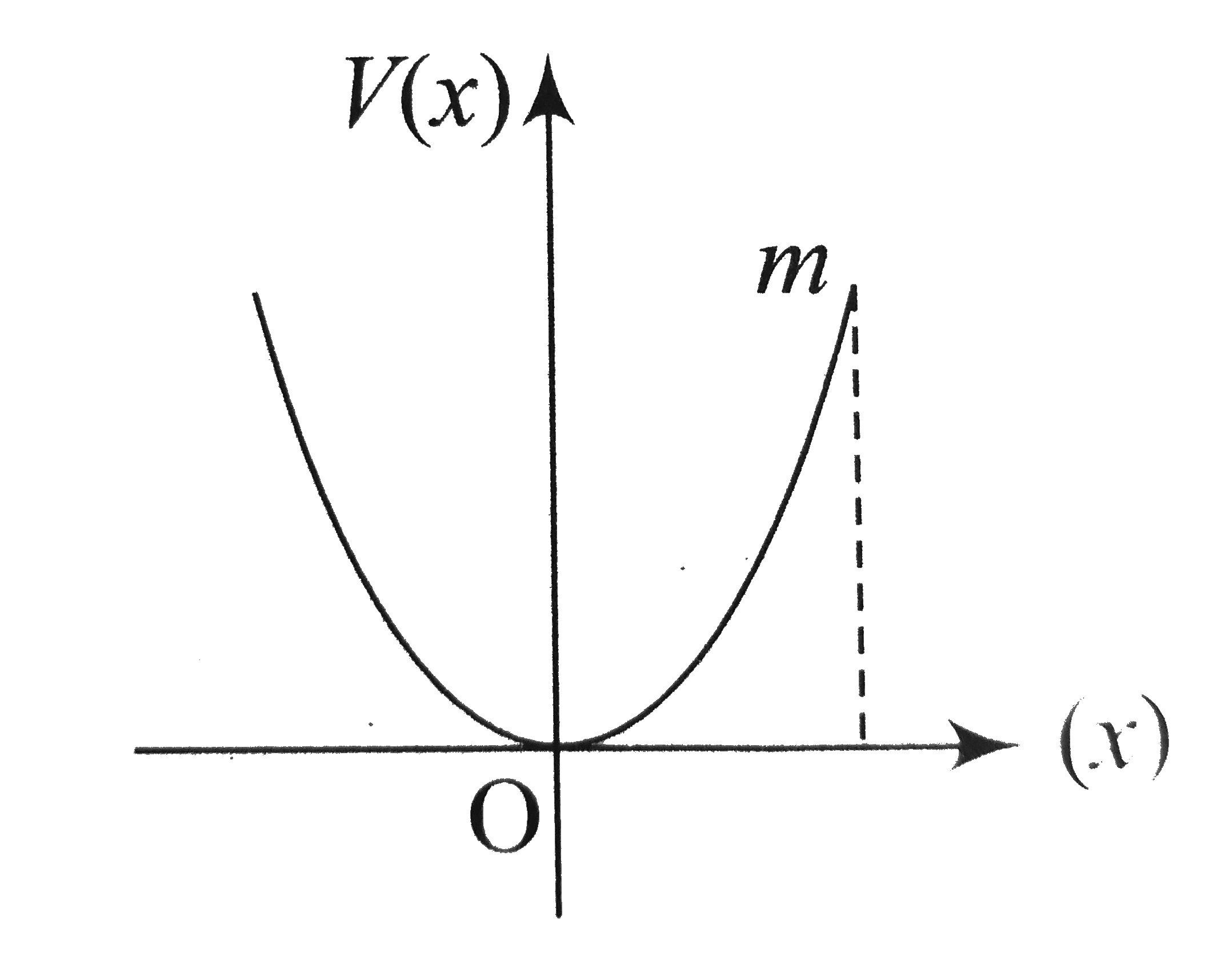
A particle of mass `m` is released from rest and follow a particle part as shown Accuming that the displacement of the mass from the origin is small which graph correctlly depicts the position of the particle as a function of time?

Promotional Banner

Similar Questions

Explore conceptually related problems

A particle of mass m is released from rest and follow a particle part as shown Assuming that the displacement of the mass from the origin is small which graph correctly depicts the position of the particle as a function of time?

A particle of mass m is released from rest and follow a particular path as shown Assuming that the displacement of the mass from the origin is small which graph correctly depicts the position of the particle as a function of time?

A particle of mass m is released from rest and follows a parabolic path as shown. Assuming that the displacement of the mass from the origin is small, which graph correctly depicts the position of the particle as a function of time?

velocity time graph of a particle is shown in figure. Find displacement of the particle.

velocity time graph of a particle is shown in figure. Find displacement of the particle.

The displacement of a particle starts from rest is proportional to the square of time,then the particle travels with

A particle of mass m is released from rest at point A in Fig., falling parallel to the (vertical) y -axis. Find the angular momentum of the particle at any time t with respect to the same origin O .

A particle of mass m is released from rest at point A in Fig., falling parallel to the (vertical) y -axis. Find the angular momentum of the particle at any time t with respect to the same origin O .

In a uniform electric field, a point charge of mass m and charge q is released from rest. If there are no other forces acting on the particle, then which of the following graphs, correctly show the dependence of the particles speed v on the distance x travelled by the particles speed v on the distance x travelled by it? [Graphs are schmatic and not drawn to scale]