
Home
Class 12
CHEMISTRY
The compound that is most difficult prot...

The compound that is most difficult protonate is

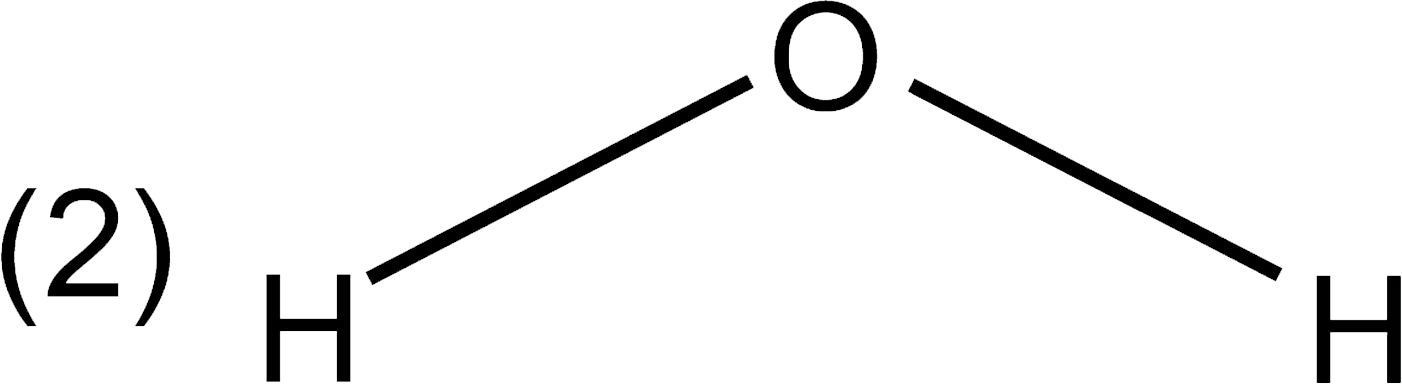
A

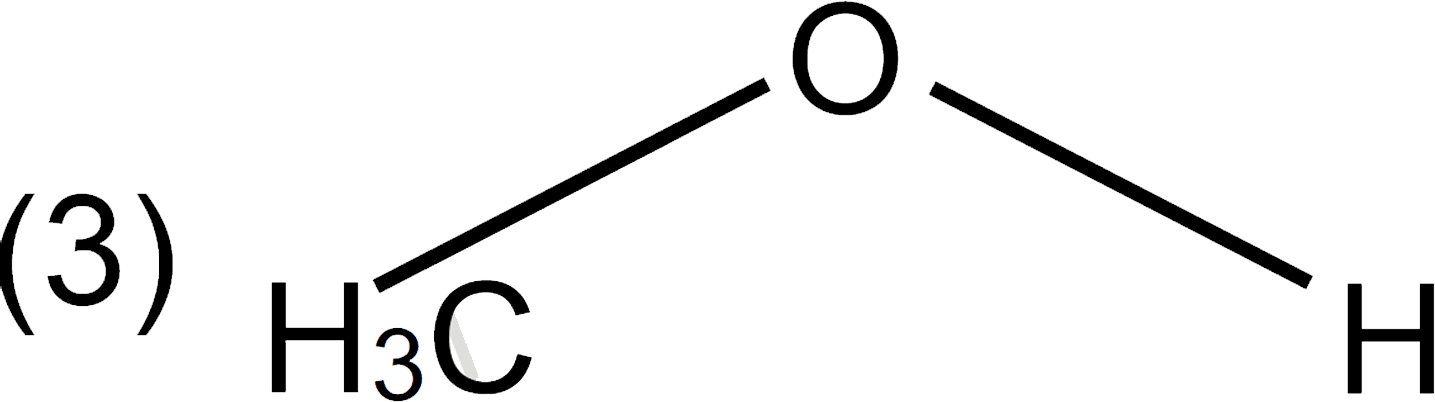
B

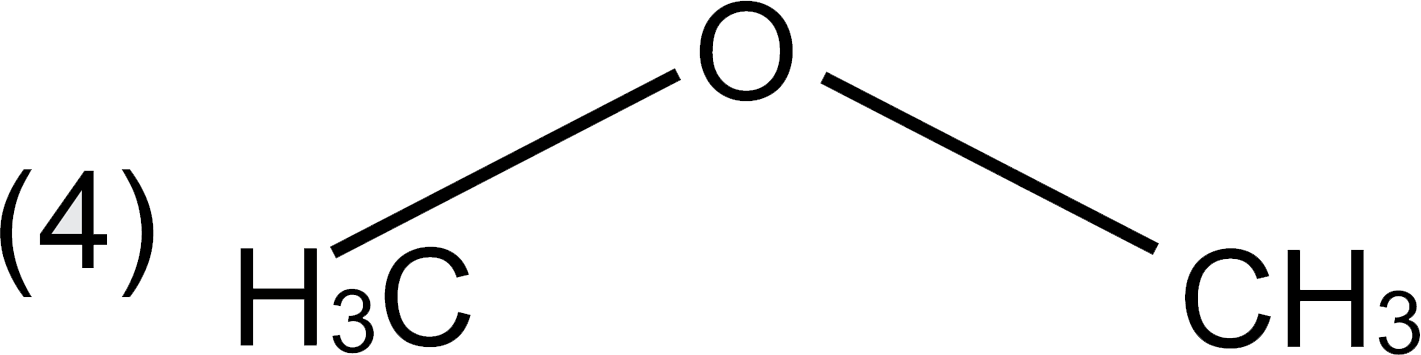
C

D

Text Solution

AI Generated Solution

The correct Answer is:

To determine which compound is most difficult to protonate, we need to analyze the electron density and availability of lone pairs on the oxygen atom in each of the given compounds. Here’s a step-by-step solution: ### Step 1: Identify the Compounds List the compounds provided in the options. For this example, let's assume the options are: 1. Phenol 2. Alcohol (e.g., ethanol) 3. Ether (e.g., diethyl ether) 4. Water ### Step 2: Analyze the Structure of Each Compound - **Phenol**: Contains a hydroxyl group (-OH) attached to a benzene ring. The lone pairs on the oxygen can participate in resonance with the aromatic ring. - **Alcohol (Ethanol)**: Contains a hydroxyl group (-OH) attached to an alkyl group. The lone pairs on the oxygen are available for protonation. - **Ether (Diethyl Ether)**: Contains an oxygen atom bonded to two alkyl groups. The lone pairs are available for protonation. - **Water**: Contains a hydroxyl group (-OH) with lone pairs available for protonation. ### Step 3: Evaluate the Availability of Lone Pairs - In **phenol**, the lone pairs on the oxygen are involved in resonance with the benzene ring, reducing their availability for protonation. - In **ethanol**, **diethyl ether**, and **water**, the lone pairs on the oxygen are not involved in resonance and are more available for protonation. ### Step 4: Determine the Compound Most Difficult to Protonate Since the lone pairs on the oxygen in phenol are involved in resonance, they are less available for protonation compared to the other compounds. Therefore, phenol is the compound that is most difficult to protonate. ### Conclusion The compound that is most difficult to protonate is **Phenol**. ---

To determine which compound is most difficult to protonate, we need to analyze the electron density and availability of lone pairs on the oxygen atom in each of the given compounds. Here’s a step-by-step solution: ### Step 1: Identify the Compounds List the compounds provided in the options. For this example, let's assume the options are: 1. Phenol 2. Alcohol (e.g., ethanol) 3. Ether (e.g., diethyl ether) 4. Water ...
Promotional Banner

Topper's Solved these Questions

  • NEET

    NEET PREVIOUS YEAR (YEARWISE + CHAPTERWISE)|Exercise QUESTION|92 Videos
  • NEET

    NEET PREVIOUS YEAR (YEARWISE + CHAPTERWISE)|Exercise MCQ|94 Videos
  • NEET

    NEET PREVIOUS YEAR (YEARWISE + CHAPTERWISE)|Exercise MCQ|94 Videos
  • METALLURGICAL OPERATIONS

    NEET PREVIOUS YEAR (YEARWISE + CHAPTERWISE)|Exercise MCQ|21 Videos
  • NEET 2018

    NEET PREVIOUS YEAR (YEARWISE + CHAPTERWISE)|Exercise QUESTION|45 Videos

Similar Questions

Explore conceptually related problems

Among the following, the compound having the most acidic proton is:

Which is most difficult to oxidise-

Which of the following metal is the most difficult to extract from its oxide?

NEET PREVIOUS YEAR (YEARWISE + CHAPTERWISE)-NEET-CHEMISTRY
  1. For the cell reaction: 2Fe^(3+)(aq)+2l^(-)(aq)to2Fe^(2+)(aq)+l(2)(aq...

    Text Solution

    |

  2. The compound that is most difficult protonate is

    Text Solution

    |

  3. The magnitude and permanganate ions are tetrahedral due to

    Text Solution

    |

  4. The correct order of the basic strength of methyl substituted amines i...

    Text Solution

    |

  5. An alkene "A" on reaction with O3 and Zn gives propanone and ethanol i...

    Text Solution

    |

  6. For the second period elements the correct increasing order of first i...

    Text Solution

    |

  7. A gas at 350 K and 15 bar has molar volume 20 percent smaller than tha...

    Text Solution

    |

  8. For a cell involving one electron E(cell)^(0)=0.59V and 298K, the equi...

    Text Solution

    |

  9. Which will make basic buffer?

    Text Solution

    |

  10. Which is the correct thermal stability order of H(2)E(E=O,S,Se,Te and ...

    Text Solution

    |

  11. For an ideal solution, the correct option is:

    Text Solution

    |

  12. The biodegradable polymer is :

    Text Solution

    |

  13. Enzymes that utilize ATP in phosphate transfer require an alkaline era...

    Text Solution

    |

  14. If the rate constant for a first order reaction is k, the time (t) req...

    Text Solution

    |

  15. Which of the following diatomic molecular species has only pi bonds ac...

    Text Solution

    |

  16. pH of a saturated solution of Ca(OH)(2) is 9. the solubility product (...

    Text Solution

    |

  17. The mixture that forms maximum boiling azeotrope is :

    Text Solution

    |

  18. 4d, 5p, 5f and 6p orbitals are arranged in the order of decreasing ene...

    Text Solution

    |

  19. Which of the following is an amphoteric hydroxide

    Text Solution

    |

  20. Which of the following is incorrect statement?

    Text Solution

    |
