Text Solution
Verified by Experts



Topper's Solved these Questions
VECTORS
CENGAGE PHYSICS|Exercise Exercise Subjective|28 VideosVECTORS
CENGAGE PHYSICS|Exercise Exercise Single Correct|51 VideosVECTORS
CENGAGE PHYSICS|Exercise Exercise 3.1|19 VideosTRAVELLING WAVES
CENGAGE PHYSICS|Exercise Integer|9 VideosWORK, POWER & ENERGY
CENGAGE PHYSICS|Exercise Archives (integer)|4 Videos
Similar Questions
Explore conceptually related problems
CENGAGE PHYSICS-VECTORS-Exercise 3.2
- vec(A)=2hat(i)+4hat(j)+4hat(k) and vec(B)=4hat(i)+2hat(j)-4hat(k) are ...
Text Solution
|
- If two vectors 2hat(i)+3hat(j)-hat(k) and -4hat(i)-6hat(j)-lambda hat(...
Text Solution
|
- In Q-2, if vectors are perpendicular to each other then find the value...
Text Solution
|
- If vec(A)=2hat(i)+3hat(j)-hat(k) and vec(B)=-hat(i)+3hat(j)+4hat(k), t...
Text Solution
|
- A body, acted upon by a force of 50N, is displaced through a distance ...
Text Solution
|
- A particle moves from position 3hat(i)+2hat(j)-6hat(k) to 14hat(i)+13h...
Text Solution
|
- If for two vectors hat(A) and hat(B),sum (vec(A)+vec(B)) is perpendicu...
Text Solution
|
- A force F=-k(y hati + x hatj) (where k is a positive constant) acts on...
Text Solution
|
- If vec(A)=3hat(i)+hat(j)+2hat(k) and vec(B)=2hat(i)-2hat(j)+4hat(k), t...
Text Solution
|
- The vector from origion to the point A and B are vec(A)=3hat(i)-6hat(j...
Text Solution
|
- The angle between the vector vec(A) and vec(B) is theta. Find the valu...
Text Solution
|
- Find the torque of the force vec(F)=(2hat(i)-3hat(j)+4hat(k)) N acting...
Text Solution
|
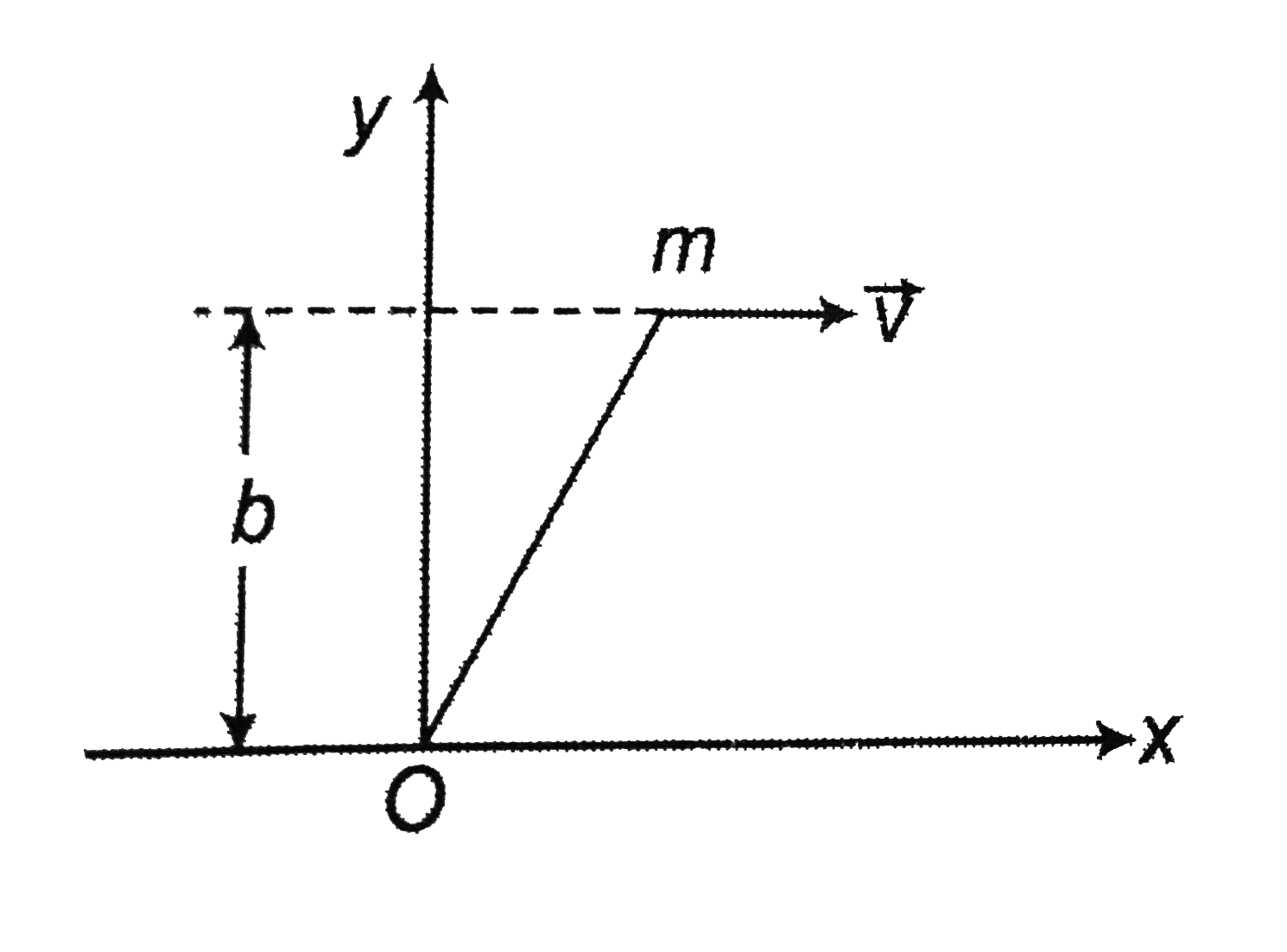
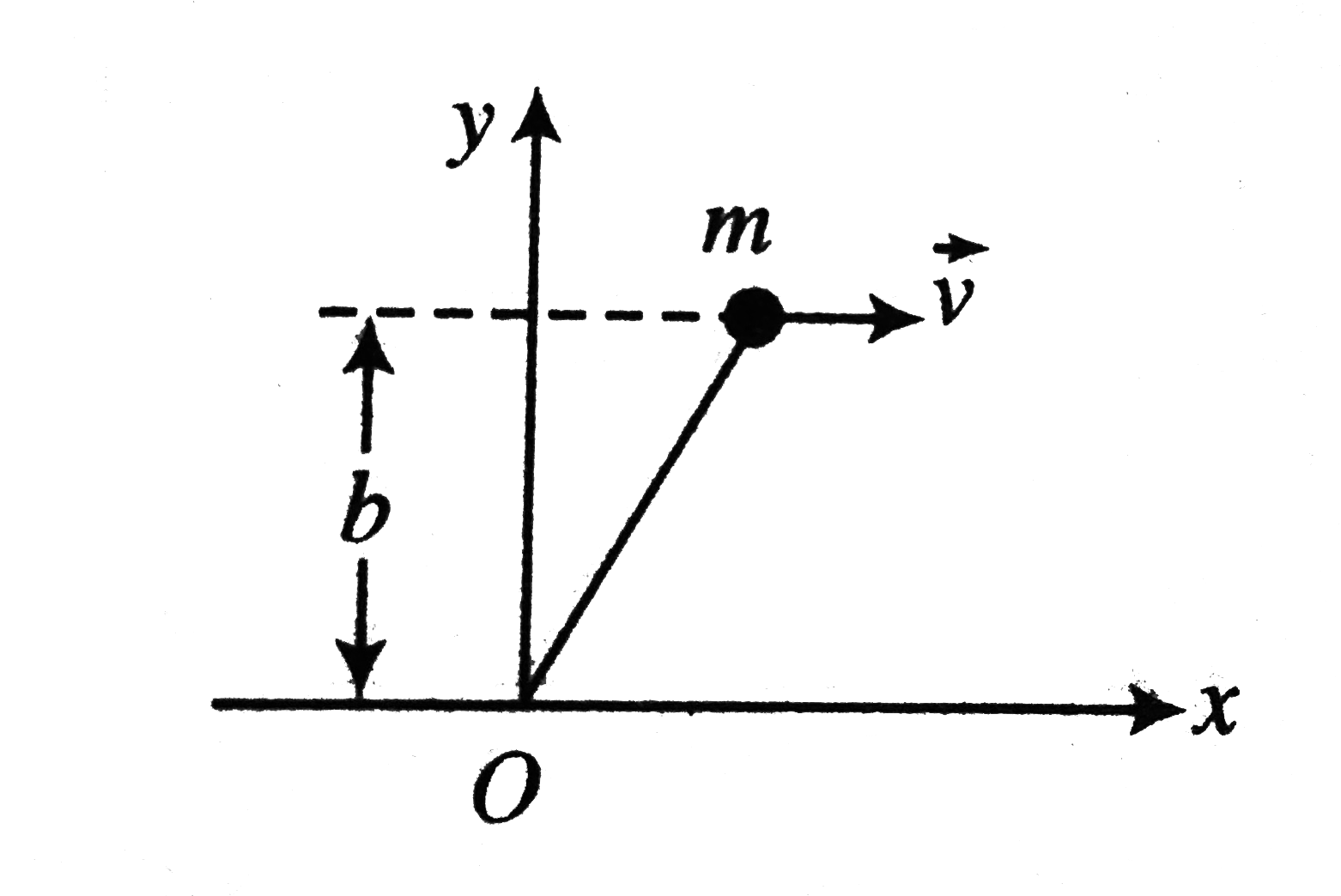
- If the particle of mass m is moving with constant velocity v parallel ...
Text Solution
|