Home
Class 11
PHYSICS
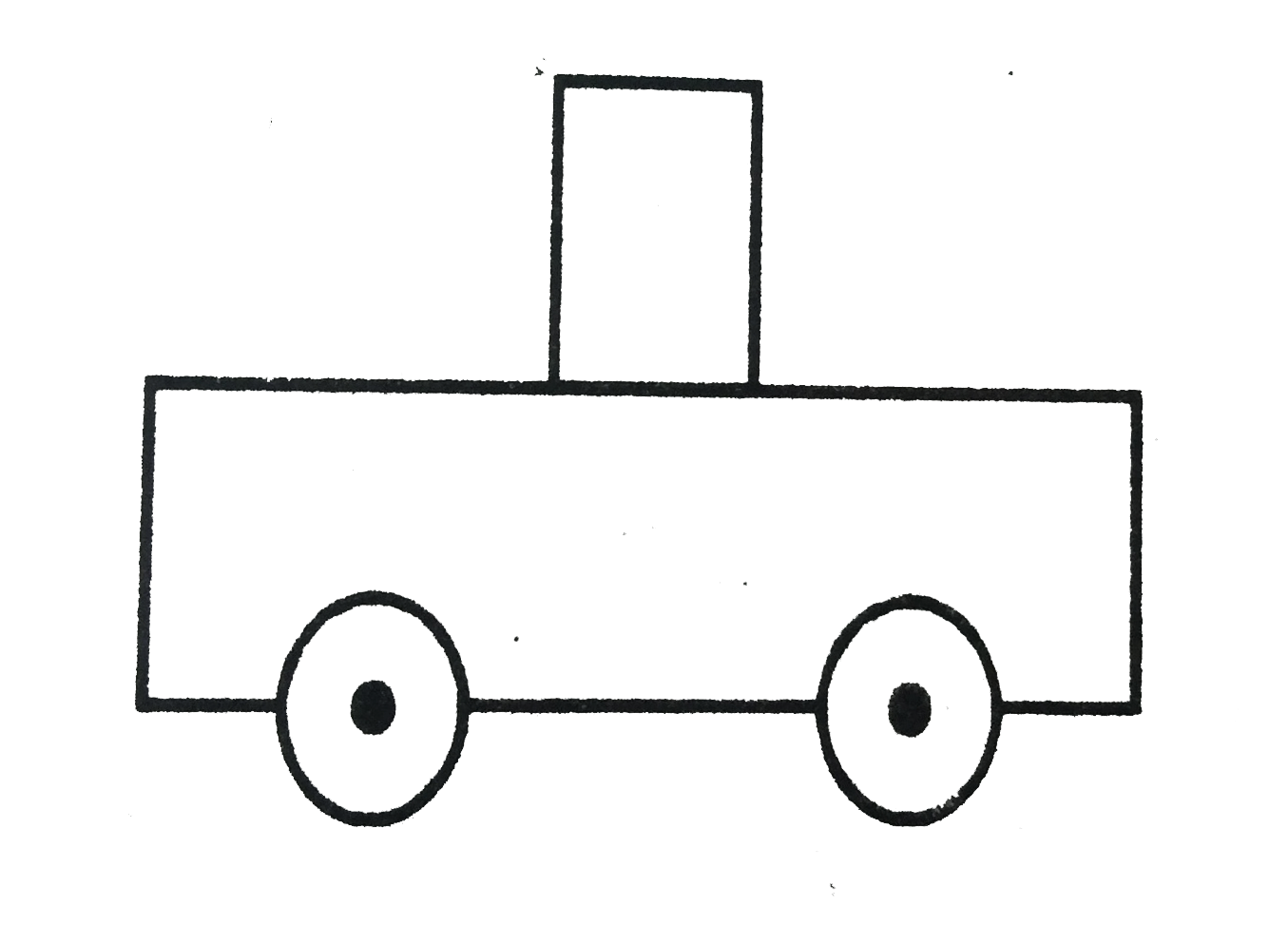
A uniform cylinder rests on a cart as sh...

A uniform cylinder rests on a cart as shown. The coefficient of static friction between the cylinder and the cart is `0.5` If the cylinder is `4 cm` in diameter and `10 cm` in height, which of the following is the minimum acceleration of the cart needed to cause the cylinder to tip over ?
.

Text Solution

Verified by Experts

The correct Answer is:
4

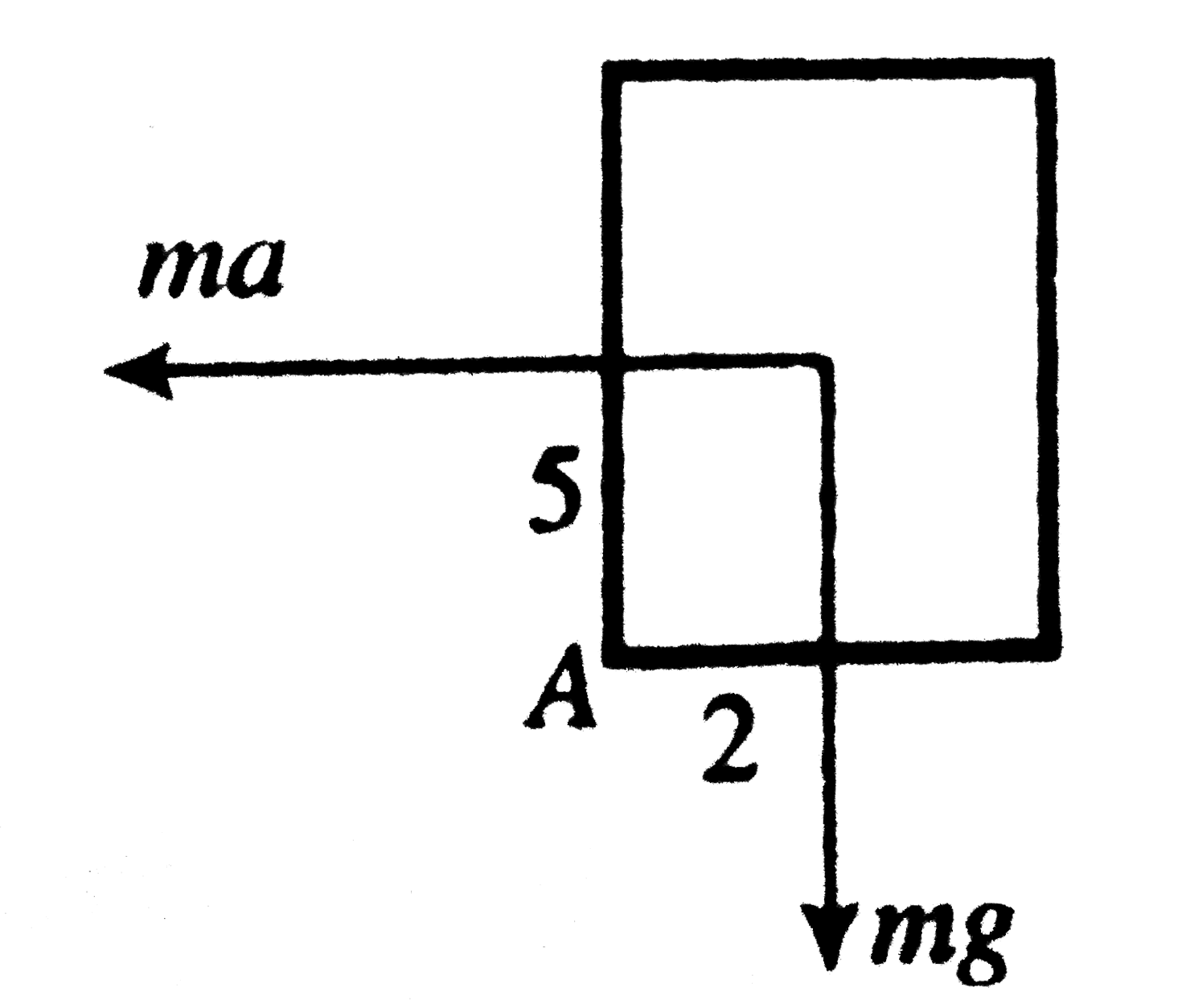
Maximum acceleration of cart so that cylinder does not slip: `a_(m)=mug=0.5xx10=5ms^(-2)`
For tipping over : let accelerationn of cart a.

considering torque about `A`:
`Maxxgemgxx2`
`implies age2g/5=4ms^(-2)`
Promotional Banner

Topper's Solved these Questions

  • RIGID BODY DYNAMICS 1

    CENGAGE PHYSICS|Exercise Linked Comprehension|28 Videos
  • PROPERTIES OF SOLIDS AND FLUIDS

    CENGAGE PHYSICS|Exercise INTEGER_TYPE|2 Videos
  • RIGID BODY DYNAMICS 2

    CENGAGE PHYSICS|Exercise Interger|2 Videos

Similar Questions

Explore conceptually related problems

A block of mass m is in contact with the cart C as shown in The coefficient of static friction between the block and the cart is mu The acceleration a of the cart that will prevent the block from falling satisfies .

A horizontal uniform rod of mass 'm' has its left end hinged to the fixed incline plane, while its right end rrests on the top of a uniform cylinder of mass 'm' which in turn is at rest on the fixed inclined plane as shown. The coefficient of friction between the cylinder and rod, and between the cylinder and inclined plane, is sufficient to keep the cylinder at rest. The magnitude of normal reaction exerted by the inclinded plane on the cylinder is :

A block of mass m is in contact with the cart C as shown in the figure The coefficient of static friction between the block and the cart is mu . The acceleration alpha of the cart that will prevent the block from falling satisfies.

The height of a cylnder is 14 cm and its diameter is 10 cm. The volume of the cylinder is

A horizontal uniform rod of mass 'm' has its left end hinged to the fixed incline plane, while its right end rrests on the top of a uniform cylinder of mass 'm' which in turn is at rest on the fixed inclined plane as shown. The coefficient of friction between the cylinder and rod, and between the cylinder and inclined plane, is sufficient to keep the cylinder at rest. The ratio of magnitude of frictional force on the cylinder due to the rod and the magnitude of frictional force on the cylinder due to the inclined plane is :

The volume of the cylinder whose height is 14 cm and diameter of base 4 cm, is

A horizontal uniform rod of mass 'm' has its left end hinged to the fixed incline plane, while its right end rrests on the top of a uniform cylinder of mass 'm' which in turn is at rest on the fixed inclined plane as shown. The coefficient of friction between the cylinder and rod, and between the cylinder and inclined plane, is sufficient to keep the cylinder at rest. The magnitude of normal reaction exerted by the rod on the cylinder is

Figure shows a vertical force applied tangentially to a uniform cylinder of weight F_(g) . The coefficient of static friction between the cylinder and all surfaces is 0.500 . In terms of F_(g) , find the maximum force P that can be applied that does not cause the cylinder to rotate.

Figure shows a vertical force applied tangentially to a uniform cylinder of weight F_(g) . The coefficient static friction between the cylinder and both surface is 0.500 . In terms of F_(g) , find the maximum force P that can be applied that does not cause the cylinder to rotate. .

A cart of mass M has a block of mass m in contact with it as shown in the figure-2.133. The coefficient of friction between the block and the cart is mu . What is the minimum acceleration of the cart so that the block m does not fall ?

