Home
Class 12
CHEMISTRY
Write notes on proteins....

Write notes on proteins.

Text Solution

Verified by Experts
Proteins : A poly peptide with more than hundred amino acid residues, having molecular mass higher than 10,000 unita is called a protein. Eg: keratin, myosin, insulin.
With respect to peptide bond proteins clessified into two types.
1) Fibrous proteins 2) Globular proteins.
When the chains of polypeptide coil around to give a spherical shape then globular proteins are formed. These are usually soluble in water. Eg: insulin and albumins.
When the poly peptide chains run parallel and are held together by hydrogen and disulphide bonds then fibre-like structure is formed . These are called fibrous proteins. These are insoluble in water . Eg : keratin, myosin.
Protein Denaturation : The phenomenon of disorganization of native protein structure is known as denaturation . Denaturation results in the loss of secondary , tertiary and quaternary structure of proteins. This involves a change in physical, chemical and biological properties of protein molecules.
Agents of denaturation :
Physica agents - heat , violent shaking , X - rays , UV - radiation
Chemical agents - Acids, alkalies, organic solvents, urea , salt of heavy metals.
Proteins structure and shapes are studied at four different levels as
i) primary ii) secondary iii) tertiary iv) quaternary structures
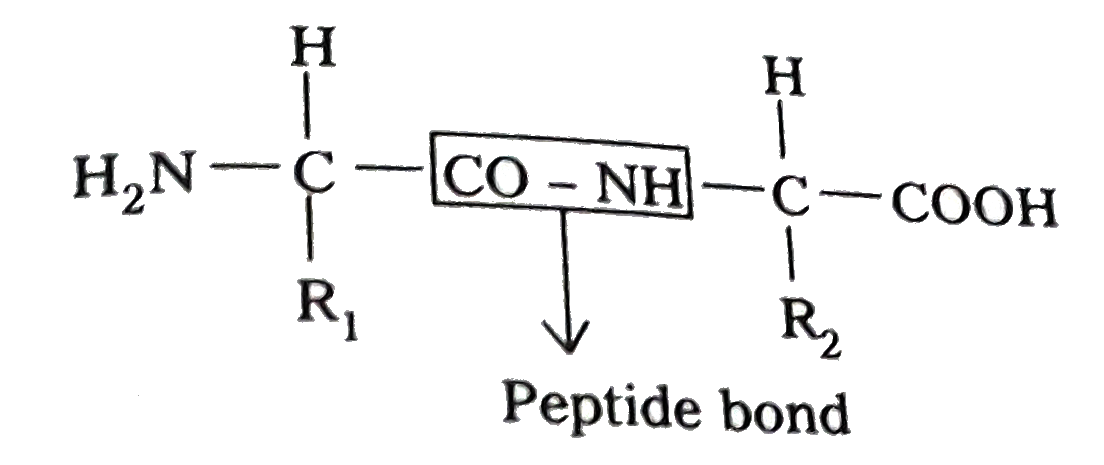
i) Primary structure : The primary structure of protein is defined as the linear sequence of amino acid residues making up its polypeptide chain . Proteins may be formed of one or more polypeptide chains. The amino acid residues are linked by peptide bonds. The peptide bond is formed between carboxyl group of one amino acid and amino group of adjacent amino acid
Eg: Fibroin of silk

`R_1` = amino acid 1 `R_2` - amino acid 2
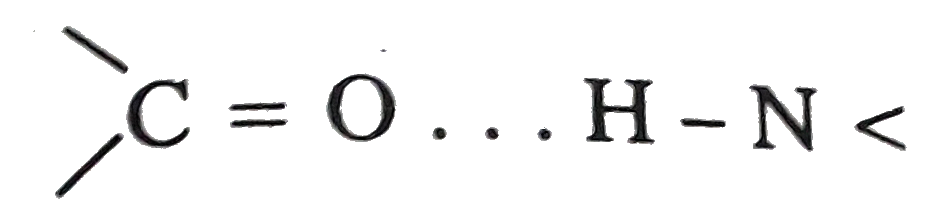
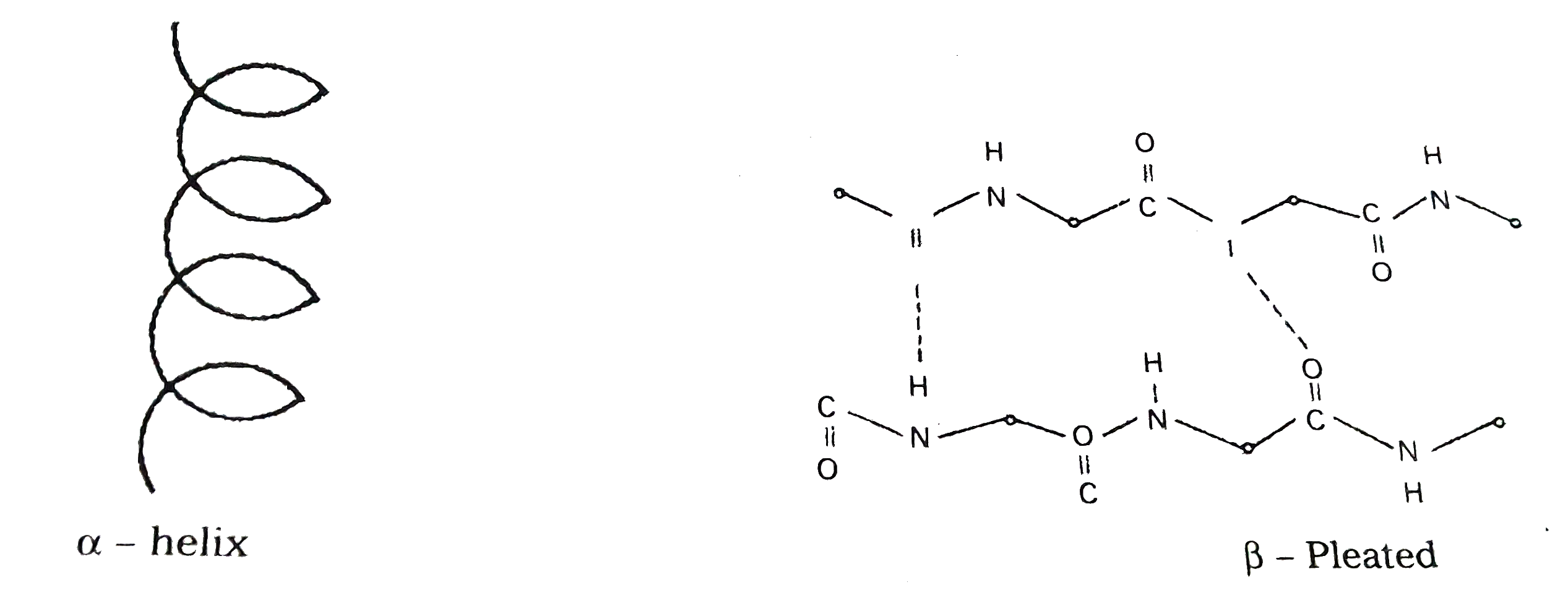
ii) Secondary structure : the secondary structure explain the shape of the polypeptide chain. It is derived from the primary structure by the formation of hydrogen bond interactions between amino acid residues.

Disulfide bonds also occurs either in same chain or between polypeptide chains. The secondary structure is classified into two types namely helical struture and pleated sheets.
Eg: Keratin of hair

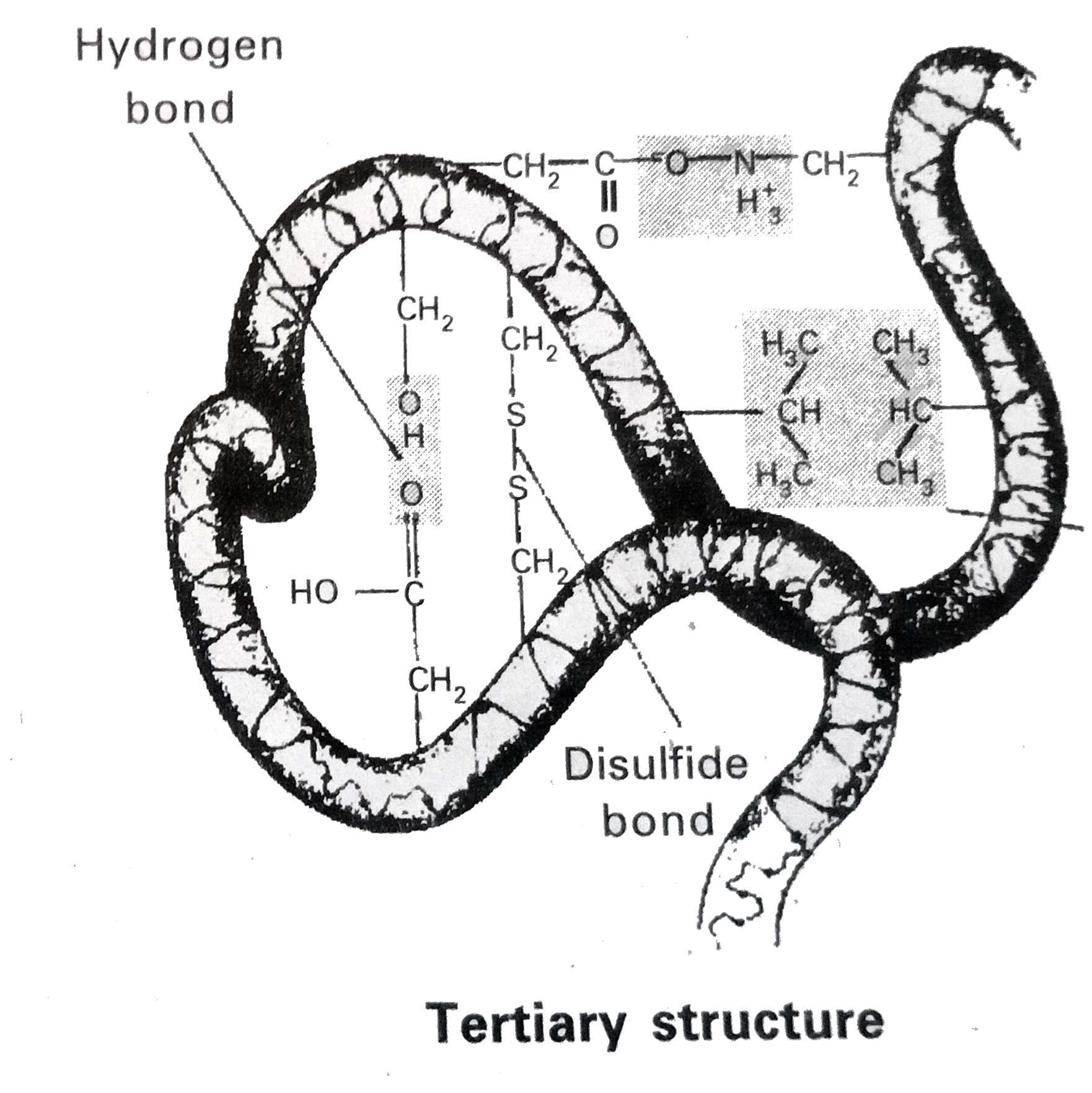
iii) Tertiary structure : tertiary structure is exhibited by proteins having only one polypeptide chain. The three dimesional structure of a protein is referred to as tertiary structures. Fibrous and globular proteins are formed by tertiray structures. Various bonds are responsible for tertiary structure.

1) Hydrophobic interactions
2) Hydrogen bonds
3) Ionic or electrostatic interactions
5) Vander waal forces
e.g : Myoglobin, Ribonuclease
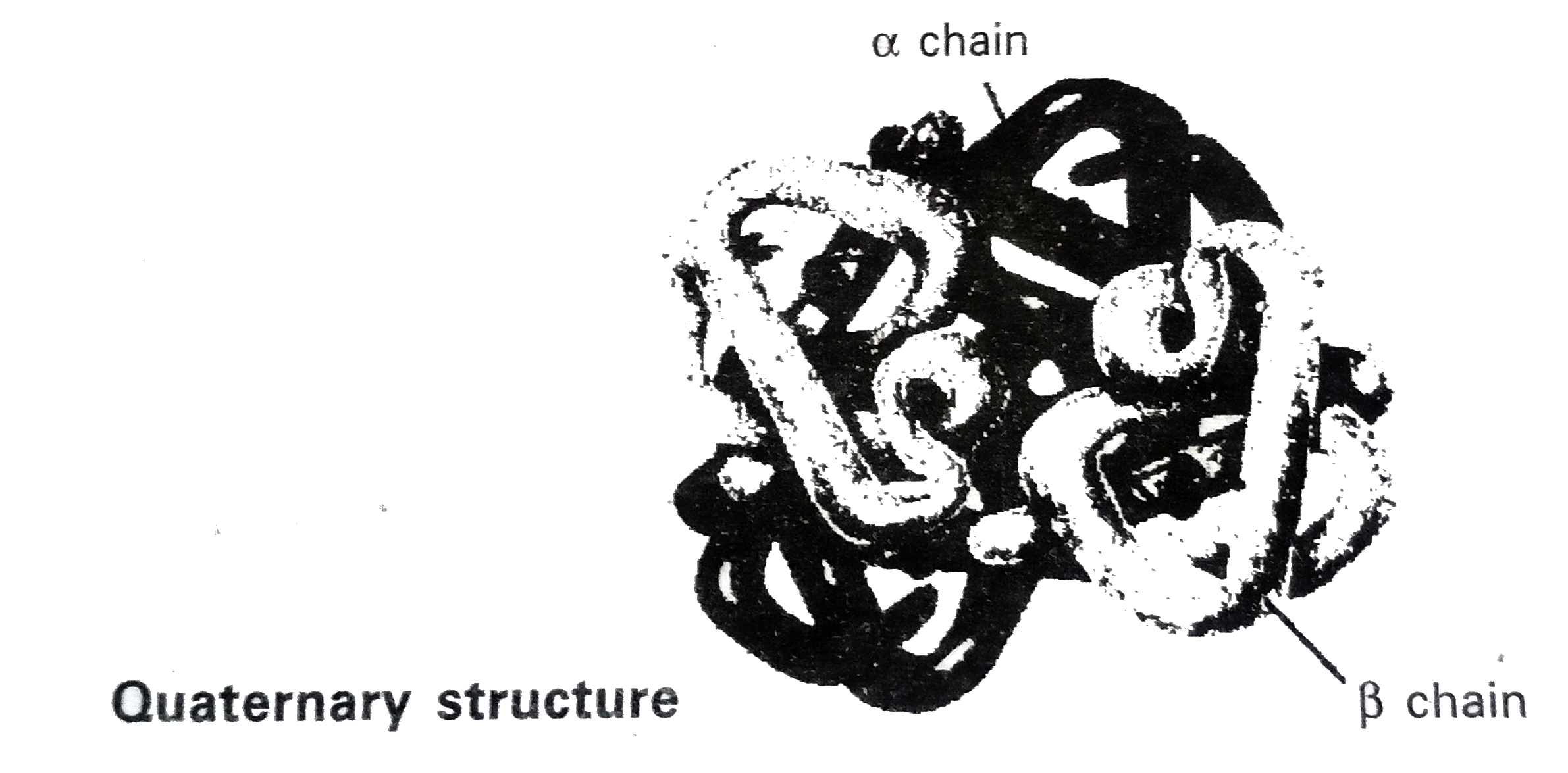
iv) Quaternary structure : Two or more polypeptide chains associate together to protect quaternary structure . A protein with a quaternary structure is referred to as an oligomes
e.g : Hemoglobin
Promotional Banner

Topper's Solved these Questions

  • BIOMOLECULES

    VIKRAM PUBLICATION ( ANDHRA PUBLICATION)|Exercise INTEX QUESTIONS|7 Videos
  • BIOMOLECULES

    VIKRAM PUBLICATION ( ANDHRA PUBLICATION)|Exercise DAM SURE VSAQ|18 Videos
  • BIOMOLECULES

    VIKRAM PUBLICATION ( ANDHRA PUBLICATION)|Exercise DAM SURE SAQ|10 Videos
  • ANDHRA PRADESH MARCH-2019

    VIKRAM PUBLICATION ( ANDHRA PUBLICATION)|Exercise SECTION-C|5 Videos
  • CHEMISTRY IN EVERYDAY LIFE

    VIKRAM PUBLICATION ( ANDHRA PUBLICATION)|Exercise Intex questions|5 Videos

Similar Questions

Explore conceptually related problems

Write notes on vitamins.

Write notes on importance of carbohydrates.

Write notes on fructose

Write notes on maltose

Write notes on lactose

Write notes on starch

Write notes on Intermolecular forces

Write notes on antispeptics and sisinfectants.