Home
Class 12
PHYSICS
A spherical conductor A contains two sph...

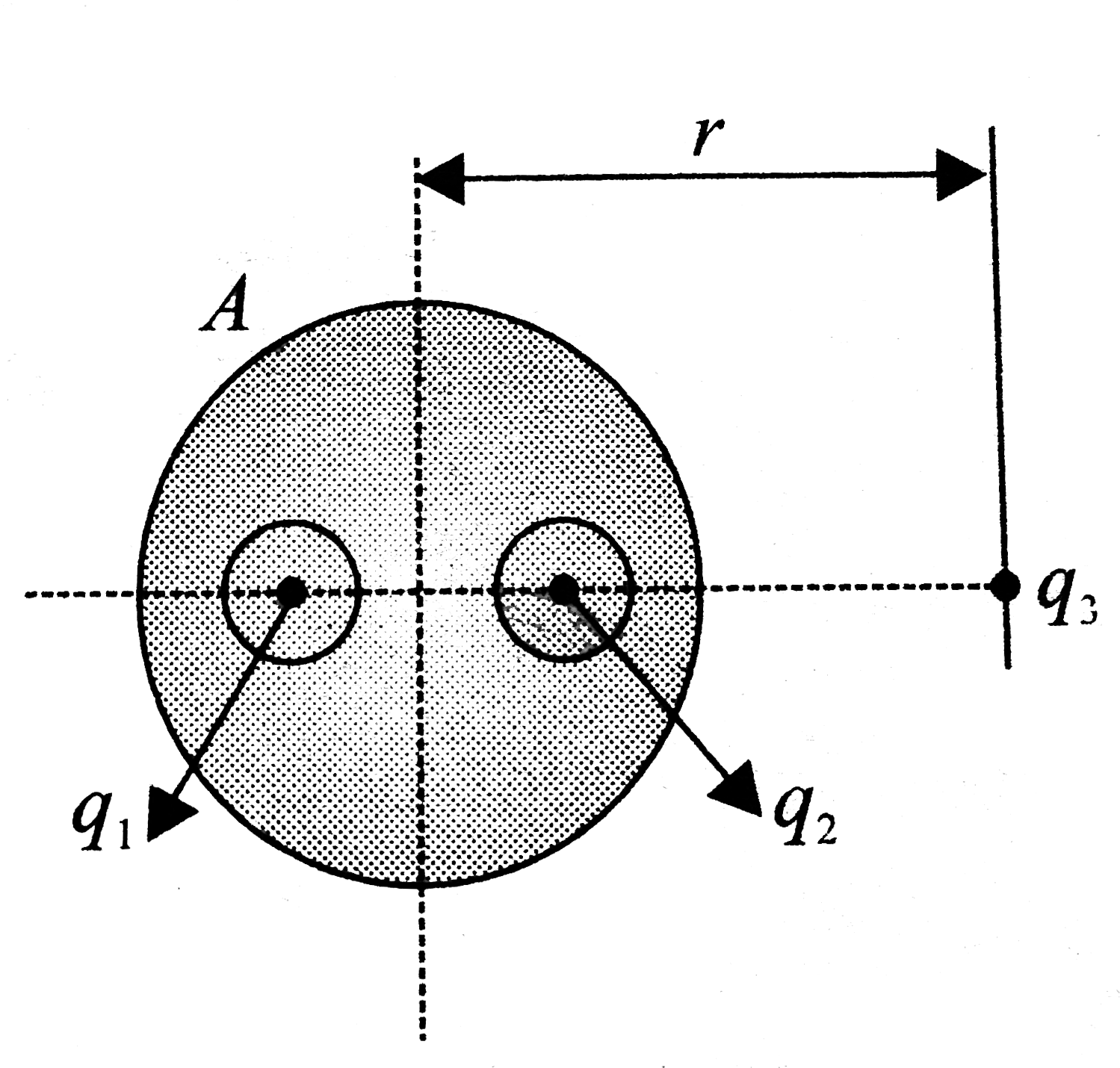
A spherical conductor `A` contains two spherical cavities as shown in Fig.2.127. The total charge on conductor itself is zero . However , there is a point charge `q_(1)` at the center of one cavity and `q_(2)` at the center of the other cavity . Another charge `q_(3)` is placed at a large distance `r` from the center of the spherical conductor.

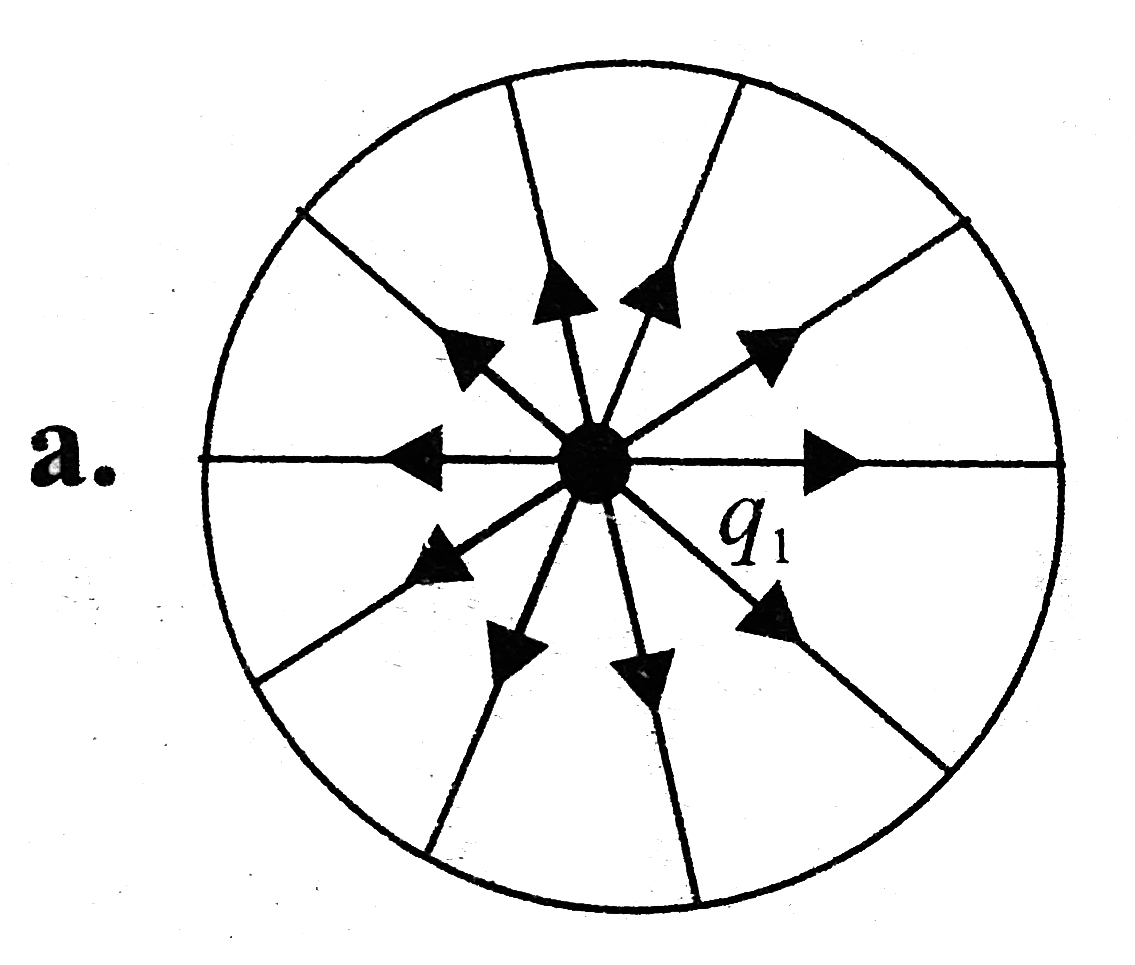
If `q_(1)` is displaced from its center slightly (being always inside the same cavity ), then the correct representation of field lines inside the same cavity is

A

B

C

There will be no field lines inside the cavity.

D

Text Solution

Verified by Experts

The correct Answer is:

B

Thereis charge inside cavity , so field lines will be present , but the potential at surface of conductor is same everywhere . So field lines should be perpendicular .
Promotional Banner

Topper's Solved these Questions

  • ELECTRIC FLUX AND GAUSS LAW

    CENGAGE PHYSICS|Exercise Subjective type|7 Videos
  • ELECTRIC FLUX AND GAUSS LAW

    CENGAGE PHYSICS|Exercise MCQ s|38 Videos
  • ELECTRIC FLUX AND GAUSS LAW

    CENGAGE PHYSICS|Exercise Multiple Correct|8 Videos
  • ELECTRIC CURRENT AND CIRCUIT

    CENGAGE PHYSICS|Exercise Interger|8 Videos
  • ELECTRIC POTENTIAL

    CENGAGE PHYSICS|Exercise DPP 3.5|14 Videos

Similar Questions

Explore conceptually related problems

A spherical conductor A contains two spherical cavities as shown in Fig.2.127. The total charge on conductor itself is zero . However , there is a point charge q_(1) at the center of one cavity and q_(2) at the center of the other cavity . Another charge q_(3) is placed at a large distance r from the center of the spherical conductor. The force acting on conductor A will be

A spherical conductor A contains two spherical cavities as shown in Fig.2.127. The total charge on conductor itself is zero . However , there is a point charge q_(1) at the center of one cavity and q_(2) at the center of the other cavity . Another charge q_(3) is placed at a large distance r from the center of the spherical conductor. Which of the following statements are true ?

Electric potential at the center ofa charged hollow spherical conductor is

The electric field intensity at a point located at distance r(r lt R) from the center of a spherical conductor (radius R) charged Q will be-

A charge q is placed at O in the cavity in a sphereical uncharged conductor. Points S is outside the conductor. If q is displaced from O towards S (still remaining within the cavity)

A point charge +q is held at a distance R from the centre of an uncharged spherical conductor of radius a(a lt R) . Calculate the potential of the conductor in the presence of q.

A conducting sphere of radius R_(2) has a spherical cavity of radius R_(1) which is non concentric with the sphere. A point charge q_(1) is placed at a distance r from the centre of the cavity. For this arrangement, answer the following questions. If q_(1) is shifted to the centre of the cavity, then: (choose the correct alternative)

CENGAGE PHYSICS-ELECTRIC FLUX AND GAUSS LAW-Comprehension
  1. A small conducting spherical shell with inner radius a and outer radiu...

    Text Solution

    |

  2. Consider the previous problem , let the outer shell have the charge -...

    Text Solution

    |

  3. Consider the previous problem , let the outer shell have the charge -...

    Text Solution

    |

  4. Consider the previous problem , let the outer shell have the charge -...

    Text Solution

    |

  5. Consider the previous problem , let the outer shell have the charge -...

    Text Solution

    |

  6. Consider the previous problem , let the outer shell have the charge -...

    Text Solution

    |

  7. Consider the previous problem , let the outer shell have the charge -...

    Text Solution

    |

  8. Two spherical cavities of radii a and b are hollowed out from the inte...

    Text Solution

    |

  9. Two spherical cavities of radii a and b are hollowed out from the inte...

    Text Solution

    |

  10. Positive and negative charges of equal magnitude lie along the symmetr...

    Text Solution

    |

  11. Positive and negative charges of equal magnitude lie along the symmetr...

    Text Solution

    |

  12. There are two nonconducting spheres having uniform volume charge densi...

    Text Solution

    |

  13. There are two nonconducting spheres having uniform volume charge densi...

    Text Solution

    |

  14. Gauss's law and Coulomb's law , although expressed in different forms ...

    Text Solution

    |

  15. Gauss's law and Coulomb's law , although expressed in different forms ...

    Text Solution

    |

  16. Gauss's law and Coulomb's law , although expressed in different forms ...

    Text Solution

    |

  17. Gauss's law and Coulomb's law , although expressed in different forms ...

    Text Solution

    |

  18. A spherical conductor A contains two spherical cavities as shown in Fi...

    Text Solution

    |

  19. A spherical conductor A contains two spherical cavities as shown in Fi...

    Text Solution

    |

  20. A spherical conductor A contains two spherical cavities as shown in Fi...

    Text Solution

    |
