Home
Class 12
PHYSICS
A vessel ABCD of 10 cm width has two sma...

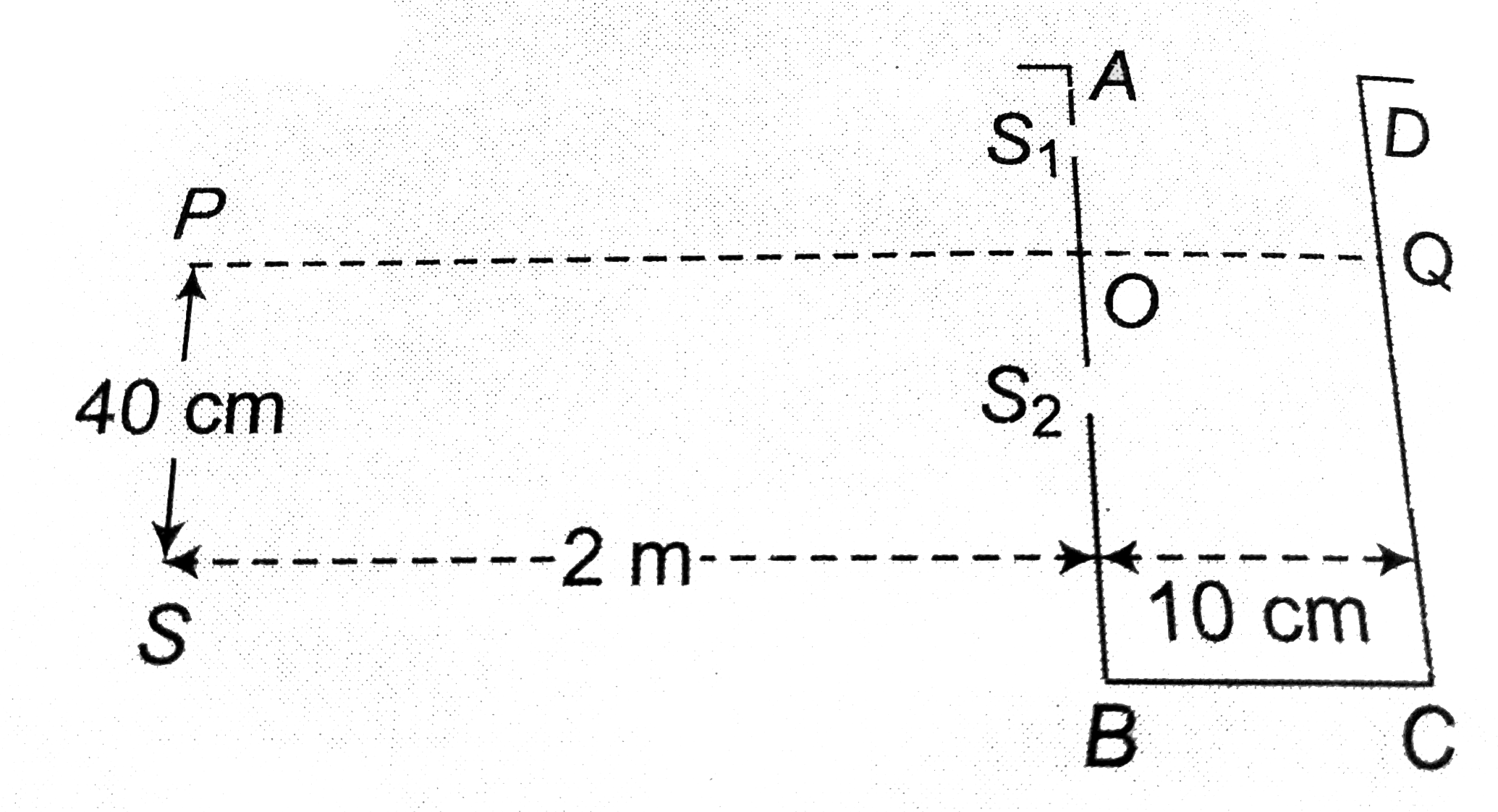
A vessel ABCD of `10 cm` width has two small slits `S_(1)` and `S_(2)` sealed with idebtical glass plates of equal thickness. The distance between the slits is `0.8 mm`. POQ is the line perpendicular to the plane AB and passing through O, the middle point of `S_(1)` and `S_(2)`. A monochromatic light source is kept at `S, 40 cm` below `P` and `2 m` from the vessel, to illuminate the slits as shown in the figure. Calculate the position of the central bright fringe on the other wall CD with respect of the line `OQ`. Now, a liquid is poured into the vessel and filled up to `OQ`. The central bright fringe is fiund to be at Q. Calculate the refractive index of the liquid.

Text Solution

Verified by Experts
Given `y_(1) = 40 cm, D_(1) = 2 m = 200 cm, D_(2) = 10cm`.
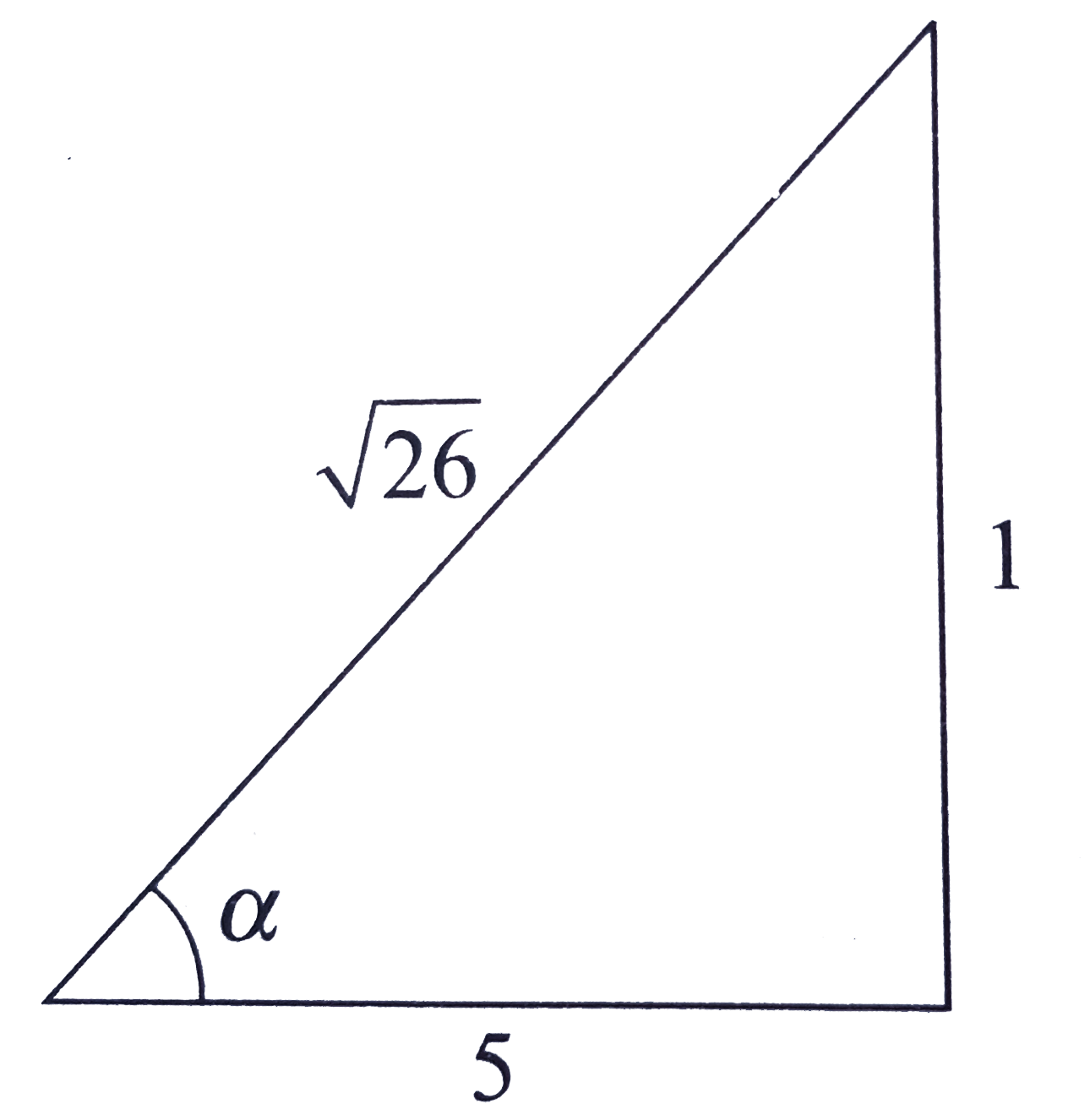
` tan alpha = (y_(1))/(D_(1)) = (40)/(200) = (1)/(5)`
` alpha = tan^(-1) ((1)/(5))`
` sin alpha = (1)/(sqrt 26) = (1)/(5) = tan alpha` (see figure)
`(BMS_V04_C02_S01_043_S01.png" width="80%">
Path difference between `S S_(1)` and `S S_(2)` is
`Delta x_(1) = d sin alpha = (0.8 mm) ((1)/(5))`
`= 0.16 mm` (i)
Now, let at point R on the screen, central bright fringe is observed (i.e., net path difference = 0).
Path differecne between `S_(2) R` and `S_(1) R` would be
` Delta x_(2) = S_(2) R - S_(1) R`
`= d sing theta`
Central birght fringe will be observed when net path difference in zero.
`Delta x_(2) - Delta x_(1) = 0`
`Delta x_(2) = Delta x_(1)`
`d sin theta = 0.16`
`(0.8) sin theta = 0.16`
`sin theta = (0.16)/(0.8) = (1)/(5)`
`tan theta = (1)/(sqrt 24) ~~ sin theta = (1)/(5)`
Hence, `tan theta = (y_(2))/(D_(2)) = (1)/(5)`
`y_(2) = (D_(2))/(5) = (10)/(5) = 2 cm`
Therefore, central bright fringe is observed at 2 cm above point O on side CD.
`Delta x` at R will be zero if `Delta x_(1) = Delta x_(2)`
`d sin alpha = d sin theta`
`alpha = theta`
`tan alpha = tan theta`
`(y_(1))/(D_(1)) = (y_(2))/(D_(2))`
`y_(2) = (D_(2))/(D_(1)) y_(1) = ((10)/(200)) (40) cm`
`y_(2) = 2cm`
The central bright fringe will be observed at point Q. If the path difference created by the liquid slab of thickness `t = 10 cm` or 100 mm is equal to `Delta x`, so that the net path difference at Q becomes zero, then
`(mu - 1) t = Delta x_(1)`
`implies (mu - 1) (100) = 0.16`
`implies mu-1 = 0.0016`
`implies mu = 1.0016`
Promotional Banner

Topper's Solved these Questions

  • WAVE OPTICS

    CENGAGE PHYSICS|Exercise Exercise 2.1|12 Videos
  • WAVE OPTICS

    CENGAGE PHYSICS|Exercise Exercise 2.2|22 Videos
  • WAVE OPTICS

    CENGAGE PHYSICS|Exercise QUESTION BANK|37 Videos
  • THERMODYNAMICS

    CENGAGE PHYSICS|Exercise QUESTION BANK|34 Videos
  • WAVES

    CENGAGE PHYSICS|Exercise QUESTION BANK|38 Videos

