Home
Class 12
PHYSICS
Most materials have the refractive index...

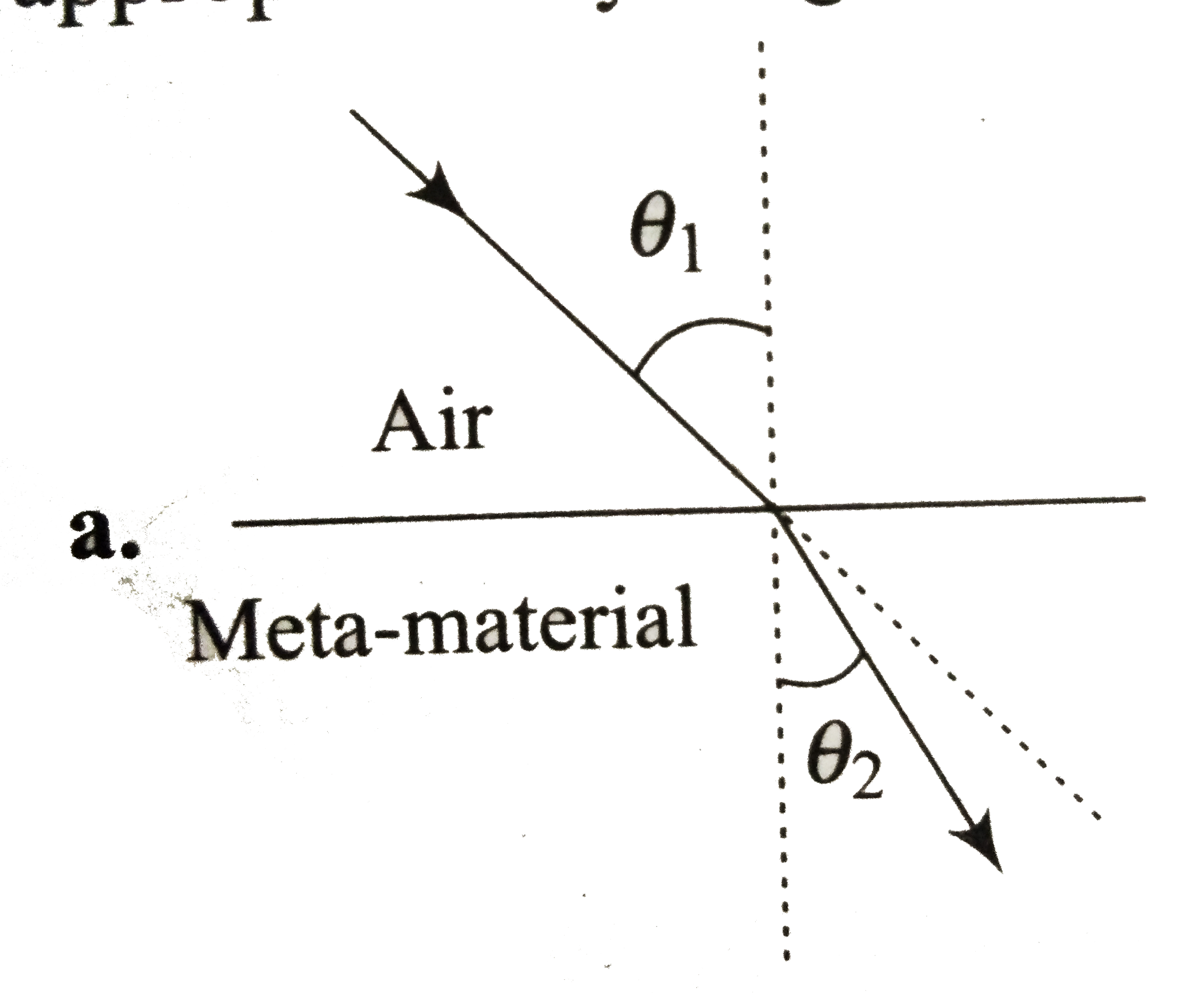
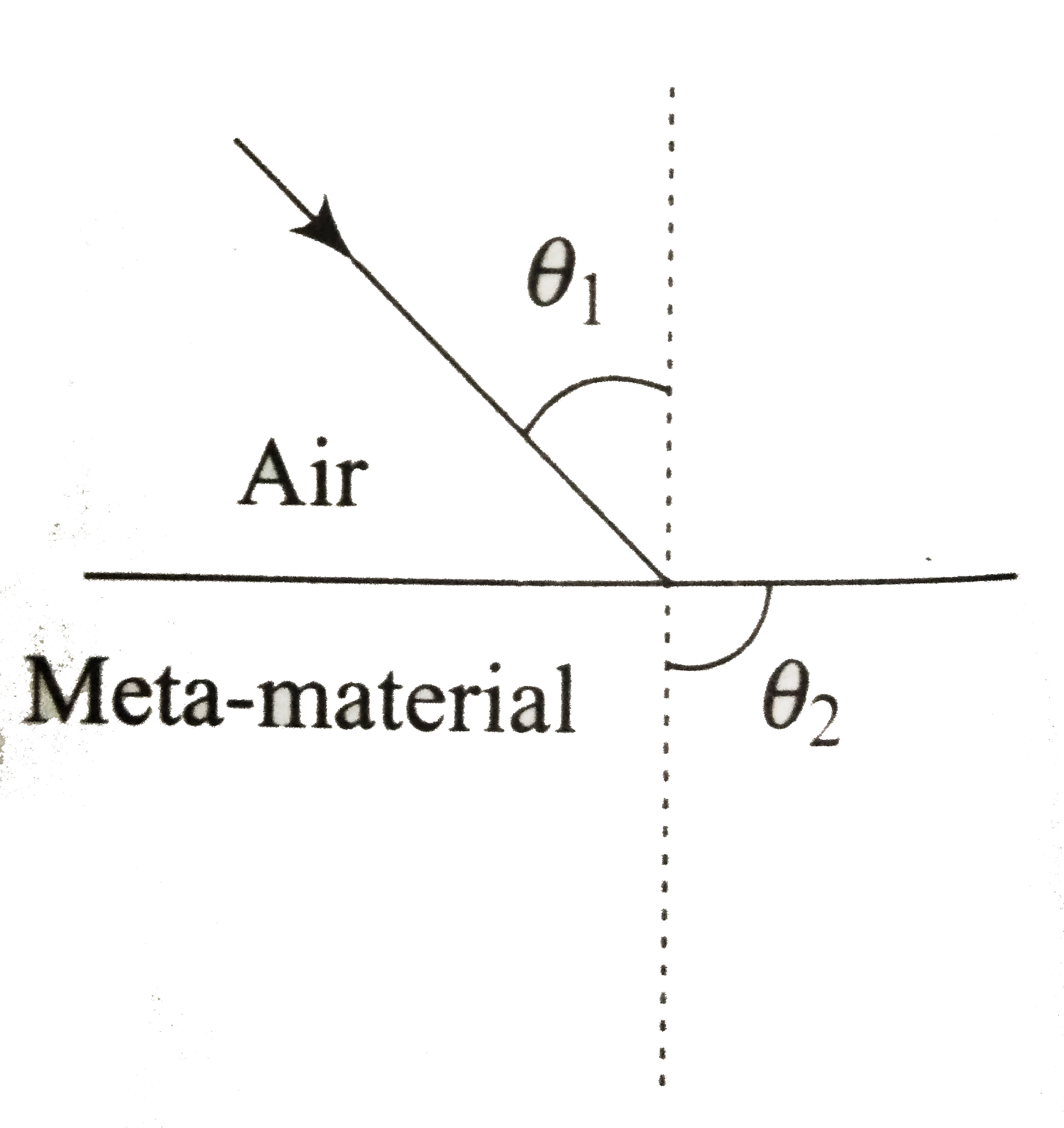
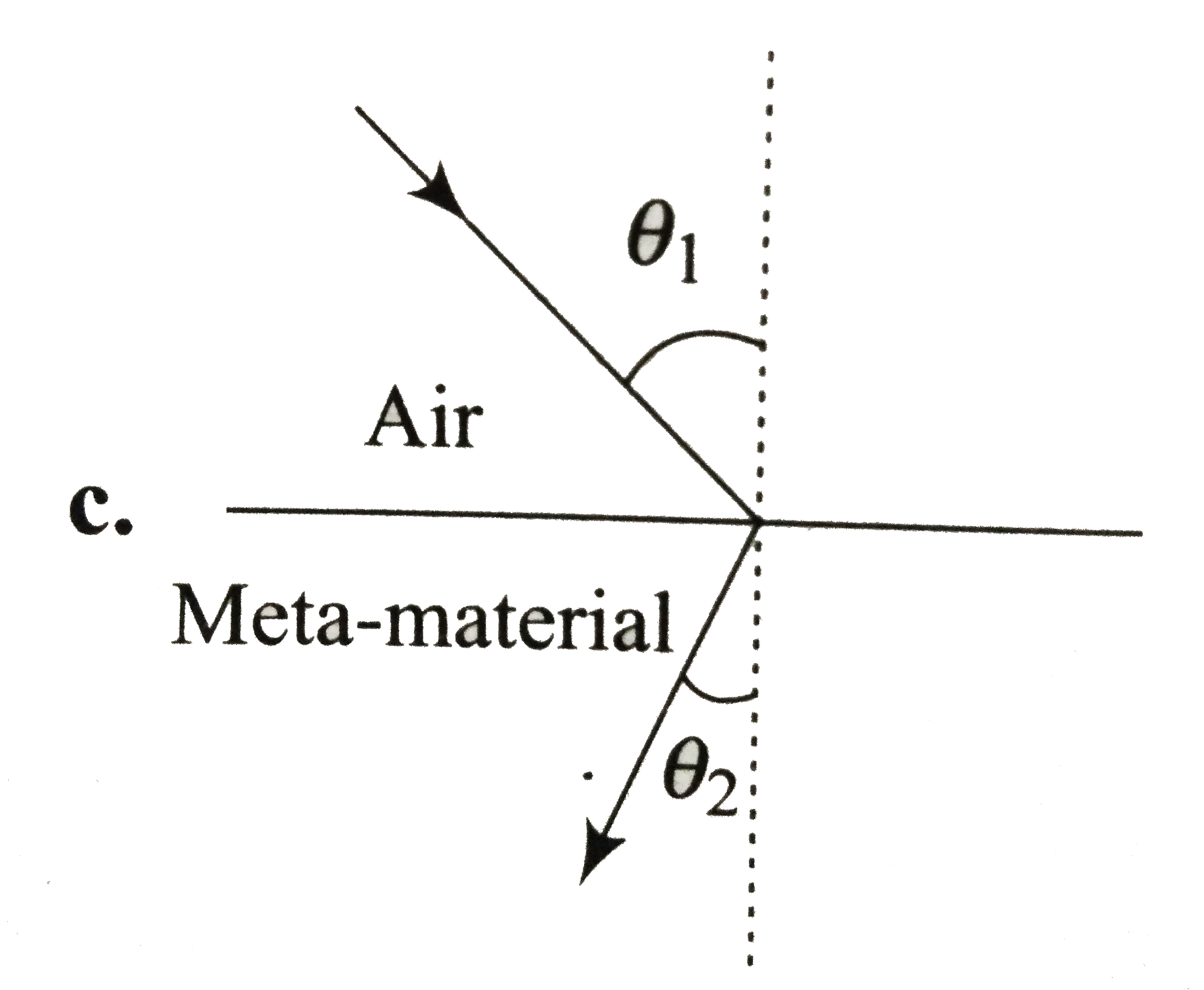
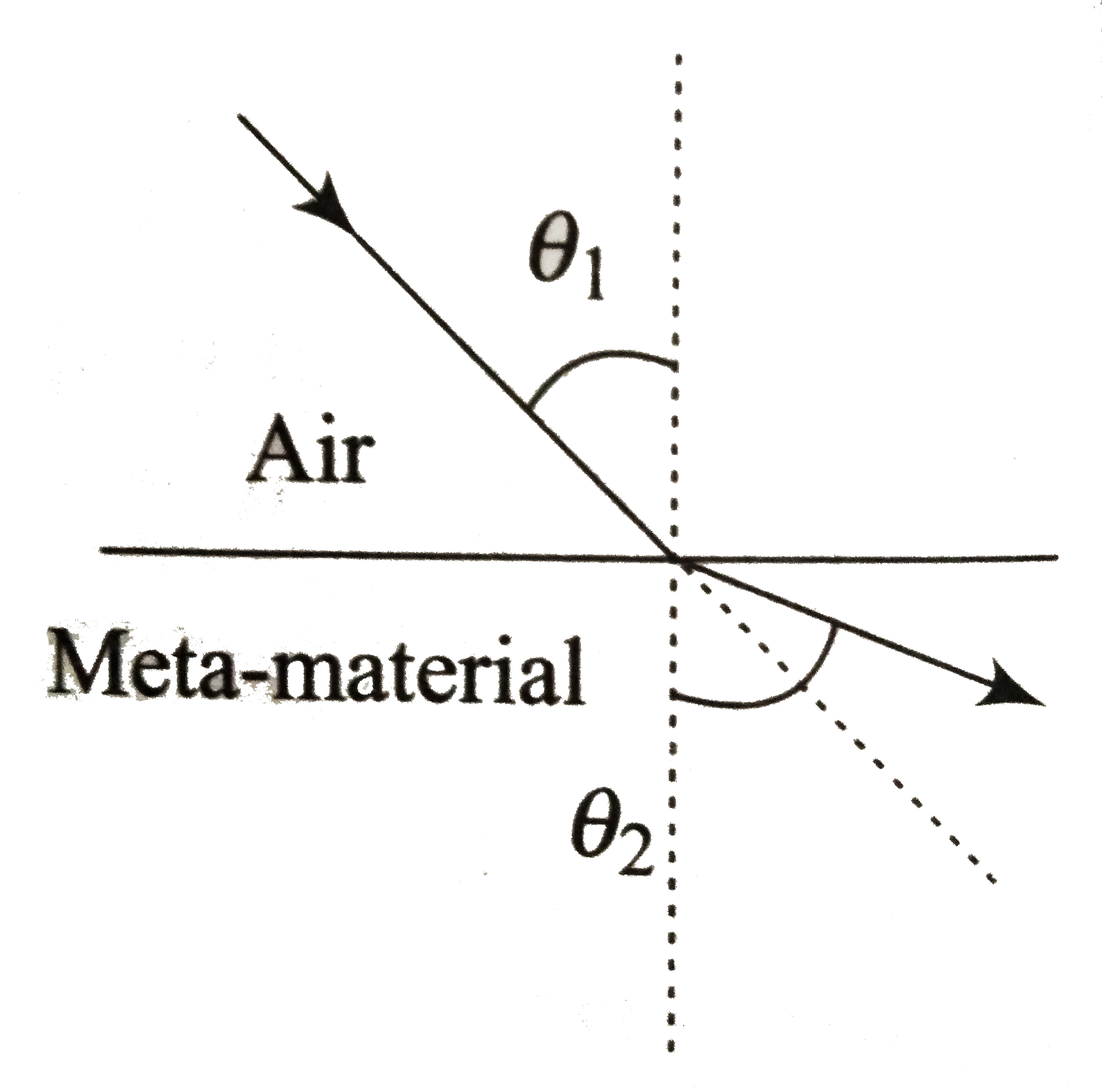
Most materials have the refractive index, `n gt 1`. So, when a light ray from air enters a naturally occuring material, then by Snell's law, `(sin theta_(1))/(sin theta_(2)) = (n_(1))/(n_(2))`, it is understood that the refracted ray bends towards the normal. But it never emerges on the same side of the normal as the incident ray. According to electromagnetism, the refractive index of the medium is given by the relation, `n = (c // v) = +- sqrt(epsilon_(r ), mu_(r ))`, where `c` is the speed of the electromagnetic waves in vacuum, `v` its speed in the medium, `epsilon_( r)` and `mu_( r)` are negative, one must choose the negative root of `n`. Such negative refractive index materials can now be artifically prepared and are called meta-materials. They exhibit significantly different optical behaviour, without violating any physical laws. Since `n` is negative, it results in a change in the direction of propagation of the refracted light. However, similar to normal materials, the frequency of light remains unchanged upon refraction even in meta-materials.
Answer the following questions :
For light incident from air on a meta-material, the appropriate ray diagram is

A

B

C

D

Text Solution

Verified by Experts

The correct Answer is:

c

Metamaterial has a negative refractive index.
`:. sin theta_(2) = (n_(1))/(n_(2)) sin theta_(1) implies n_(2)` is negative.
`:. theta_(2)` is negative.
Promotional Banner

Topper's Solved these Questions

  • WAVE OPTICS

    CENGAGE PHYSICS|Exercise Matching Column Type|2 Videos
  • WAVE OPTICS

    CENGAGE PHYSICS|Exercise Comprehension Type|16 Videos
  • WAVE OPTICS

    CENGAGE PHYSICS|Exercise MCQ|2 Videos
  • THERMODYNAMICS

    CENGAGE PHYSICS|Exercise QUESTION BANK|34 Videos
  • WAVES

    CENGAGE PHYSICS|Exercise QUESTION BANK|38 Videos

Similar Questions

Explore conceptually related problems

Most materials have the refractive index, n gt 1 . So, when a light ray from air enters a naturally occuring material, then by Snell's law, (sin theta_(1))/(sin theta_(2)) = (n_(1))/(n_(2)) , it is understood that the refracted ray bends towards the normal. But it never emerges on the same side of the normal as the incident ray. According to electromagnetism, the refractive index of the medium is given by the relation, n = (c // v) = +- sqrt(epsilon_(r ), mu_(r )) , where c is the speed of the electromagnetic waves in vacuum, v its speed in the medium, epsilon_( r) and mu_( r) are negative, one must choose the negative root of n . Such negative refractive index materials can now be artifically prepared and are called meta-materials. They exhibit significantly different optical behaviour, without violating any physical laws. Since n is negative, it results in a change in the direction of propagation of the refracted light. However, similar to normal materials, the frequency of light remains unchanged upon refraction even in meta-materials. Answer the following questions : Choose the correct statement.

The first law of refraction states that the incident and refracted rays are in the same ____as the normal.

When a ray of light is incident normally on one refracting surface of an equilateral prism (Refractive index of the material of the prism =1.5

A ray of light falls on a material body at an incident angle of 30^(@) and refracted at angle 60^(@) . What is the refractive index of the material?

A ray of light falls on a material body at an incident angle 60^(@) and refracted at angle 30^(@) . What is the refractive index of the material?
