

Home
Class 11
CHEMISTRY
The rate of SN^2 reaction depends on the...

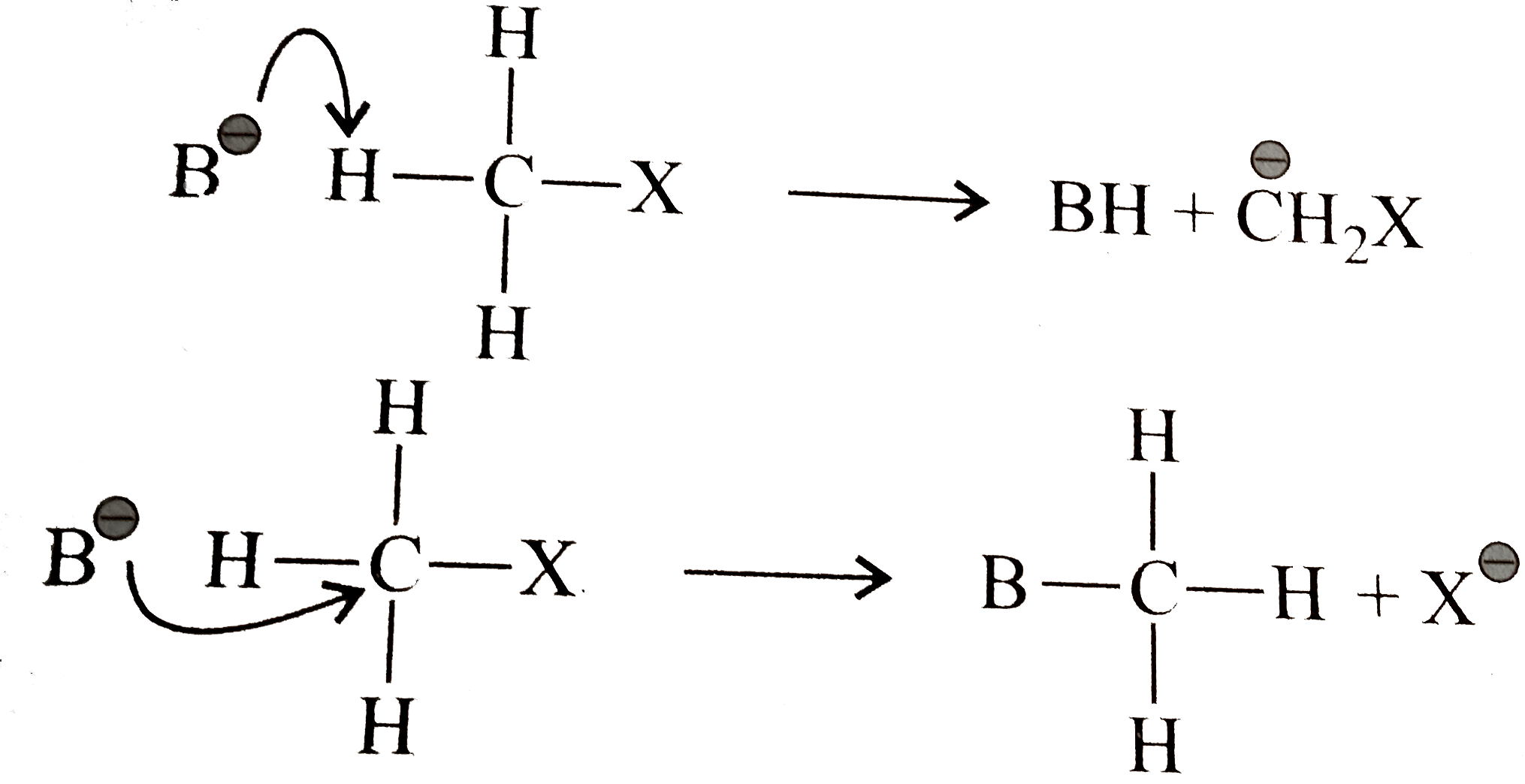
The rate of `SN^2` reaction depends on the effectiveness of the nucleophile in ejecting the leaving group. Nucleophilicity is the affinity for `C` atom, while basicity is the affinity for proton.

In both cases, a new bond is formed. If a new bond is formed between the anion and proton, the specied acts as a base. If a new bond is formed between the anion and `C` atom, the species acts as nucleophile.
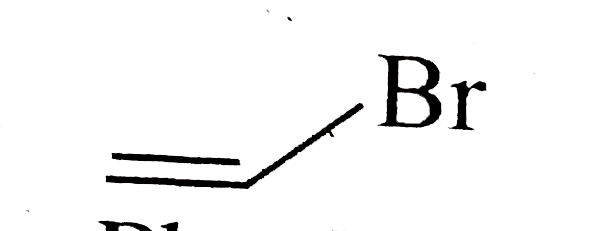
Which of the following compounds gives `SN^1, SN^2`, and `SN^2` mechanisms ?

A

B

C

Ph-I

D

Text Solution

Verified by Experts

The correct Answer is:

B

(b) Allyl halide can undergo `SN^1, SN^2`, and `SN^2'` reactions.
Promotional Banner

Topper's Solved these Questions

  • ORGANIC REACTION MECHANISM

    CENGAGE CHEMISTRY|Exercise Multiple Correct|30 Videos
  • ORGANIC REACTION MECHANISM

    CENGAGE CHEMISTRY|Exercise Single correct|50 Videos
  • ORGANIC REACTION MECHANISM

    CENGAGE CHEMISTRY|Exercise Subjective|19 Videos
  • NCERT BASED EXERCISE

    CENGAGE CHEMISTRY|Exercise Chemical Equilibrium|72 Videos
  • P-BLOCK GROUP 13 - BORON FAMILY

    CENGAGE CHEMISTRY|Exercise Exercise Archives (Subjecive)|9 Videos

Similar Questions

Explore conceptually related problems

The rate of SN^2 reaction depends on the effectiveness of the nucleophile in ejecting the leaving group. Nucleophilicity is the affinity for C atom, while basicity is the affinity for proton. In both cases, a new bond is formed. If a new bond is formed between the anion and proton, the specied acts as a base. If a new bond is formed between the anion and C atom, the species acts as nucleophile. Which of the following is wrong ?

The rate of SN^2 reaction depends on the effectiveness of the nucleophile in ejecting the leaving group. Nucleophilicity is the affinity for C atom, while basicity is the affinity for proton. In both cases, a new bond is formed. If a new bond is formed between the anion and proton, the specied acts as a base. If a new bond is formed between the anion and C atom, the species acts as nucleophile. Which of the following statements is wrong ?

The rate of SN^2 reaction depends on the effectiveness of the nucleophile in ejecting the leaving group. Nucleophilicity is the affinity for C atom, while basicity is the affinity for proton. In both cases, a new bond is formed. If a new bond is formed between the anion and proton, the specied acts as a base. If a new bond is formed between the anion and C atom, the species acts as nucleophile. Which of the following statements is wrong ? Nucleophile order of the following in weakly polar aprotic solvents, e.g., acetone is :

A covalent bond is formed between

A peptide bond is formed between

A new C-C bond is formed in-

In diborane, the banana bond is formed between

A pure covalent bond is formed between :

Glycosidic bond is formed between

CENGAGE CHEMISTRY-ORGANIC REACTION MECHANISM-Comprehension
  1. The rate of SN^2 reaction depends on the effectiveness of the nucleoph...

    Text Solution

    |

  2. The rate of SN^2 reaction depends on the effectiveness of the nucleoph...

    Text Solution

    |

  3. The rate of SN^2 reaction depends on the effectiveness of the nucleoph...

    Text Solution

    |

  4. Which statement is wrong in the formation of (B) from (A).

    Text Solution

    |

  5. Which is correct in the formation of (c) from (A) ?

    Text Solution

    |

  6. Which statement is wrong in the formation of (c) from (A) ?

    Text Solution

    |

  7. In elimination reaction, the major product is either Saytzeff (more-su...

    Text Solution

    |

  8. In elimination reaction, the major product is either Saytzeff (more-su...

    Text Solution

    |

  9. In elimination reaction, the major product is either Saytzeff (more-su...

    Text Solution

    |

  10. In elimination reaction, the major product is either Saytzeff (more-su...

    Text Solution

    |

  11. In elimination reaction, the major product is either Saytzeff (more-su...

    Text Solution

    |

  12. Consider the following reactions : Which of the following are ste...

    Text Solution

    |

  13. Consider the following reactions : Which of the following regiose...

    Text Solution

    |

  14. Consider the following reactions : Syn-addition takes place in :

    Text Solution

    |

  15. Consider the following reactions : Anti-addition takes place in :

    Text Solution

    |

  16. Consider the following reactions : Meso-butan-2,3-diol is formed ...

    Text Solution

    |

  17. Consider the following reactions : Racemic-butan-2,3-diol is form...

    Text Solution

    |

  18. Consider the following reactions : The name of structure of MMPP ...

    Text Solution

    |

  19. Consider the following reactions : Which of the following are ste...

    Text Solution

    |

  20. Consider the following reactions : Which of the following regiose...

    Text Solution

    |
