Home
Class 12
CHEMISTRY
a. Acid halides, anhydrides, esters and ...

a. Acid halides, anhydrides, esters and amides, all of them contain `(C=O)` group but none of them gives test for `(C=O)` group, i.e., they do not form oximes, hydrazones, and DNP derivatives, etc. Why?
b. Arrange the following in the decreasing order of nucleophilic addition.
i. `(1) -CHO`
`(2) -COCH_(3)`
`(3) -COOH`
`(4) -COCI`
`(5) -CONH_(2)`
`(6)-COOCH_(3)`
`(7)-COO^(Θ)`
ii. `(1) CH_(3)CHO`
`(2) CH_(3)COCH_(3)`
`(3) HCHO`
`(4)CH_(2)H_(5)CH_(2)COCH_(3)`
iii. `(1) CH_(3)COCH_(3)`
`(2)C_(6)H_(5)COCH_(3)`
`(3) C_(6)H_(5)COC_(6)H_(5)`
`(4) C_(6)H_(5)CH_(2)COCH_(3)`
iv. `(1)C_(6)H_(5)CHO`
`(2) rho-CH_(3).C_(6)H_(4).CHO`
`(3)rho-OH.C_(6)H_(4).CHO`
`(4) rho-NO_(2).C_(6)H_(4).CHO`
`(5) rho-CI.C_(6)H_(4).CHO`
v. `(1) HCHO`
`(2) CH_(3)CHO`
`(3) CH_(3)COCH_(3)`
`(4) CI_(3)C CHO`
c. Arrange the following in the increasing order of ease of hydrolysis.
`(1)C CH_(3)COOC_(2)H_(5)`
`(2) CH_(3)COCI`
`(3) (CH_(3)CO)_(2)O`
`(4) CH_(3)CONH_(2)`
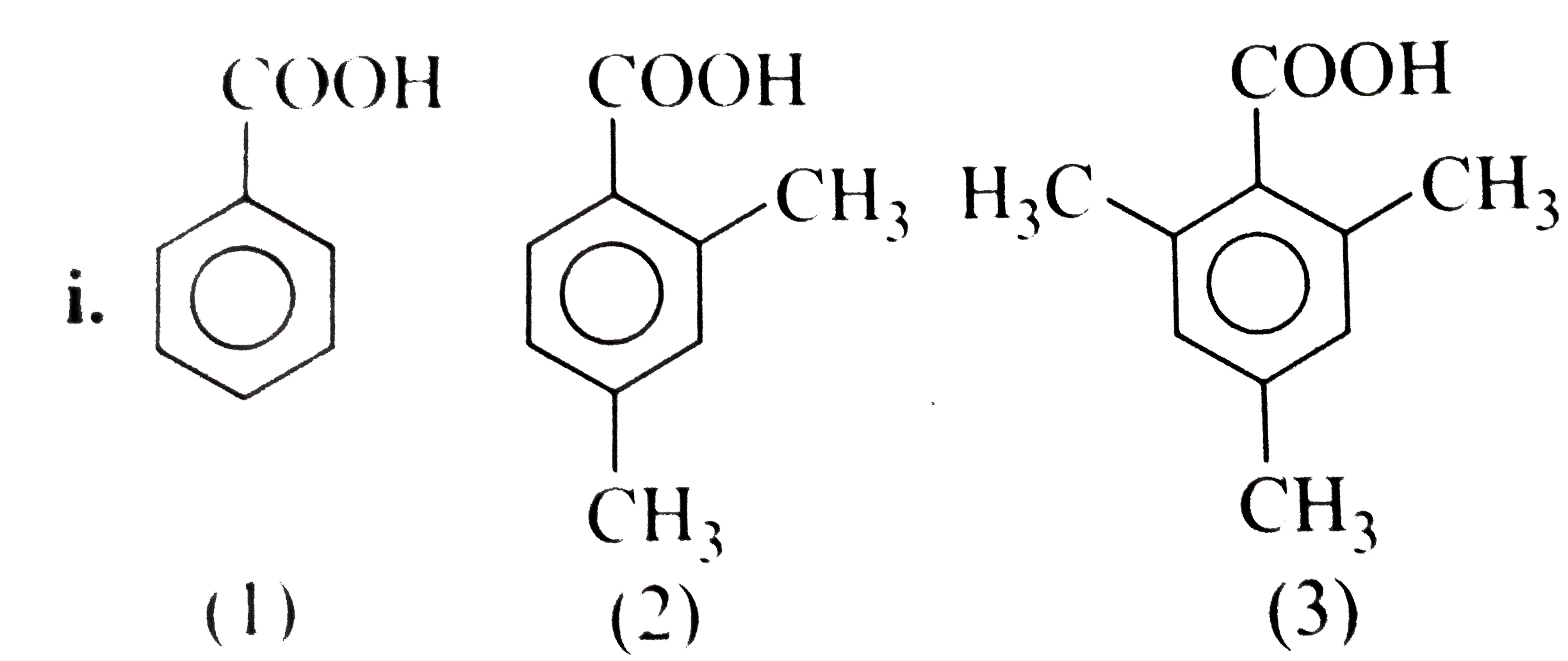
d. Arrange the following in the increasing order of ease of acid-catalysed esterification of:
i.
ii. `(1) CH_(3)CH_(2)COOH`
`(2) (CH_(3))_(2)CHCOOH`
`(3) (CH_(3))_(3)C COOH`
iii. `(1) CH_(3)CH_(2)CH_(2)OH`
`(2) CH_(3)CHOHC_(2)H_(5)`
`(3) (CH_(3))_(2)C(OH)C_(2)H_(5)`
e. Arrange the following esters in decresing order of ease of alkaline hydrolysis.
i. `(1) HCOOCH_(3)`
`(2) CH_(3)COOCH_(3)`
`(3) (CH_(3))_(3)C COOCH_(3)`
`(4) (CH_(3))_(2)CHCOOCH_(3)`
ii. `(1) CH_(3)COOCH_(3)`
`(2) CH_(3)COOC(CH_(3))_(3)`
`(3) CH_(3)COOCH(CH_(3))_(2)`
`(4) CH_(3)COOCH_(2)CH_(3)`
iii. `(1) C_(6)H_(5)COOCH_(3)`
`(2) rho-CH_(3)O-C_(6)H_(4)-C COOCH_(3)`
`(3) rho-NO_(2)-C_(6)H_(4)-COOCH_(3)`
`(4) rho-Cl-C_(6)H_(4)-COOCH_(3)`

Text Solution

Verified by Experts
All the compounds do not contain a true `(C=O)` bond as shown by their resonance structures and hence do not give any test of `(C=O)` group.
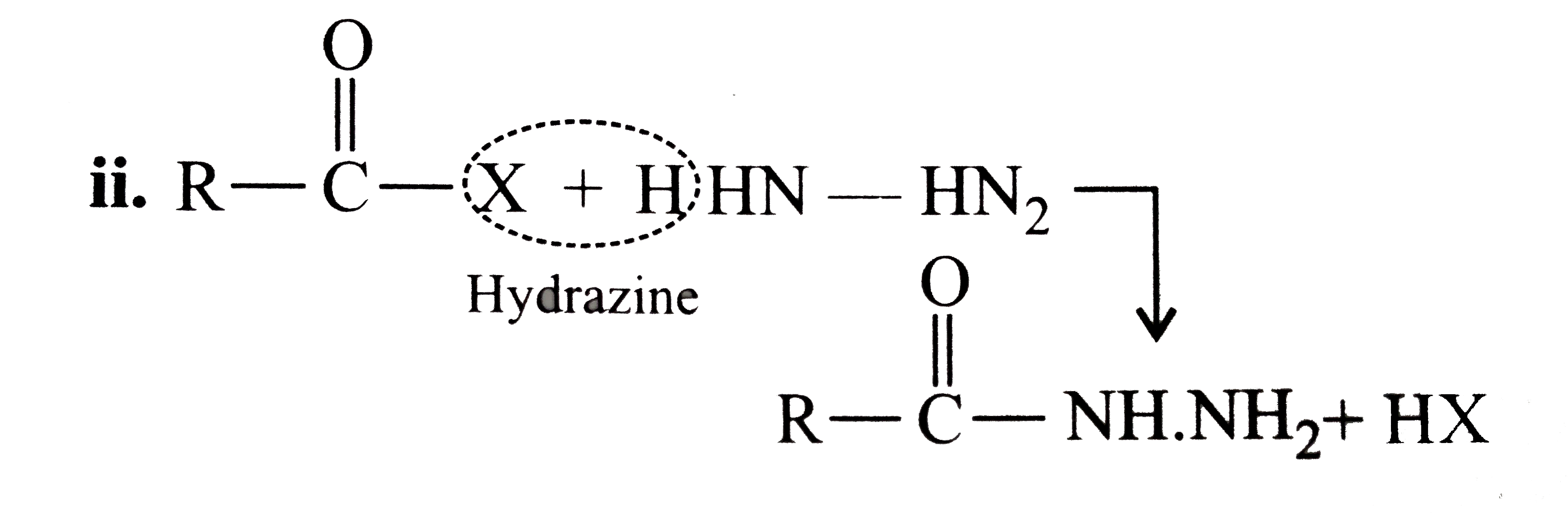
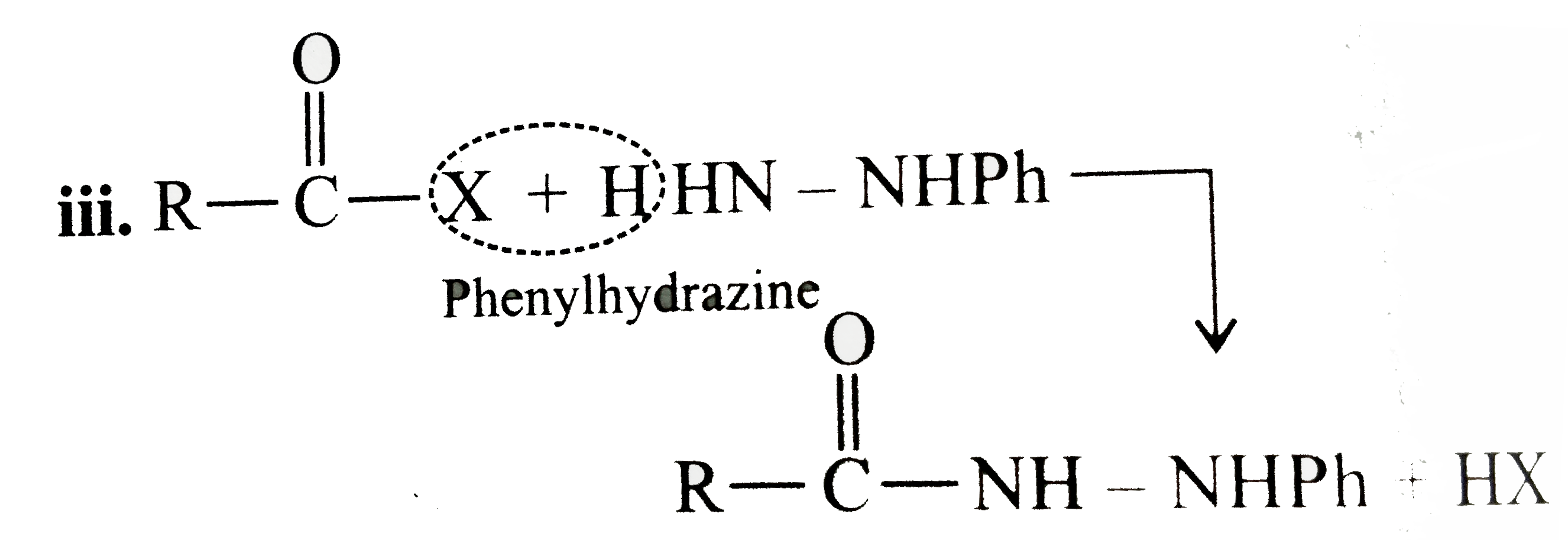
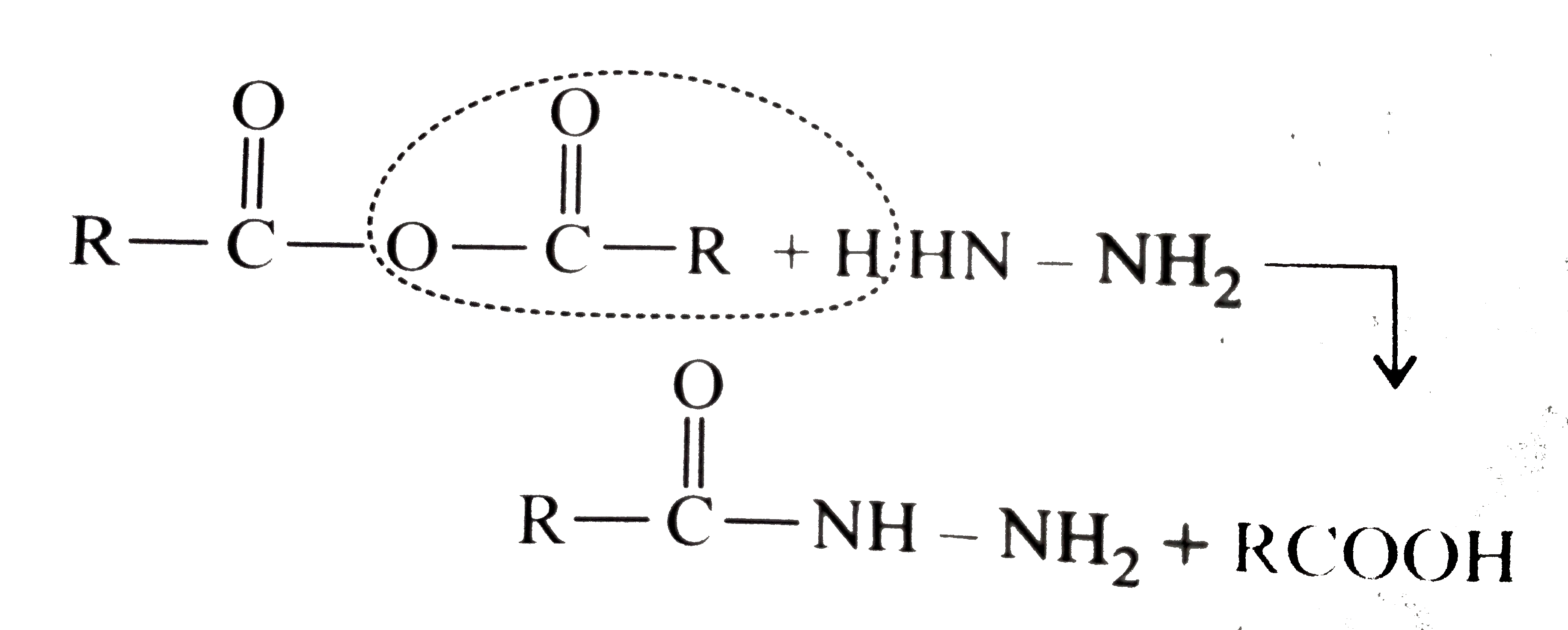
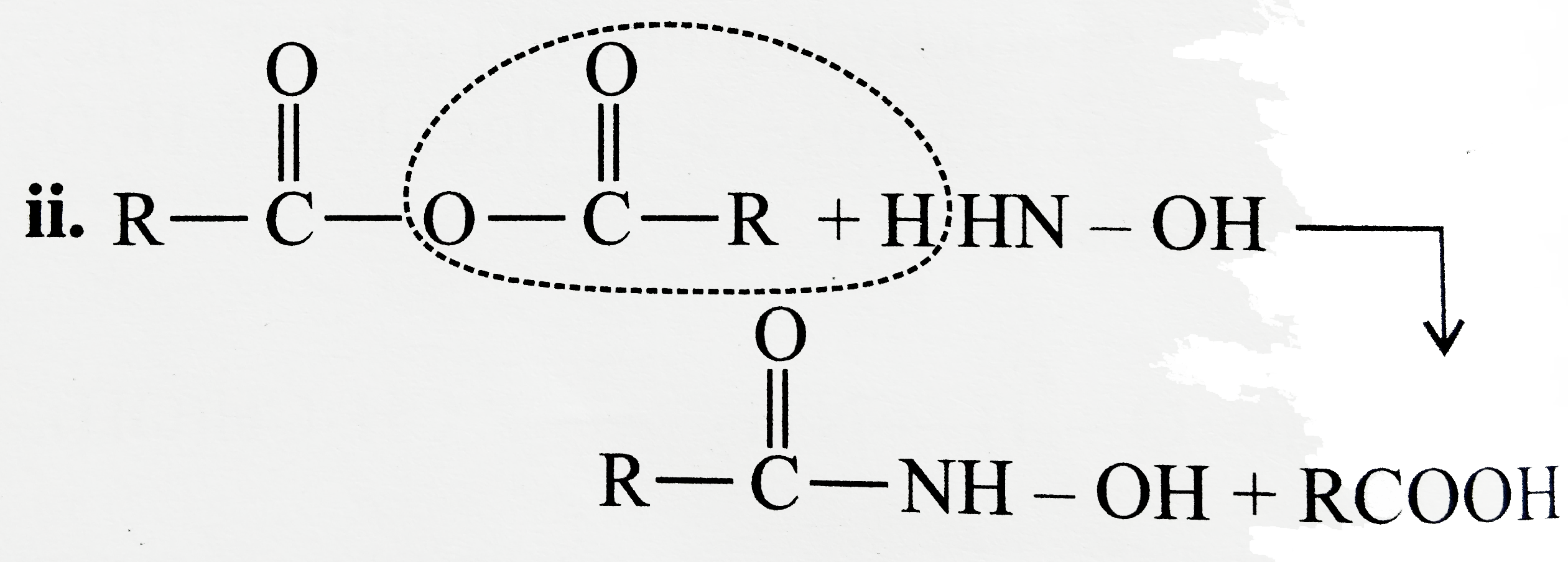
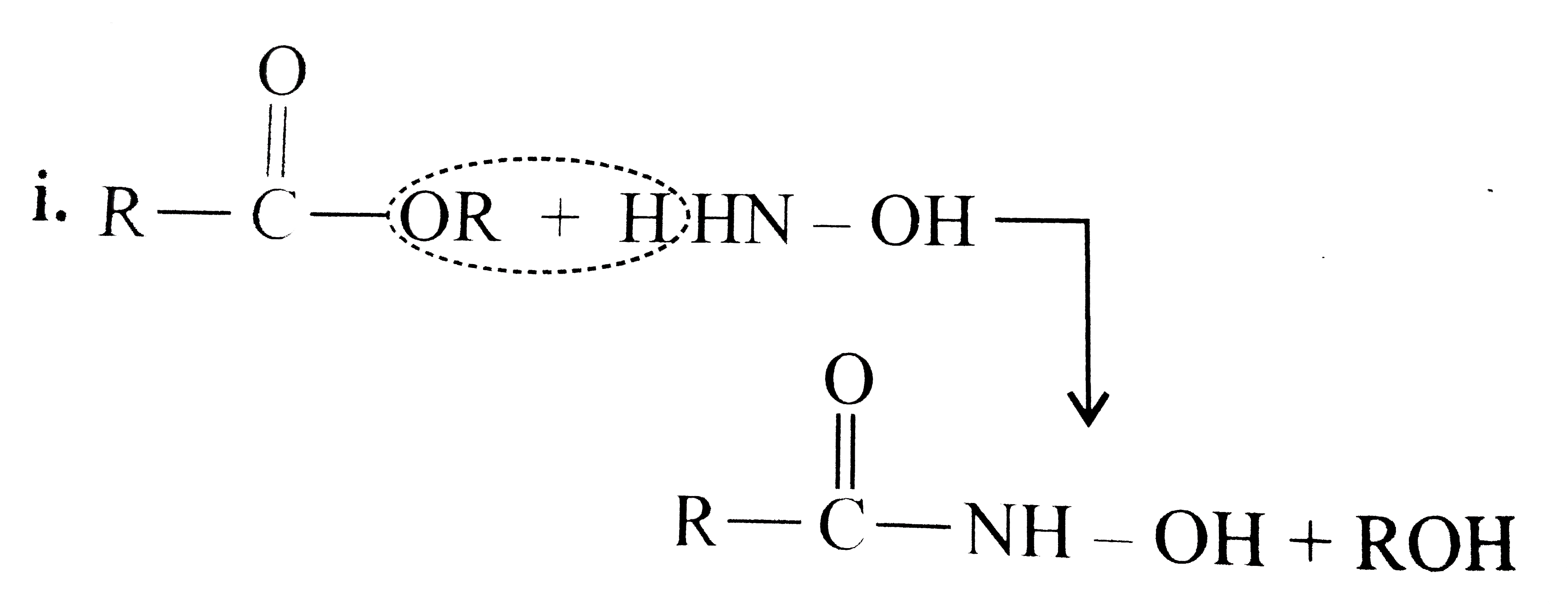
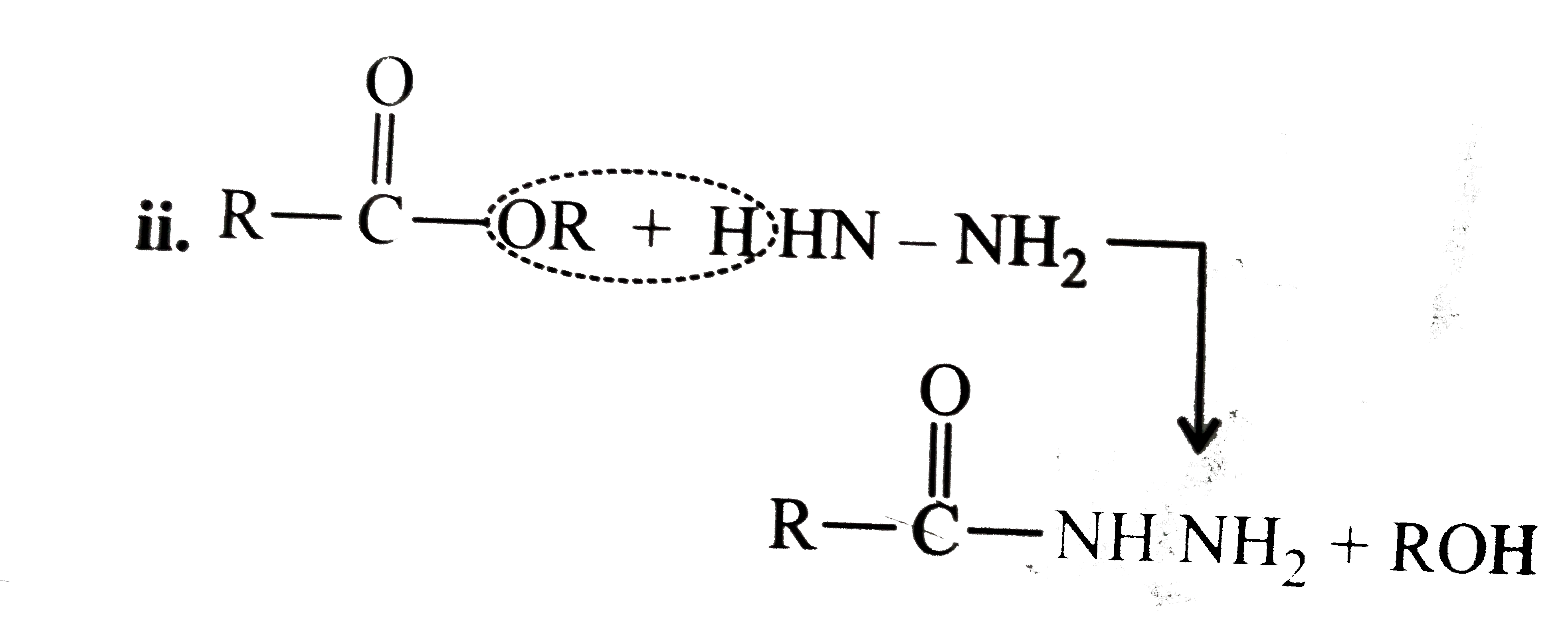
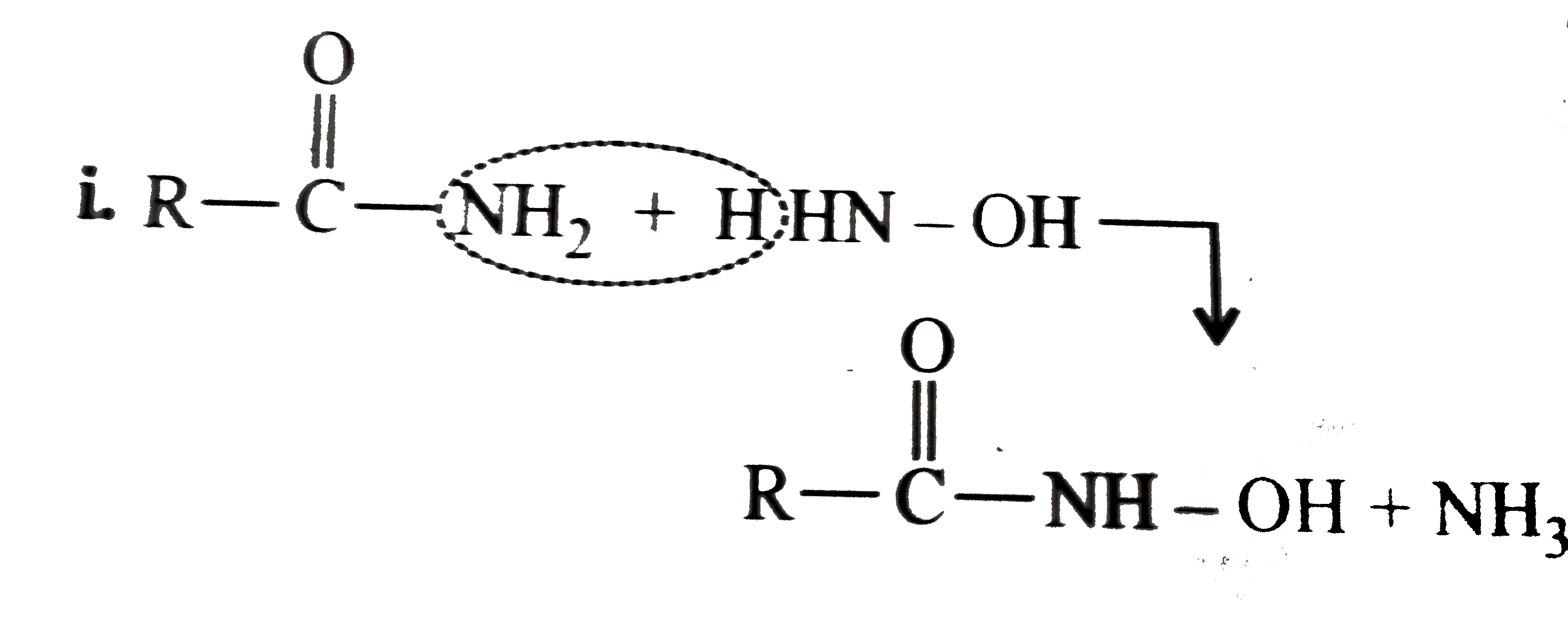
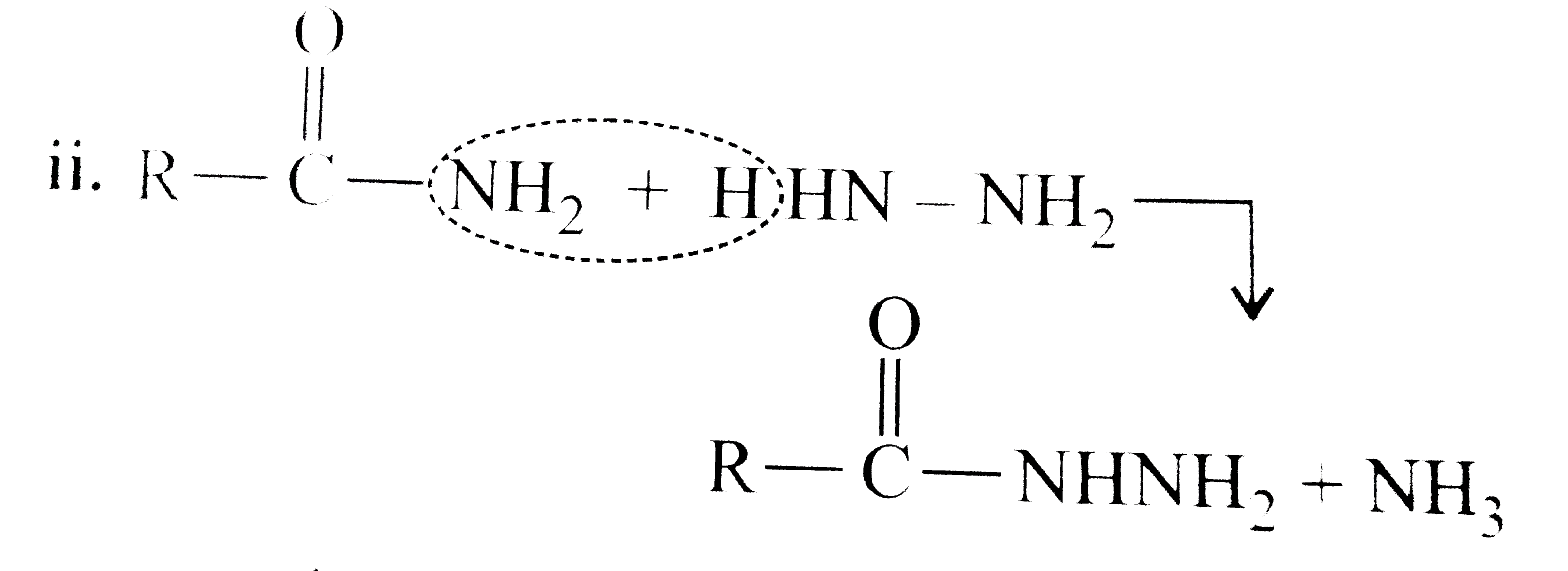
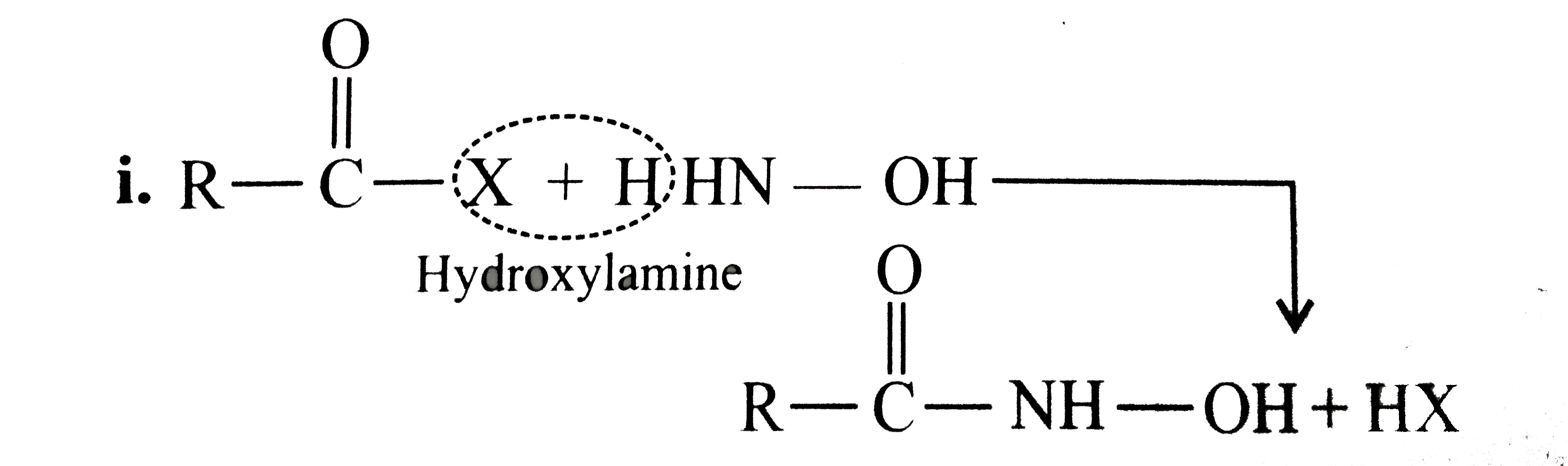
However, all the acid derivatives react differently (nucleophilic acyl substitution) with ammonia derivatives e.g.,
I. Reaction of acid halide with ammonia derivative:
i.
ii.
iii.
II. Reaction of anhydride with ammonia derivative:
i.
ii.
III. Reaction of esters with ammonia derivative:
i.
ii.
IV. Reaction of amide with ammonia derivative:
i.
ii.
b. i. `1gt2gt4gt6gt5gt3gt7` (Aldehyde gt Ketone gt Acid chloride gt Ester gt Amidegt Acid gt Acid ion)
ii. `3gt1gt2gt4`
iii. `4gt1gt2gt3`
More the `bar(e)-`withdrawing group, faster in the NA. In (4), Ph group is `bar(e)-`withdrawing by `-I` effect (+R cannot occur, since there is no extended conjugation)

iv. `4gt5gt1gt2gt3`
`[rho-N NO_(2)-(-I and -R), rho-C1 (-I) gt "Standard" gt rho-Me (+I and H.C.) gt rho-OH (+R and -I)]`
v. `4gt5gt1gt2gt3 [(C1_(3)C-CHO) (-I "of" 3C1)gtHCHOgtCH_(3)CHOgtCH_(3)COCH_(3)]`
c. `2gt3gt1gt4` (Acid chloride gt Anhydride gt Ester gt Amide)
d. As the size of substituents on the `alpha-`C increases, the tetrahedrally bonded intermediate becomes more crowded. Greater the crowding, slower is the reaction.
i. `1gt2gt3`
ii. `1gt2gt3`
iii. `1gt2gt3`
e. i. `1gt2gt4gt3`
ii. `1gt4gt3gt2`
iii. `3gt4gt1gt2`
Promotional Banner

Topper's Solved these Questions

  • ALIPHATIC AND AROMATIC ALDEHYDES AND KETONES

    CENGAGE CHEMISTRY|Exercise Solved Examples|13 Videos
  • ALIPHATIC AND AROMATIC ALDEHYDES AND KETONES

    CENGAGE CHEMISTRY|Exercise Exercises Subjective|52 Videos
  • ALCOHOL,PHENOL AND ETHERS

    CENGAGE CHEMISTRY|Exercise Archives Analytical And Descriptive|15 Videos
  • AMINES

    CENGAGE CHEMISTRY|Exercise QUESTION BANK|1 Videos

Similar Questions

Explore conceptually related problems

Arrange the following in decreasing order of nucleophilic addition CH_(3)CHO, CH_(3)COCH_(3), HCHO, C_(2)H_(5)COCH_(3)

Arrange the following compounds in decreasing orders of rate of hydration. (X) C Cl_(3)CHO " " (Y) CH_(3)CHO " " (Z)CH_(3)COCH_(3) " " (W) CF_(3)CHO

Arrange the following in the increasing order of expected enol content. i. CH_(3)COCH_(2)CHO ii. CH_(3)COCH_(3) iii. CH_(3)CHO iv. CH_(3)COCH_(2)COCH_(3)

Arrange the following in the increasing order of recativity with NH_(3) (I) CH_(2) O (II) CH_(3) CHO (III) CH_(3) - CO - Ch_(3) (IV) (I) CH_(2

Arrange the following compounds in the increasing order of nucleophillic addition reaction: I. HCHO II. CH_(3)COCH_(3) III. C_(6)H_(5)COCH_(3) IV. C_(6)H_(5)COC_(6)H_(5)

Arrange the following in order of increasing reactivity towards nucleophilic addition reactions C_(6)H_(5)COCH_(3), CH_(3)CHO, CH_(3)COCH_(3) .

CENGAGE CHEMISTRY-ALIPHATIC AND AROMATIC ALDEHYDES AND KETONES-Archives Subjective
  1. a. Acid halides, anhydrides, esters and amides, all of them contain (C...

    Text Solution

    |

  2. Write the structural formula of the main organic product formed when m...

    Text Solution

    |

  3. Outline the reaction sequence for the conversion of methanal to ethana...

    Text Solution

    |

  4. Show with balanced equation what happens when the following are mixed:...

    Text Solution

    |

  5. Write down the reactions involved in the preparation of the following ...

    Text Solution

    |

  6. Arrange the following in the order of their incresing reactivity towar...

    Text Solution

    |

  7. Write down the main product of the following reaction. Propanal overse...

    Text Solution

    |

  8. Give reasons in one or two sentances for the following: 'Hydrazones of...

    Text Solution

    |

  9. In what manner the following transformation might be carried out (in n...

    Text Solution

    |

  10. Complete the following with appropriate structures.

    Text Solution

    |

  11. Compound (A) (C(6)H(12)O(2)) on reduction with LiAlH(4) yielded two co...

    Text Solution

    |

  12. Arrange the following in the increasing order of expected enol content...

    Text Solution

    |

  13. Write the structure of major organic product expected from the followi...

    Text Solution

    |

  14. How will you bring about the following conversions ? '4-nitrobenzaldeh...

    Text Solution

    |

  15. Complete the following reaction with appropriate structure. C(6)H(5)...

    Text Solution

    |

  16. Complete the following reaction with appropriate structure:

    Text Solution

    |

  17. Suggest appropriate structure of the missing compounds. (The number of...

    Text Solution

    |

  18. Complete the following, giving the structures of principal organic pro...

    Text Solution

    |

  19. Acetophenone on reaction with hydroxyl amine hydrochloride can produce...

    Text Solution

    |

  20. An aldehyde (A) (C(11)H(8)O), which does not undergo self aldol conden...

    Text Solution

    |

  21. Complete the following reactions with appropriate structures of produc...

    Text Solution

    |