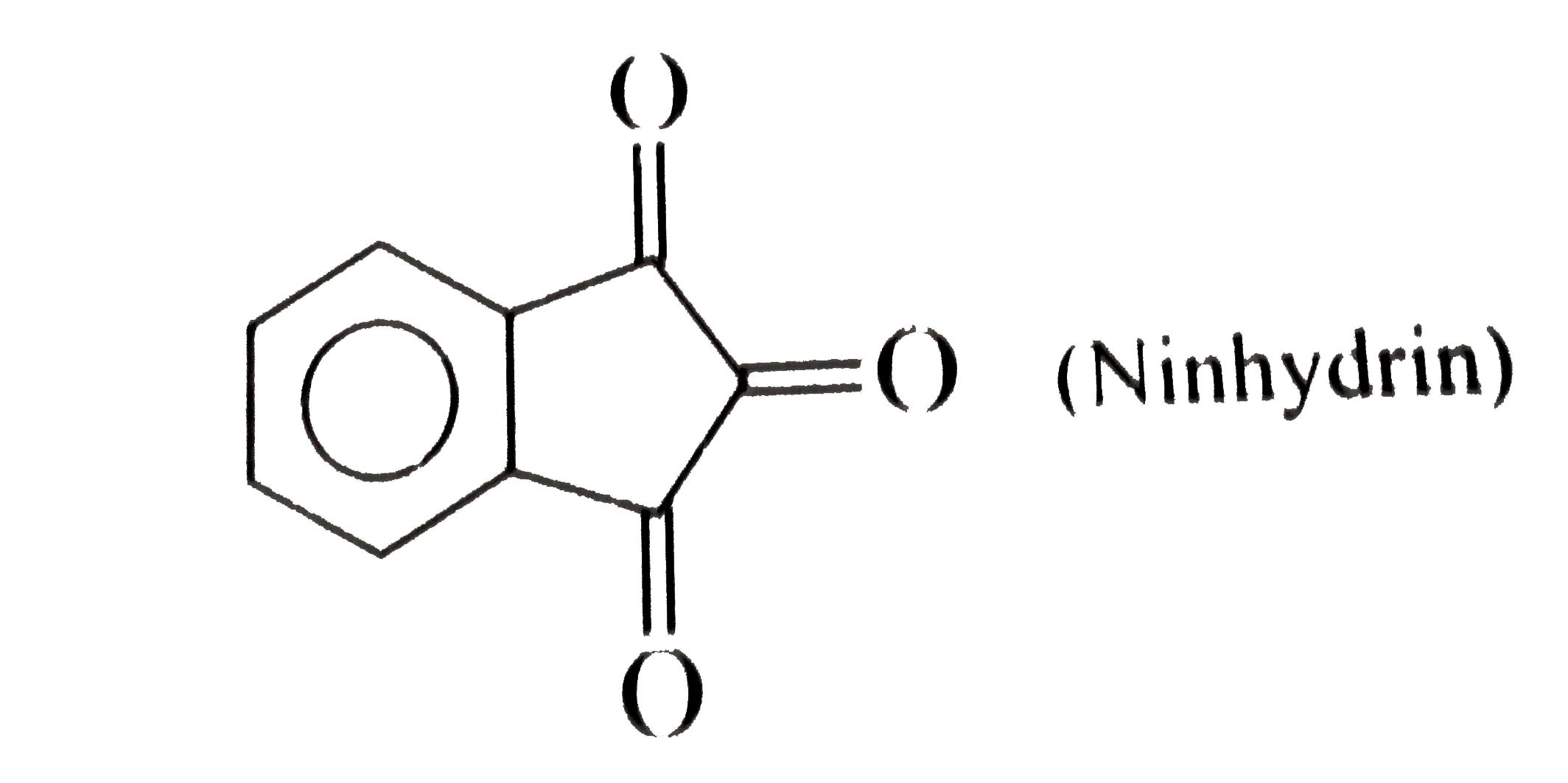
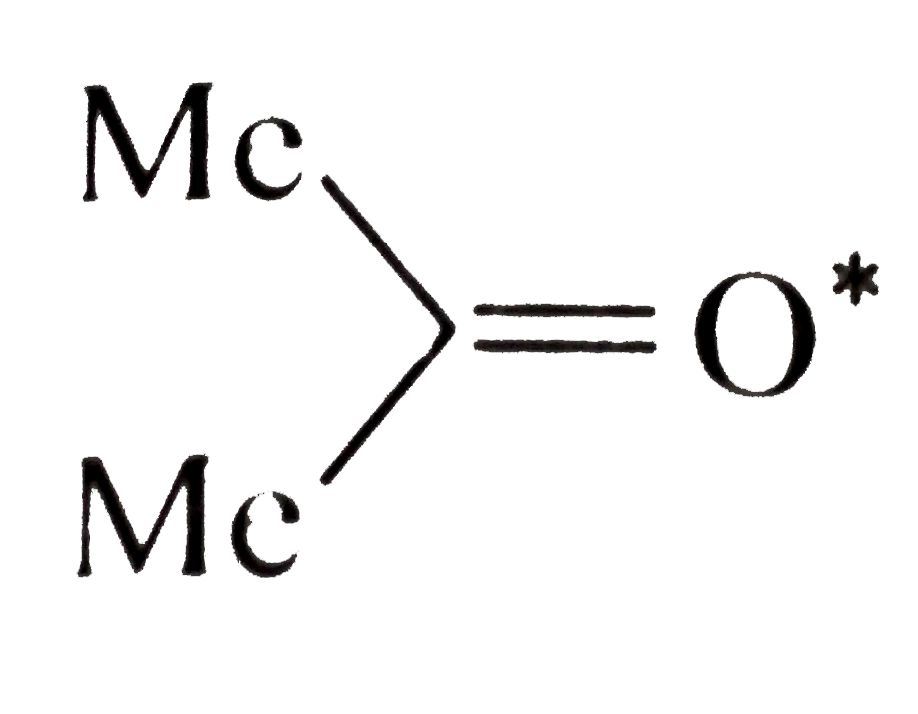
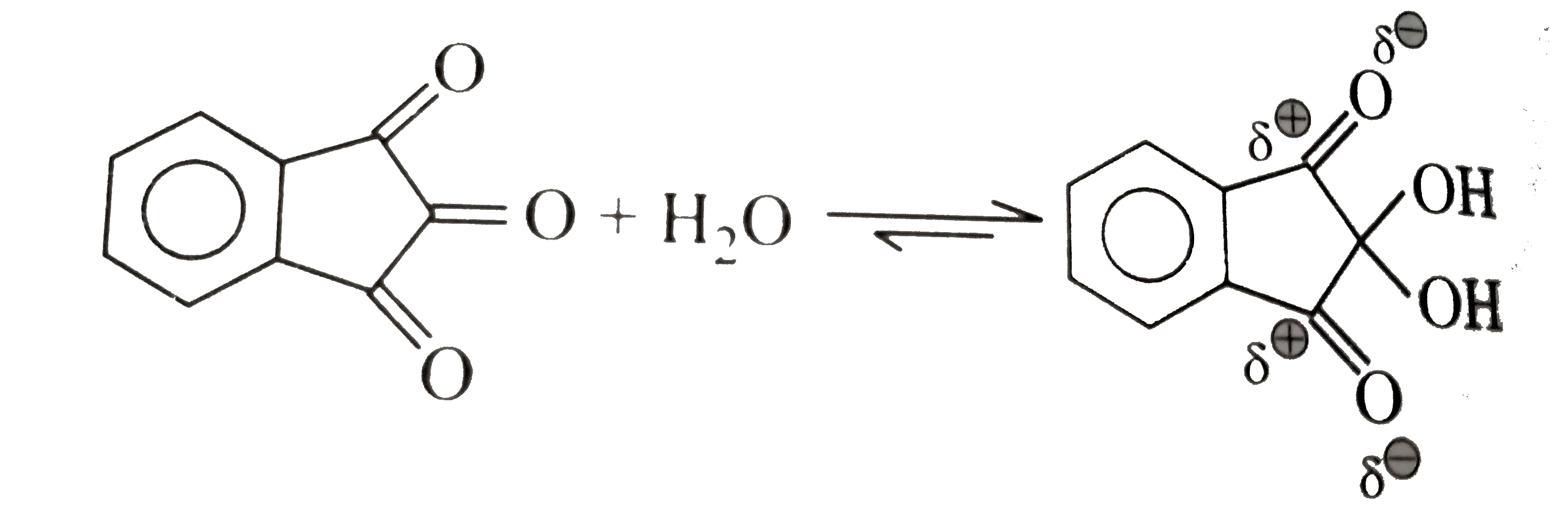
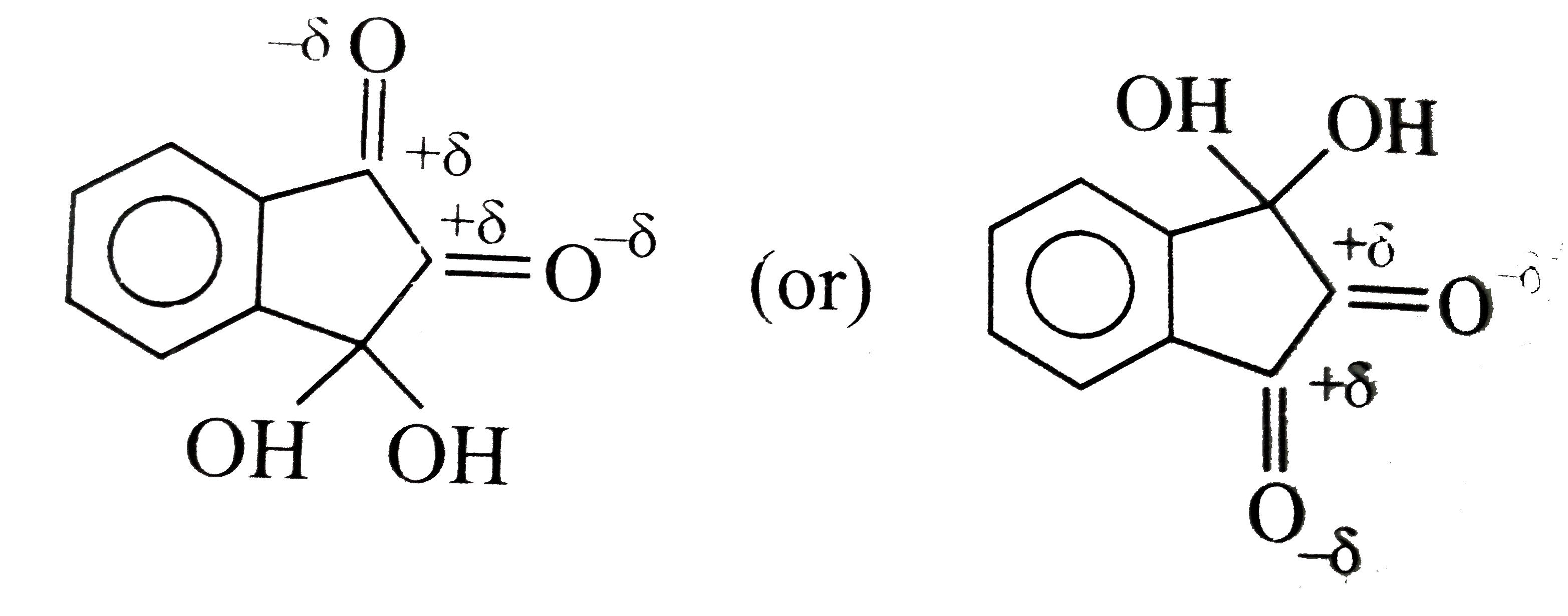
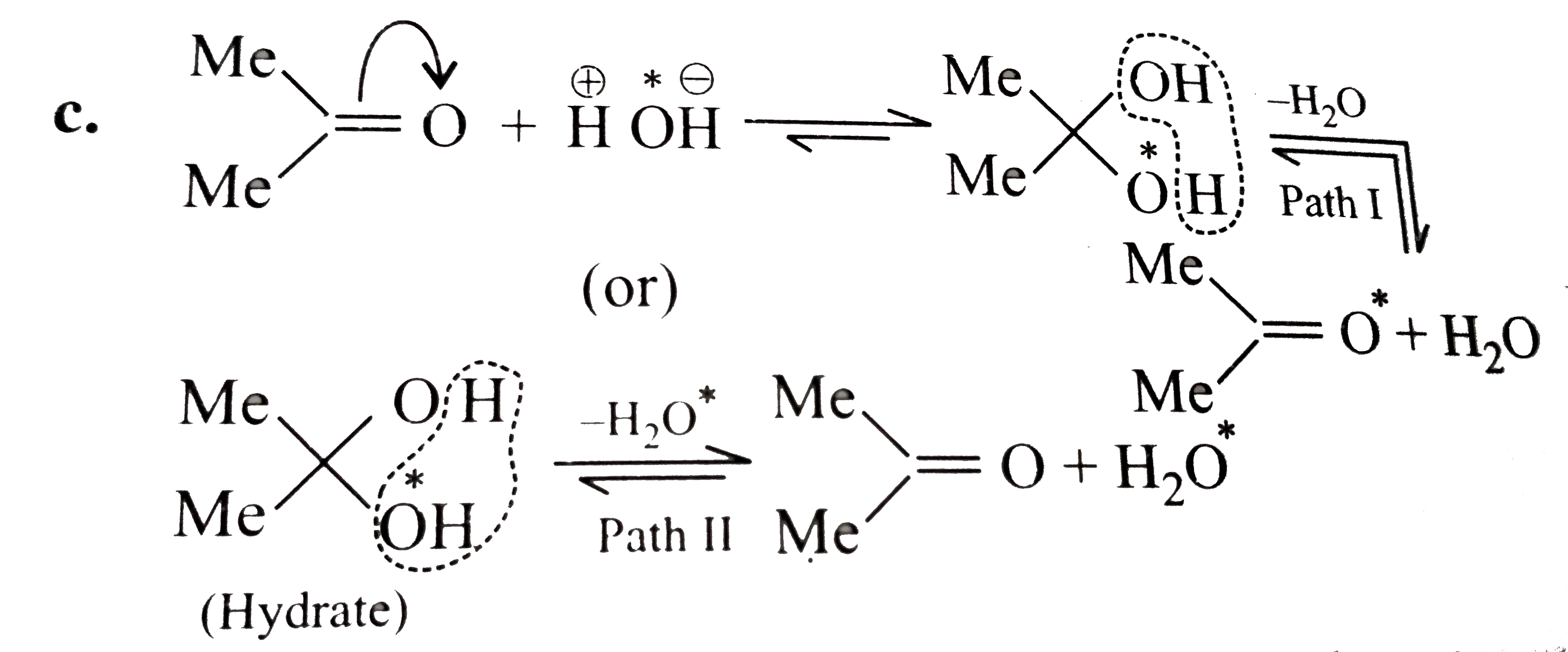
 from the reaction of
 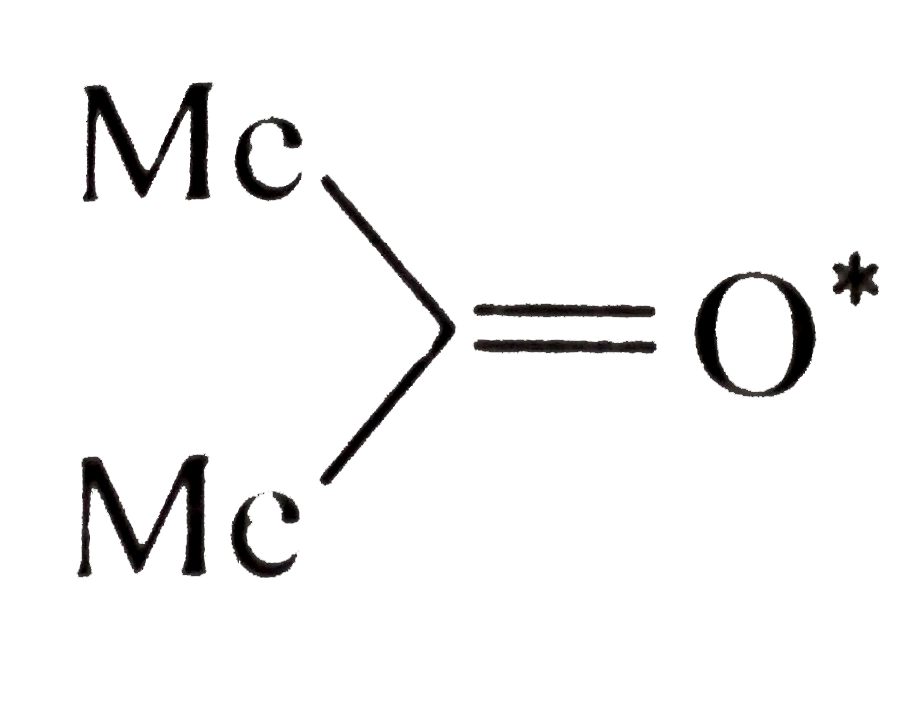 with `H_(2)O^(**)` (`O^(**)` represents `O^(18)`, isotope of `O^(16)`.)
Text Solution
Verified by Experts



Topper's Solved these Questions
ALIPHATIC AND AROMATIC ALDEHYDES AND KETONES
CENGAGE CHEMISTRY|Exercise Solved Examples|13 VideosALIPHATIC AND AROMATIC ALDEHYDES AND KETONES
CENGAGE CHEMISTRY|Exercise Exercises Subjective|52 VideosALCOHOL,PHENOL AND ETHERS
CENGAGE CHEMISTRY|Exercise Archives Analytical And Descriptive|15 VideosAMINES
CENGAGE CHEMISTRY|Exercise QUESTION BANK|1 Videos
Similar Questions
Explore conceptually related problems
CENGAGE CHEMISTRY-ALIPHATIC AND AROMATIC ALDEHYDES AND KETONES-Archives Subjective
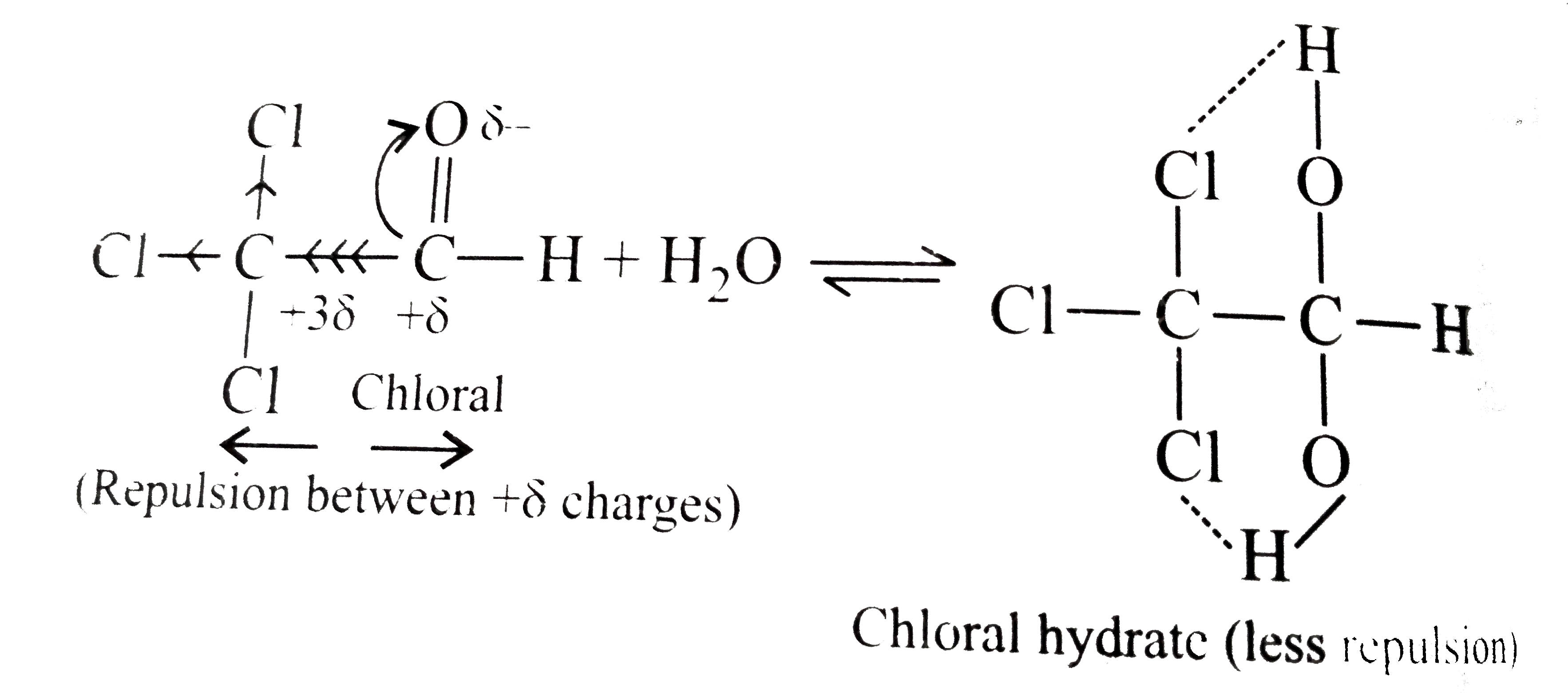
- Explain: a. Chloral normally exists as chloral hydrate and is used a...
Text Solution
|
- Write the structural formula of the main organic product formed when m...
Text Solution
|
- Outline the reaction sequence for the conversion of methanal to ethana...
Text Solution
|
- Show with balanced equation what happens when the following are mixed:...
Text Solution
|
- Write down the reactions involved in the preparation of the following ...
Text Solution
|
- Arrange the following in the order of their incresing reactivity towar...
Text Solution
|
- Write down the main product of the following reaction. Propanal overse...
Text Solution
|
- Give reasons in one or two sentances for the following: 'Hydrazones of...
Text Solution
|
- In what manner the following transformation might be carried out (in n...
Text Solution
|
- Complete the following with appropriate structures.
Text Solution
|
- Compound (A) (C(6)H(12)O(2)) on reduction with LiAlH(4) yielded two co...
Text Solution
|
- Arrange the following in the increasing order of expected enol content...
Text Solution
|
- Write the structure of major organic product expected from the followi...
Text Solution
|
- How will you bring about the following conversions ? '4-nitrobenzaldeh...
Text Solution
|
- Complete the following reaction with appropriate structure. C(6)H(5)...
Text Solution
|
- Complete the following reaction with appropriate structure:
Text Solution
|
- Suggest appropriate structure of the missing compounds. (The number of...
Text Solution
|
- Complete the following, giving the structures of principal organic pro...
Text Solution
|
- Acetophenone on reaction with hydroxyl amine hydrochloride can produce...
Text Solution
|
- An aldehyde (A) (C(11)H(8)O), which does not undergo self aldol conden...
Text Solution
|
- Complete the following reactions with appropriate structures of produc...
Text Solution
|