Home
Class 11
PHYSICS
Acceleration versus time graph for four ...

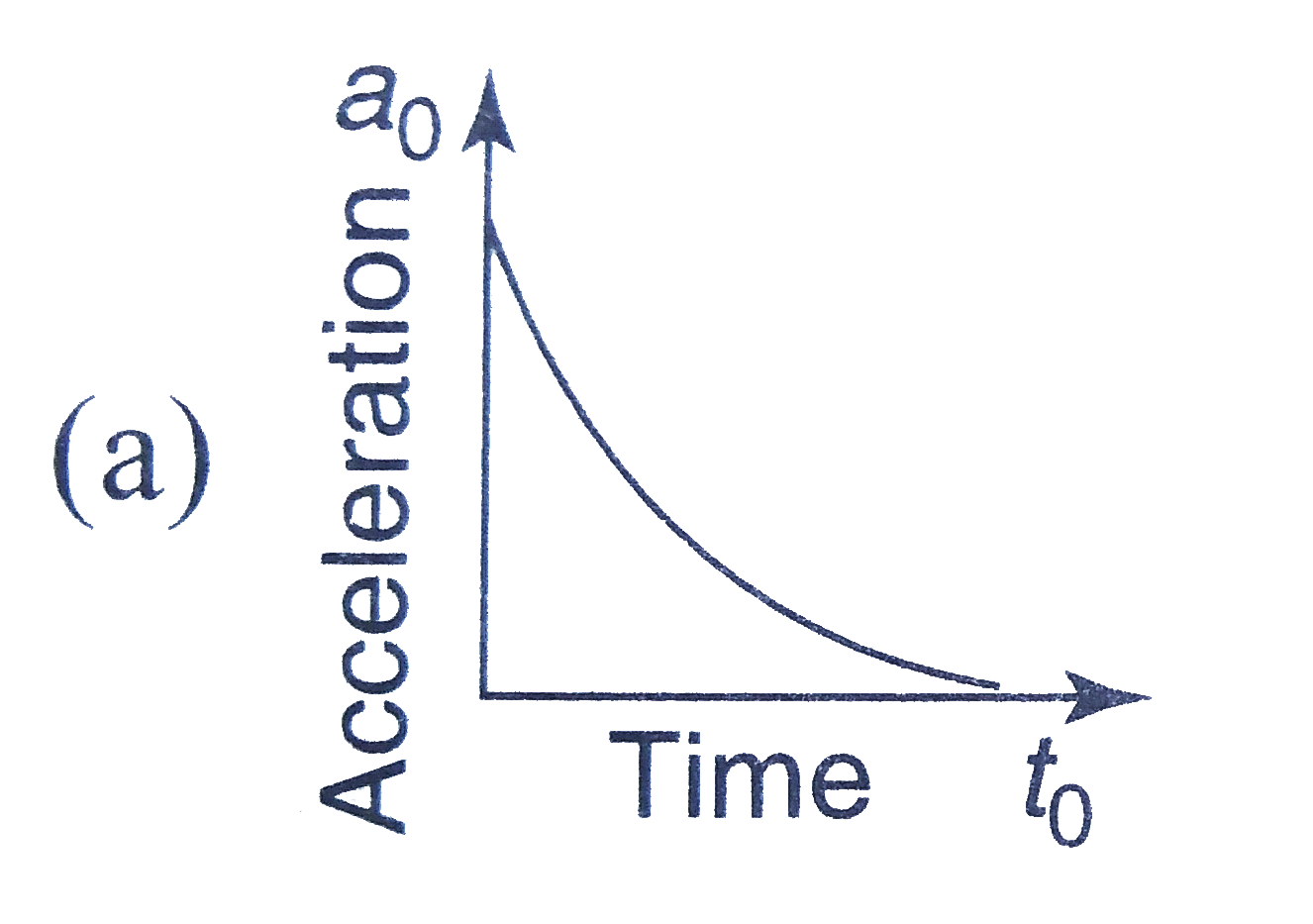
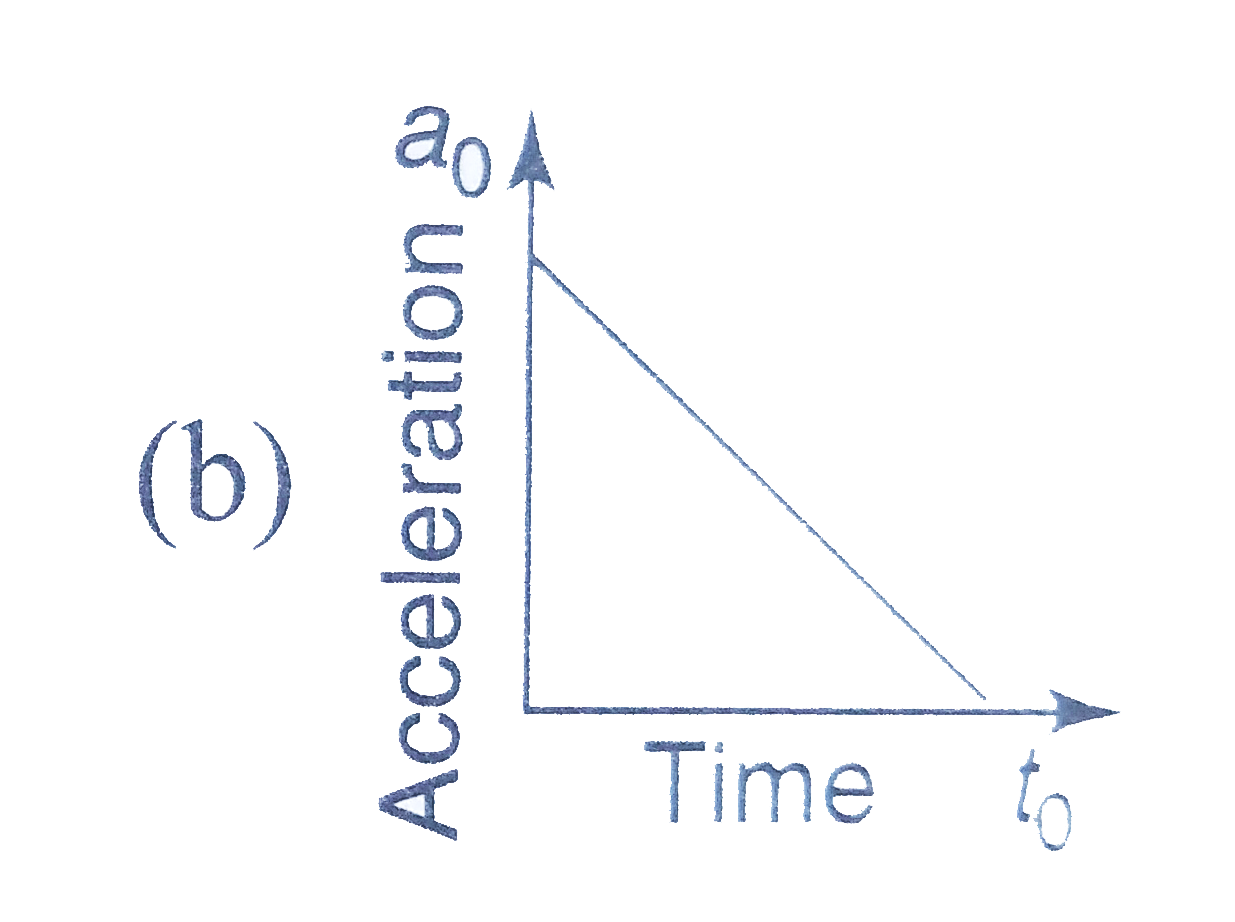
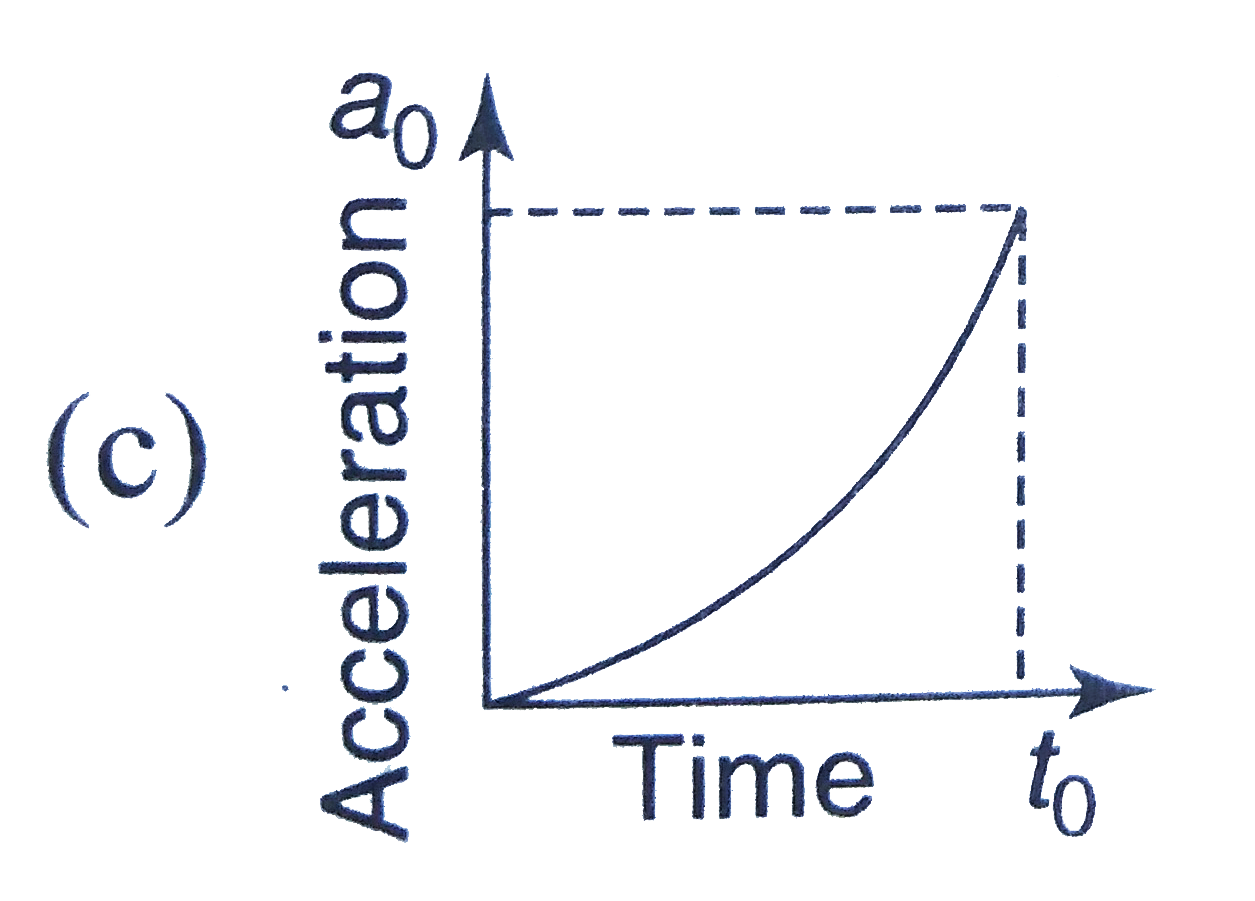
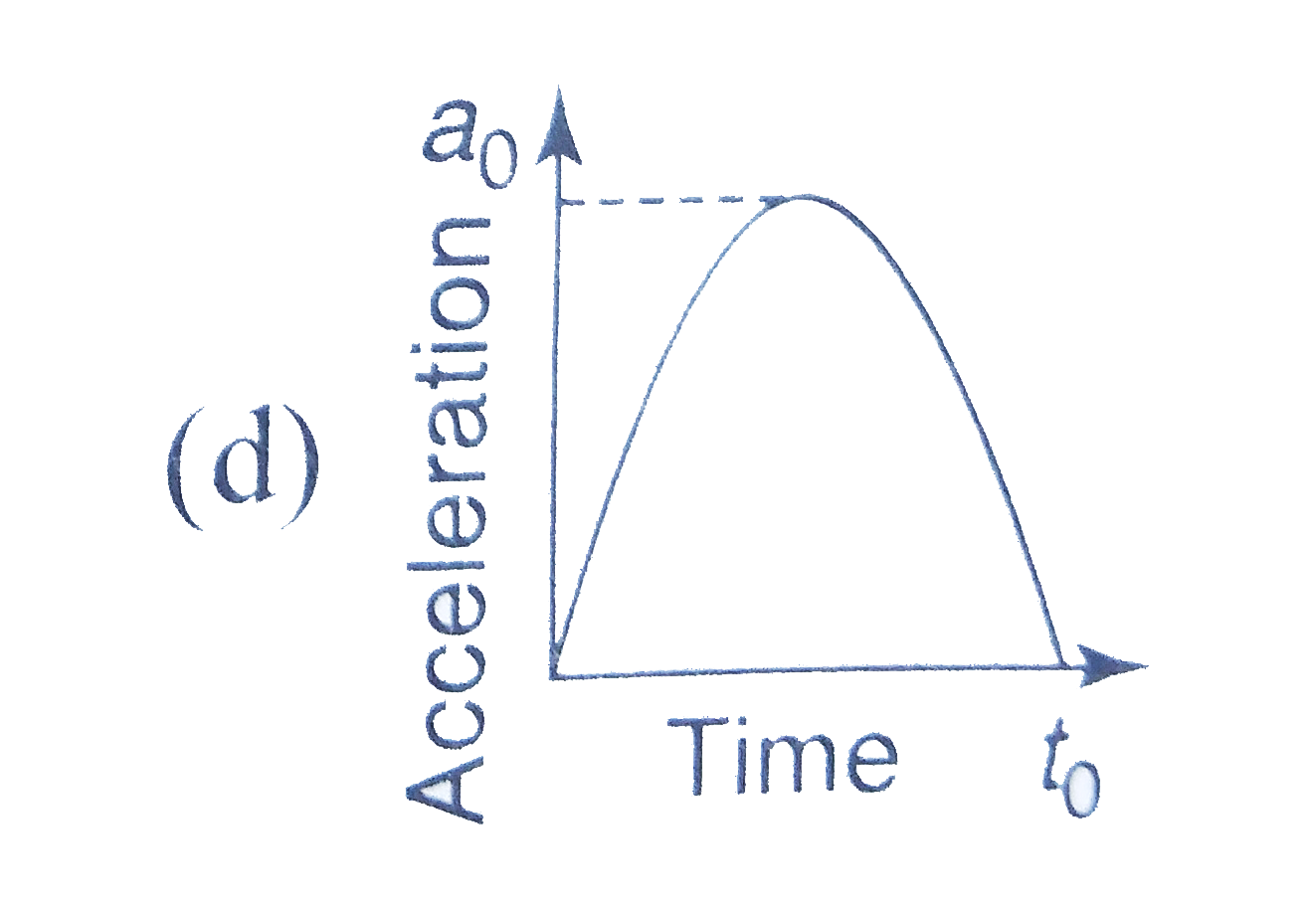
Acceleration versus time graph for four objects are shown below. All axes have the same scale. Which object had the greatest change in velocity during the interval ?

A

.

B

.

C

.

D

.

Text Solution

AI Generated Solution

The correct Answer is:

To determine which object had the greatest change in velocity during the interval from the acceleration versus time graphs, we can follow these steps: ### Step 1: Understand the relationship between acceleration and change in velocity The change in velocity (\( \Delta v \)) can be calculated using the formula: \[ \Delta v = \int a \, dt \] This means that the change in velocity is equal to the area under the acceleration versus time graph. ### Step 2: Identify the area under each graph To find the change in velocity for each object, we need to calculate the area under the acceleration-time graph for each object. The area can be calculated by identifying the shapes formed under the curve (rectangles, triangles, etc.) and applying the appropriate area formulas. ### Step 3: Calculate the area for each object 1. **Object A**: Calculate the area under the curve for Object A. If it forms a triangle or rectangle, use the respective area formula. 2. **Object B**: Calculate the area under the curve for Object B. 3. **Object C**: Calculate the area under the curve for Object C. 4. **Object D**: Calculate the area under the curve for Object D. ### Step 4: Compare the areas Once you have calculated the areas for all four objects, compare them to determine which one is the largest. The object with the largest area under the curve will have the greatest change in velocity. ### Step 5: Conclusion The object with the greatest area under the acceleration versus time graph corresponds to the greatest change in velocity. Based on the analysis, conclude which object had the greatest change in velocity.

To determine which object had the greatest change in velocity during the interval from the acceleration versus time graphs, we can follow these steps: ### Step 1: Understand the relationship between acceleration and change in velocity The change in velocity (\( \Delta v \)) can be calculated using the formula: \[ \Delta v = \int a \, dt \] This means that the change in velocity is equal to the area under the acceleration versus time graph. ...
Promotional Banner

Topper's Solved these Questions

  • GENERAL KINEMATICS AND MOTION IN ONE DIMENSION

    A2Z|Exercise Problem Based On Mixed Concepts|30 Videos
  • GENERAL KINEMATICS AND MOTION IN ONE DIMENSION

    A2Z|Exercise Assertion Reasoning|20 Videos
  • GENERAL KINEMATICS AND MOTION IN ONE DIMENSION

    A2Z|Exercise Relative Motion In One Dimension|20 Videos
  • FLUID MECHANICS

    A2Z|Exercise Chapter Test|29 Videos
  • GRAVITATION

    A2Z|Exercise Chapter Test|29 Videos

Similar Questions

Explore conceptually related problems

Draw position-time graphs for two objects having zero relative velocity.

The velocity-time graph of an object is shown below. The acceleration of the object is

The position - time graph of an object is given below. What is the velocity of the object?

The position - time graph of an object is given below. What is the velocity of the object?

The position-time graph of an object is given below. What is the velocity of the object?

The position-time graph of an object is given below. What is the velocity of the object?

Distance versus time graph of an object is as shown in the figure. The average speed of the object is _____ ms^(-1)

A2Z-GENERAL KINEMATICS AND MOTION IN ONE DIMENSION-Understanding Motion Through Graphs
  1. The graph shows position as a function of time for two trains running ...

    Text Solution

    |

  2. A lift is going up. The variation in the speed of the lift is as given...

    Text Solution

    |

  3. Acceleration versus time graph for four objects are shown below. All a...

    Text Solution

    |

  4. Figure shows the position the graph for a particle in one dimensional ...

    Text Solution

    |

  5. The velocity time graph of a body moving along a straight line is show...

    Text Solution

    |

  6. The velocity-time plot is shown in figure. Find the average speed in t...

    Text Solution

    |

  7. Figure shows the graph of acceleration of particle as a function of ti...

    Text Solution

    |

  8. The velocity-time graph of a body is given below. Find the average vel...

    Text Solution

    |

  9. The velocity-time graph of a body moving along straight line is as fol...

    Text Solution

    |

  10. The velocity-time graph of a linear motion os shown figure. The distan...

    Text Solution

    |

  11. A particle starts from rest and undergoes an acceleration as shown in ...

    Text Solution

    |

  12. Which of the following graphs show the v - t graph of a ball thrown up...

    Text Solution

    |

  13. Figure shows a velocity-time graph. This shows that.

    Text Solution

    |

  14. A paratrooper id dropped from an airplane. After some time his parachu...

    Text Solution

    |

  15. The plot shows the position (x) as a function of time (t) for two trai...

    Text Solution

    |

  16. The graph to the right is a plot of position versus time. For which le...

    Text Solution

    |

  17. Figure shows the position of a particle moving on the x-axis as a func...

    Text Solution

    |

  18. A particle moves rectilinearly with a constant acceleration 1 m//s^2. ...

    Text Solution

    |

  19. In figure shown, the graph shows the variation of acceleration of body...

    Text Solution

    |

  20. Refer Q.139. The average acceleration of the body from t = 0 to t = 15...

    Text Solution

    |
