Home
Class 11
PHYSICS
Two pulses travel in mutually opposite d...

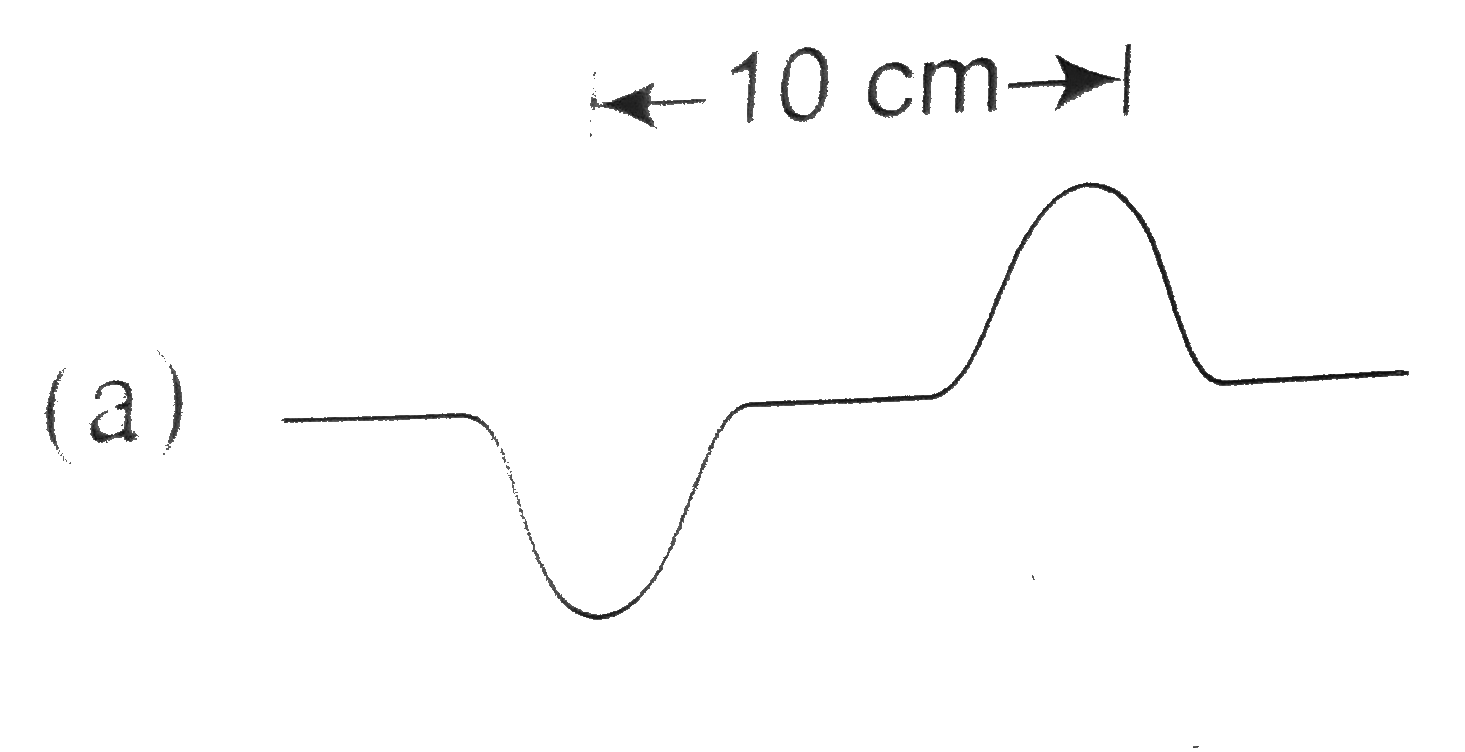
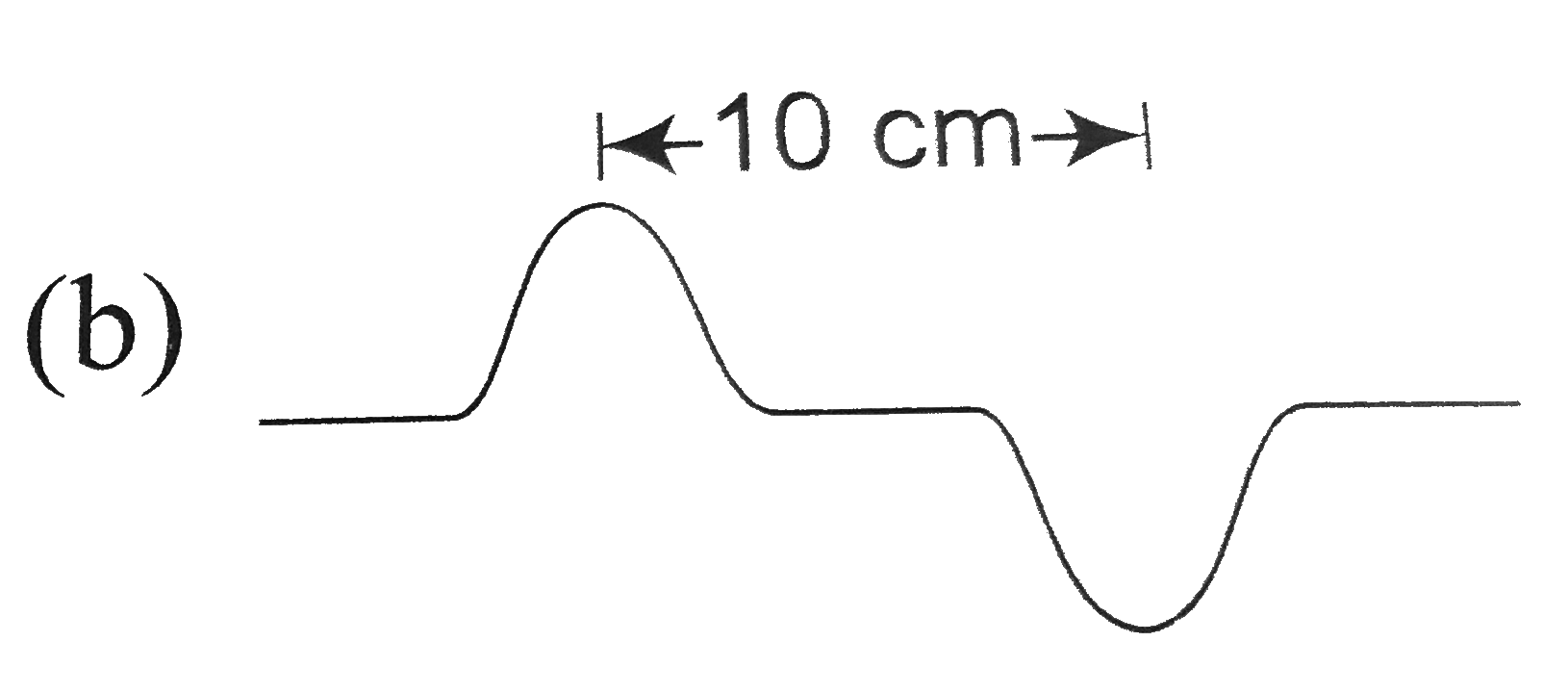
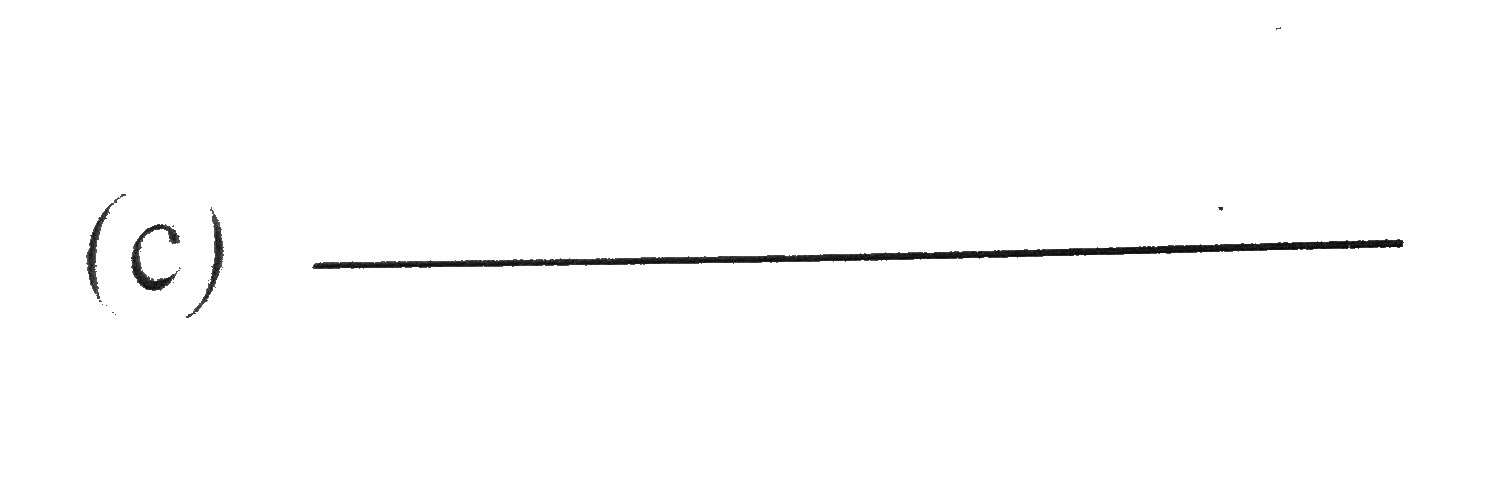
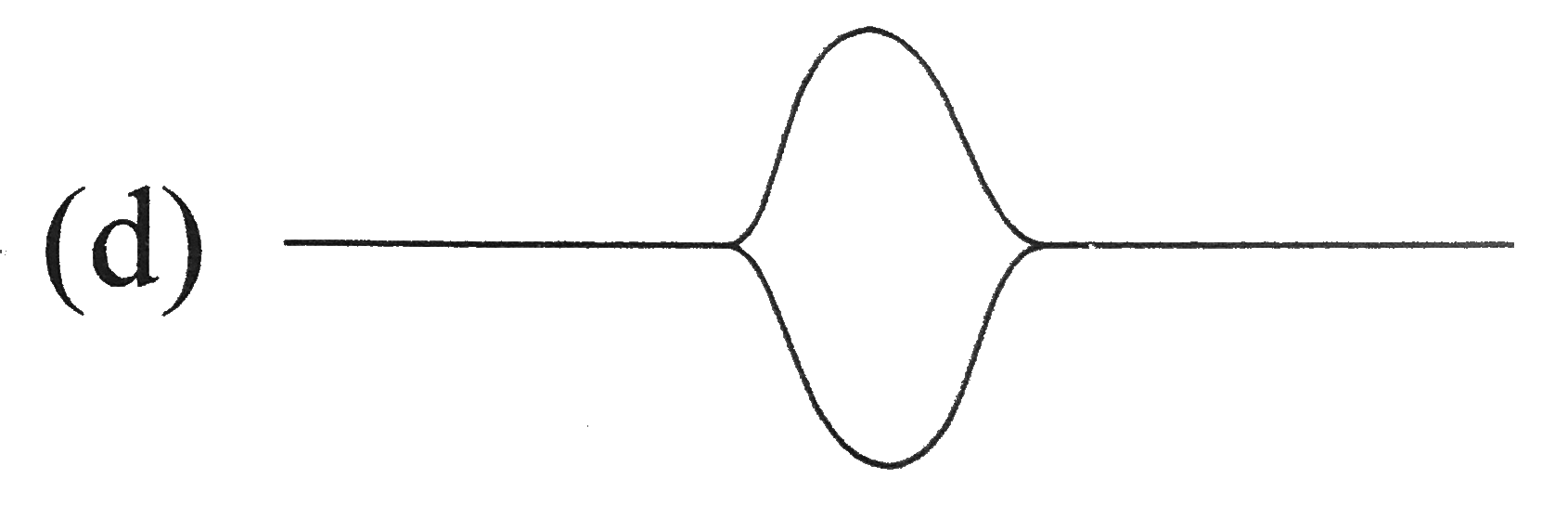
Two pulses travel in mutually opposite directions in a string with a speed of `2.5 cm//s` as shown in the figure. Initially the pulses are `10 cm` apart. What will be the state of the string after two seconds?

A

B

C

D

Text Solution

AI Generated Solution

The correct Answer is:

To solve the problem of determining the state of the string after two seconds, we can follow these steps: ### Step 1: Understand the Initial Conditions - The two pulses are initially 10 cm apart. - Each pulse travels at a speed of 2.5 cm/s in opposite directions. ### Step 2: Calculate the Distance Each Pulse Travels in 2 Seconds - Since the speed of each pulse is 2.5 cm/s, we can calculate the distance traveled by each pulse in 2 seconds using the formula: \[ \text{Distance} = \text{Speed} \times \text{Time} \] - For 2 seconds: \[ \text{Distance} = 2.5 \, \text{cm/s} \times 2 \, \text{s} = 5 \, \text{cm} \] ### Step 3: Determine the New Positions of the Pulses - Since the pulses are moving towards each other, we need to consider their new positions after 2 seconds. - The first pulse moves 5 cm towards the second pulse, and the second pulse also moves 5 cm towards the first pulse. ### Step 4: Calculate the New Distance Between the Pulses - Initially, the distance between the two pulses was 10 cm. - After 2 seconds, each pulse has moved 5 cm towards each other, so the new distance between the pulses is: \[ \text{New Distance} = \text{Initial Distance} - (\text{Distance moved by Pulse 1} + \text{Distance moved by Pulse 2}) \] \[ \text{New Distance} = 10 \, \text{cm} - (5 \, \text{cm} + 5 \, \text{cm}) = 0 \, \text{cm} \] ### Step 5: Conclusion - After 2 seconds, the two pulses will meet at the same point on the string, resulting in a new state where the distance between them is 0 cm. ### Summary of the Solution - After 2 seconds, the two pulses will overlap completely at the same point on the string.

To solve the problem of determining the state of the string after two seconds, we can follow these steps: ### Step 1: Understand the Initial Conditions - The two pulses are initially 10 cm apart. - Each pulse travels at a speed of 2.5 cm/s in opposite directions. ### Step 2: Calculate the Distance Each Pulse Travels in 2 Seconds - Since the speed of each pulse is 2.5 cm/s, we can calculate the distance traveled by each pulse in 2 seconds using the formula: ...
Promotional Banner

Topper's Solved these Questions

  • WAVES AND ACOUSTICS

    A2Z|Exercise Beats|20 Videos
  • WAVES AND ACOUSTICS

    A2Z|Exercise Stationary Waves|20 Videos
  • WAVES AND ACOUSTICS

    A2Z|Exercise Equation And Energy Of Progressive Wave|16 Videos
  • VECTORS

    A2Z|Exercise Chapter Test|29 Videos
  • WORK, ENERGY, POWER AND COLLISION

    A2Z|Exercise Chapter Test|29 Videos

Similar Questions

Explore conceptually related problems

Two pulses are travelling along a string in opposite directions towards each other as shown in the figure. If the wave velocity is 2cm//s and the pulses are 6 cm apart, then after 1.5 sec , the energy stored in the string will be (Assume shapes of pulses to be similar)

Two wave pulses travel in opposite directions on a string and approch each other. The shape of the one pulse is same with respect to the other

Two sinusoidal waves with identical wavelengths and amplitudes travel in opposite directions along a string with a speed of 15 cm/s. If the time interval between instants when the string is fiat is 0.20 s, what is the wavelength of the waves?

Two wave pulses travel in opposite directions on a string and approach each other. The shape of one pulse is inverted with respect to the other

Two wave pulses travel in opposite directions on a string and approach each other. The shape of the one pulse in inverted with respect to the other.

Two identical harmonic pulses travelling in opposite directions in a taut string approach each other. At the instant when they completely overlap, the total energy of the string will be .

Two sinusoidal waves with same wavelengths and amplitudes travel in opposite directions along a string with a speed 10ms^-1 . If the minimum time interval between two instant when the string is flat is 0.5s , the wavelength of the waves is

Two triangular wave pulses are travelling toward each other on a stretched string as shown in Fig . 7.25. Both pulses are identical to each other and travels at 2.00 cm//s . The leading edges of the pulses are 1.00 cm apart at t = 0 . Sketch the shape of the string at t = 0.250 s, t = 0.500 s , t = 0.750 s, t = 1.000 s and t = 1.250 s .

A2Z-WAVES AND ACOUSTICS-Superposition And Interference
  1. Out of given four waves (1),(2),(3) and (4) y=asin(kx+omegat) ..(1)...

    Text Solution

    |

  2. Equation of motion in the same direction is given by y1=Asin(omegat-kx...

    Text Solution

    |

  3. The amplitude of a wave represented by displacement equation y=(1)/(sq...

    Text Solution

    |

  4. Two waves having equations x1=asin(omegat+phi1), x2=asin(omegat+phi...

    Text Solution

    |

  5. A wave travels on a light string. The equation of the wave is Y = A si...

    Text Solution

    |

  6. In a large room, a person receives direct sound waves from a source 12...

    Text Solution

    |

  7. Two speakers connected to the same source of fixed frequency are place...

    Text Solution

    |

  8. Two loudspeakers L1 and L2 driven by a common oscillator and amplifier...

    Text Solution

    |

  9. Two pulses travel in mutually opposite directions in a string with a s...

    Text Solution

    |

  10. Two pulses are travelling along a string in opposite directions toward...

    Text Solution

    |

  11. There are 10 sound sources each producing intensity I at a point indep...

    Text Solution

    |

  12. Two coherent sources of different intensities send waves which interf...

    Text Solution

    |

  13. A string fixed at both ends has consecutive standing wave modes for wh...

    Text Solution

    |

  14. When a wave pulse travelling in a string is reflected from rigid wall ...

    Text Solution

    |

  15. S(1) and S(2) are two coherent sources of sound of frequency 110Hz eac...

    Text Solution

    |

  16. In the figure the intensity of waves arriving at D from two coherent s...

    Text Solution

    |

  17. Two interfering waves have intensities in the ratio 9:1. Then the rati...

    Text Solution

    |

  18. The difference of loudness in decibels (dB) between maximum and minimu...

    Text Solution

    |

  19. The wavelength of the waves arriving at P from two coherent sources S1...

    Text Solution

    |

  20. S1 and S2 are two coherent sources of sound having no initial phase di...

    Text Solution

    |
