Text Solution
Verified by Experts
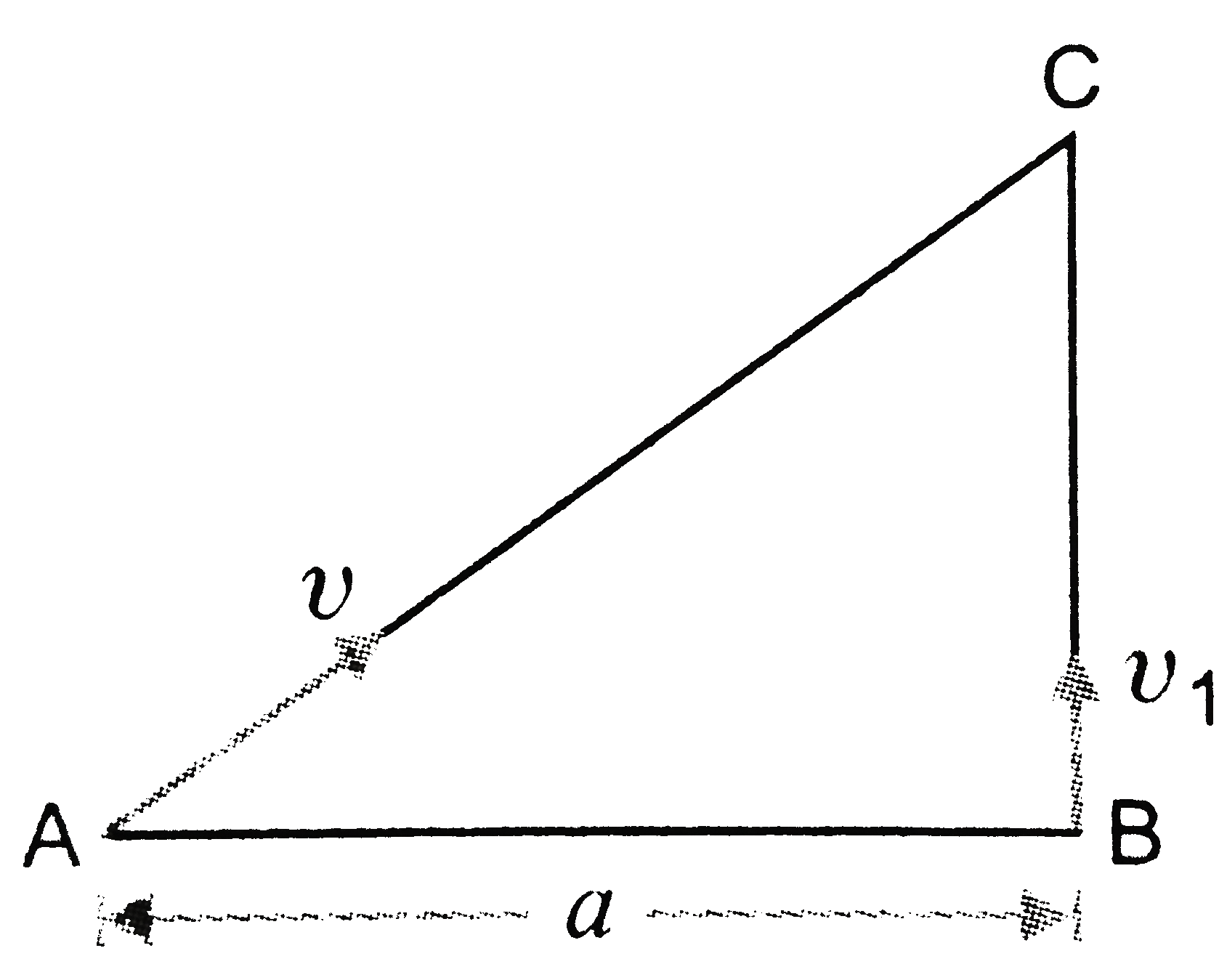 .
. 


Topper's Solved these Questions
KINEMATICS
PRADEEP|Exercise 3 Con ceptual Problems|27 VideosKINEMATICS
PRADEEP|Exercise 4 Conceptual Problems|1 VideosKINEMATICS
PRADEEP|Exercise 1 Con ceptual Problems|14 VideosGRAVIATION
PRADEEP|Exercise Assertion-Reason Type Questions|19 VideosLAWS OF MOTION
PRADEEP|Exercise Assertion- Reason Type Questions|17 Videos
Similar Questions
Explore conceptually related problems
PRADEEP-KINEMATICS-2 Con ceptual Problems
- The direction in which an obect moves is given by thedirection of velo...
Text Solution
|
- From top of a huilding a ball is dropped while another is frpjected ho...
Text Solution
|
- A body travels along a straight line with uniform acceleration a(1) f...
Text Solution
|
- The driver of a train moving at a speed v(1) sights another train at ...
Text Solution
|
- Two ends of a train moving with a constant acceleration pass a certain...
Text Solution
|
- A passenger is standing d metres away from a bus. The bus begins to mo...
Text Solution
|
- In a car race, A takes a time of t s, less than car B at the finish an...
Text Solution
|
- How is the position-time graph of uniformly accelerated motion id one ...
Text Solution
|
- How is thevlocity-time graph of uniformly accelerated motion helpful i...
Text Solution
|
- An object has a uniformly acclerated motion. The object always slows d...
Text Solution
|
- A ball is dropped vertically from a height d above the ground . It hit...
Text Solution
|
- Two boys are standing at the ends A and B of a ground, where AB=a. The...
Text Solution
|
- If the initial velocity of aparticle is (u) collinera acceleration at ...
Text Solution
|
- The dirver of a car travelling at a velcituy (v) suddenly sees a broad...
Text Solution
|
- The acceleration. If v(0) is themagnitude the engine is cut off, is ...
Text Solution
|