Home
Class 11
PHYSICS
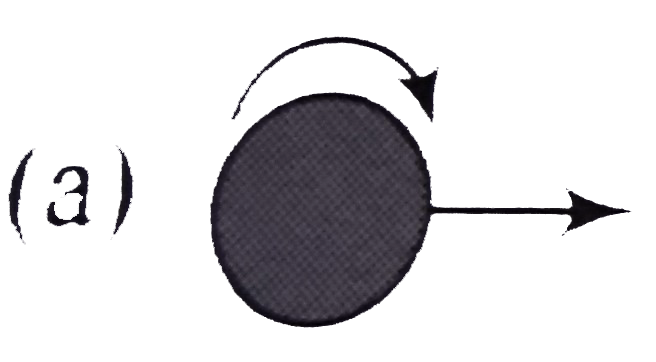
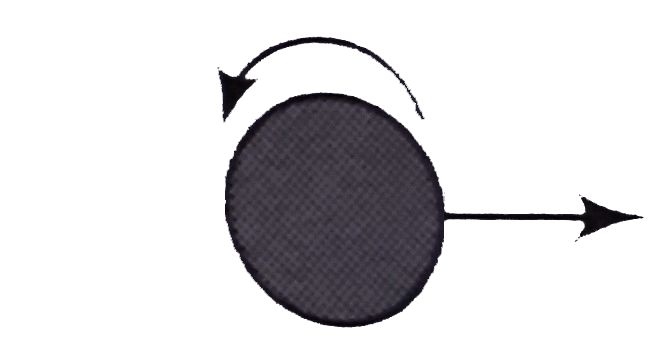
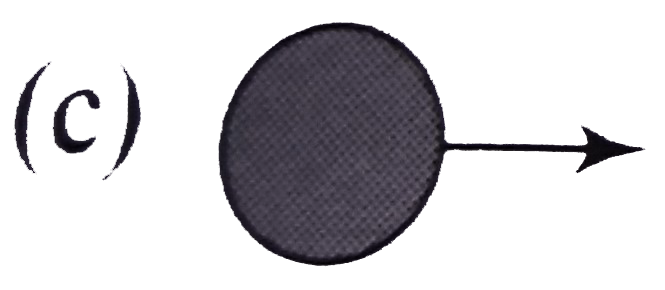
To get the maximum flight a ball must be...

To get the maximum flight a ball must be thrown as :

A

B

C

D

Text Solution

AI Generated Solution

The correct Answer is:

To determine how to achieve maximum flight for a ball when thrown, we can analyze the effects of velocity and spin on the ball's trajectory using Bernoulli's principle. Here’s a step-by-step solution: ### Step 1: Understand the Concept of Bernoulli's Principle Bernoulli's principle states that in a fluid flow, an increase in the fluid's velocity occurs simultaneously with a decrease in pressure. This principle will help us analyze the effects of different throwing techniques on the ball's flight. **Hint:** Recall that Bernoulli's equation relates pressure and velocity in fluid dynamics. ### Step 2: Analyze the Options Given We have four options regarding how to throw the ball: 1. Forward velocity with clockwise spin. 2. Forward velocity with anti-clockwise spin. 3. Only forward velocity. 4. Any of these methods could yield the same result. **Hint:** Consider how the direction of spin affects the velocity distribution around the ball. ### Step 3: Evaluate Option A (Clockwise Spin) When the ball is thrown with a forward velocity and a clockwise spin: - The upper surface of the ball has a velocity of \( V - R\omega \) (where \( R \) is the radius and \( \omega \) is the angular velocity). - The lower surface has a velocity of \( V + R\omega \). - This results in higher pressure on the top and lower pressure on the bottom, creating a net downward force. **Hint:** Think about how the pressure differences affect the ball's flight. ### Step 4: Evaluate Option B (Anti-clockwise Spin) When the ball is thrown with a forward velocity and an anti-clockwise spin: - The upper surface has a velocity of \( V + R\omega \). - The lower surface has a velocity of \( V - R\omega \). - This results in lower pressure on the top and higher pressure on the bottom, creating a net upward force. **Hint:** Consider how the upward force could enhance the ball's flight. ### Step 5: Evaluate Option C (Only Forward Velocity) If the ball is thrown with only forward velocity, there are no pressure differences created by spin. The pressures above and below the ball remain equal, resulting in no net force acting on the ball. **Hint:** Reflect on how the absence of spin affects the pressure distribution. ### Step 6: Conclusion From the analysis: - Option A results in a net downward force, reducing flight. - Option B results in a net upward force, enhancing flight. - Option C provides no net force. Thus, the best method to achieve maximum flight for the ball is to throw it with a forward velocity and an anti-clockwise spin (Option B). **Final Answer:** To achieve maximum flight, the ball must be thrown with a forward velocity and an anti-clockwise spin (Option B).

To determine how to achieve maximum flight for a ball when thrown, we can analyze the effects of velocity and spin on the ball's trajectory using Bernoulli's principle. Here’s a step-by-step solution: ### Step 1: Understand the Concept of Bernoulli's Principle Bernoulli's principle states that in a fluid flow, an increase in the fluid's velocity occurs simultaneously with a decrease in pressure. This principle will help us analyze the effects of different throwing techniques on the ball's flight. **Hint:** Recall that Bernoulli's equation relates pressure and velocity in fluid dynamics. ### Step 2: Analyze the Options Given ...
Promotional Banner

Topper's Solved these Questions

  • FLUID MECHANICS

    A2Z|Exercise Application Of Bernoulli'S Theorem And Velocity Of Efflux|19 Videos
  • FLUID MECHANICS

    A2Z|Exercise Problems Based On Mixed Concepts|29 Videos
  • FLUID MECHANICS

    A2Z|Exercise Buoyancy And Floatation|40 Videos
  • GENERAL KINEMATICS AND MOTION IN ONE DIMENSION

    A2Z|Exercise Chapter Test|30 Videos

Similar Questions

Explore conceptually related problems

When a ball is thrown up vertically with velocity v_0 , it reaches a maximum height of h. If one wishes to triple the maximum height then the ball should be thrown with velocity

A ball is thrown from the ground with velocity u at an angle theta with horizontal. If the coefficient of restitution is e , find the time of flight , the maximum height and the horizontal range after the first collision.

Balls are thrown vertically upwards in such a way that the next ball is thorwn when the previous one is at the maximum height. If the maximum hieght is 5m , the number of balls thrown per minute will be

A very large number of balls are thrown vertically upwards in quick successions in such a way that the next ball is thrown when the previous one is at the maximum height. If the maximum height is 5m, then number of balls thrown per minute is (take g=10m//s^(2) )

In quick succession, a large number of balls are throun up vertically in such a way that the next ball is thrown up when the previous ball is at the maximum height. If the maximum height is 5 m , then find the mumber of the thrown up per second (g=10 m s^(-2)).

Two balls are thrown with the same speed from a point O at the same time so that their horizontal ranges are same. If the difference of the maximum height attained by them is equal to half of the sum of the maximum heights, then the angles of projection for the balls are

A small ball of mass m is thrown upward with velocity u from the ground. The ball experiences a resistive force mkv^(2) where v is its speed. The maximum height attained by the ball is :

At what angle with the horizontal should a ball be thrown so that the range R is related to the time of flight as R = 5 T^2 ? (Take g = 10 ms^(-2)) .

A2Z-FLUID MECHANICS-Continuity Equation And Bernoulli'S Theorem
  1. If two ping-pong balls are suspended near each other and a fast stream...

    Text Solution

    |

  2. The vertical sections of the wing of a fan are shown. Maximum upthrust...

    Text Solution

    |

  3. To get the maximum flight a ball must be thrown as :

    Text Solution

    |

  4. In the following fig., the flow of liquid through a horizontal pipe is...

    Text Solution

    |

  5. When a tap is closed, the manometer attached to the pipe reads 3.5xx10...

    Text Solution

    |

  6. Water flows through a frictionless duct with a cross-section varying a...

    Text Solution

    |

  7. An ideal fluid is flowing through the given tubes which is placed on a...

    Text Solution

    |

  8. An L-shaped tube with a small orifice is held in a water stream as sho...

    Text Solution

    |

  9. The tube shown in figure is of unifrom corss-section. Liquid flows thr...

    Text Solution

    |

  10. Water from a tap emerges vertically downwards with an initial velocity...

    Text Solution

    |

  11. An incompressible liquid travels as shown in fig. The speed of the liq...

    Text Solution

    |

  12. A broad pipe having a radius 10 cm branches into two pipes of radii, 5...

    Text Solution

    |

  13. Consider ideal flow of water through a pipe with its axis horizontal. ...

    Text Solution

    |

  14. Figure shows an ideal fluid flowing through a uniform cross-sectional ...

    Text Solution

    |

  15. The speed of flow past the lower surface of a wing of an aeroplane is ...

    Text Solution

    |

  16. A manometer connected to a closed tap reads 3.5xx10^(5)N//m^(2).When t...

    Text Solution

    |

  17. An L-shaped glass tube is immersed in a flowing liquid such that its o...

    Text Solution

    |

  18. A horizontal pipeline carries water in a streamline flow. At a point a...

    Text Solution

    |

  19. A long cylindrical tank of radius 1m is being filled by a pipe of radi...

    Text Solution

    |

  20. A liquid flows through a horizontal tube as shown in figure. The veloc...

    Text Solution

    |
