

Home
Class 12
CHEMISTRY
In a set of reactions acetic acid yields...

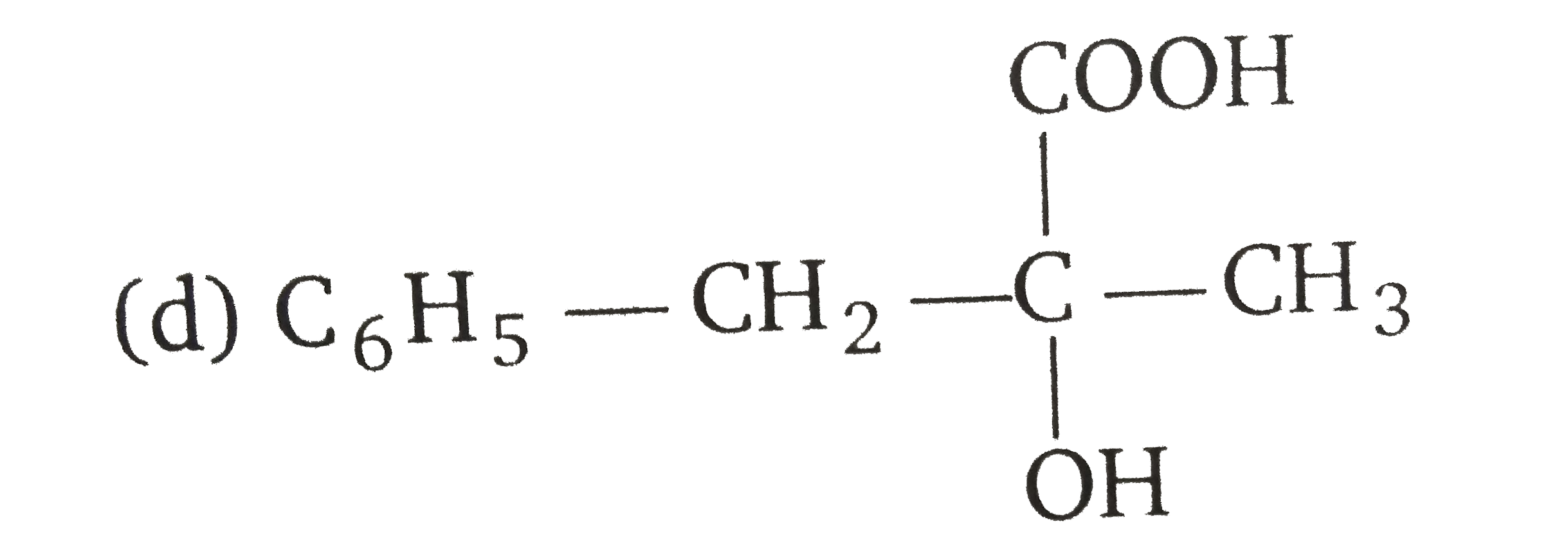
In a set of reactions acetic acid yields a product `[D]` The structures of `[D]` would be:
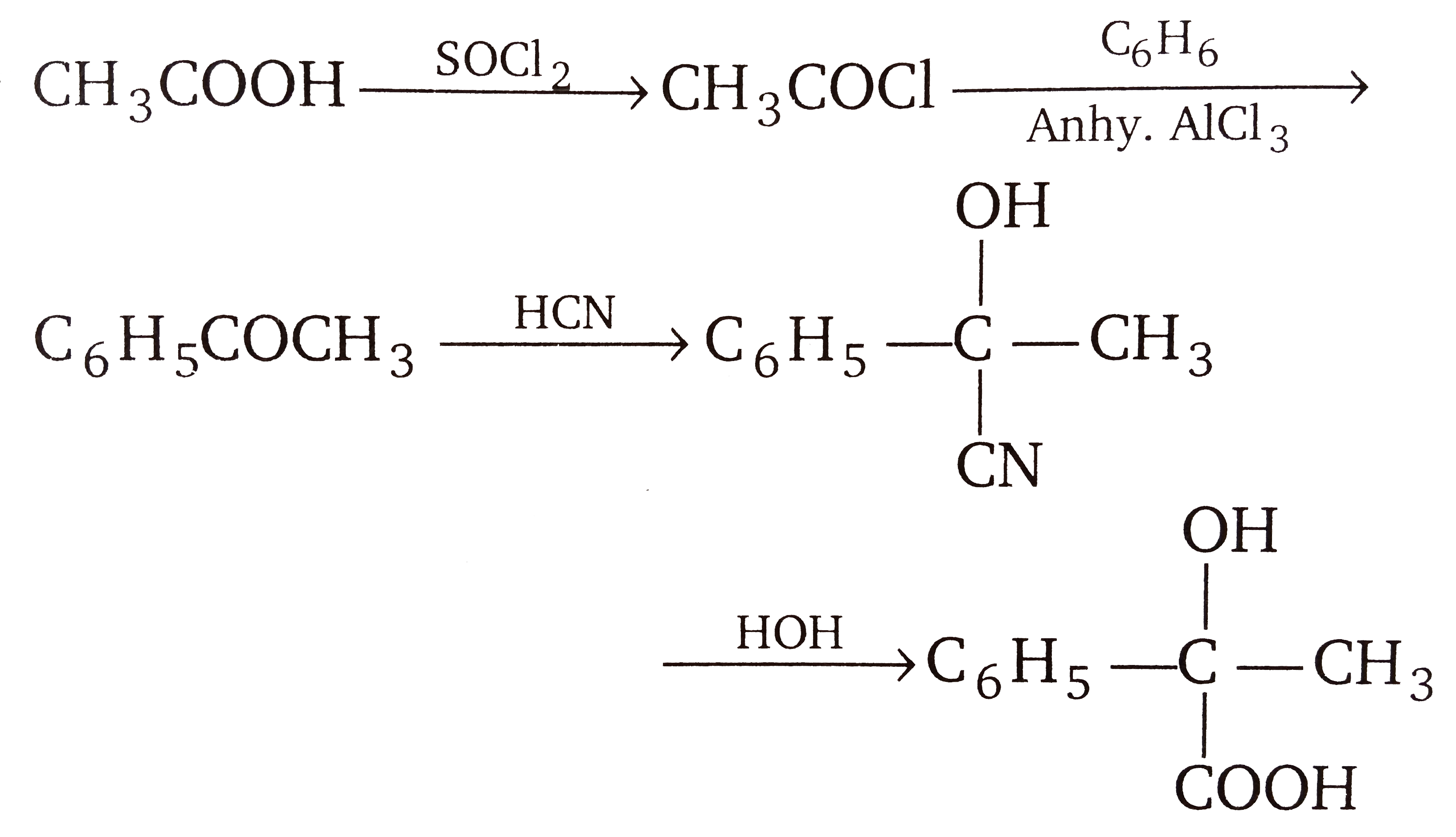
`CH_(3)COOHoverset(SOCl_(2))to[A]overset(C_(6)H_(5))underset(Anhy. AlCl_(3))to[B]`
`overset(HCN)to[C]overset(HOH)to[D]`

A

`C_(6)H_(5)CH_(2)-overset(OH)overset(|)underset(CN)underset(|)(C)-CH_(3)`

B

`C_(6)H_(5)-overset(CN)overset(|)underset(OH)underset(|)(C)-CH_(3)`

C

`C_(6)H_(5)-overset(OH)overset(|)underset(CH_(3))underset(|)(C)-COOH`

D

Text Solution

Verified by Experts

Promotional Banner

Topper's Solved these Questions

  • ELECTROCHEMISTRY

    P BAHADUR|Exercise Exercise (9) ADVANCED NUMERICAL PROBLEMS|36 Videos
  • SOLID STATE

    P BAHADUR|Exercise Exercise 9|1 Videos

Similar Questions

Explore conceptually related problems

CH_(3)COOH+PCI_(5)to A overset(C_(6)H_(5)) underset("Anhy" AICI_(3)) rarrB. The product B is

Perdict the product (C) of the following sequence of reactions : CH_(3)COOHoverset(PCl_(5))rarr[A]overset(C_(6)H_(6))underset("Anhyd."AlCl_(3))rarr[B]overset(CH_(3)MgBr)underset(H_(2)O^(+))rarr[C]

In a act reactions acid yielded a product D CH_(2) COOH overset (SOCI) to A overset ("Benzene") underset (Anbr AICI_(3)) to B overset (HCN) to C overset (HOH) to D .

A set of reactions yielded a product (D): CH_(3)COOHoverset(SOCl_(2))to(A)underset(anhyd.AlCl_(3))overset("Benzene")to(B)overset(HCN)to(C )overset(HOH)to(D) The structure of (D) would be:

Predict the product 'C' in the following series of reactions : CH_(3)-COOHoverset(PCl_(5))to'A'underset("Anhyd" AlCl_(3))overset(C_(6)H_(6))to'B'overset(CH_(3)MgBr)to'C'

In a set of reactions, propionic acid yielded a compound (D). CH_(3)CH_(2)COOHoverset(SOCl_(2))to(B)overset(NH_(3))to(C )underset(Br_(2))overset(KOH)to(D) The structure of (D) would be:

P BAHADUR-MOCK TEST PAPER-Exercise
  1. In a set of reactions acetic acid yields a product [D] The structures ...

    Text Solution

    |

  2. The continuous chain hydrocarbon isomeric with 2-methyl-3-ethyl hexane...

    Text Solution

    |

  3. In solid ammonia, each NH(3) molecule has six other NH(3) molecules as...

    Text Solution

    |

  4. Which statement is not correct about the given nuclear reaction. .(3...

    Text Solution

    |

  5. The correct statement are: 1. for an elementary reaction order and m...

    Text Solution

    |

  6. An aqueous solution of urea has a freezing point of -0.52^(@)C. Assumi...

    Text Solution

    |

  7. The potential of a silver// silver chloride electrode measured with re...

    Text Solution

    |

  8. The possible product in the reaction given below is:

    Text Solution

    |

  9. The set of molecule having two different bond angles is 1. Cl(3),2.X...

    Text Solution

    |

  10. Statement-1 Diamond is tetrahedral, graphite is planar and C(60) has b...

    Text Solution

    |

  11. Statement-1L The bond angles in molecules depneds upon hybridization e...

    Text Solution

    |

  12. Statement-1 The ratio of sigma-bonds and pi-bonds in tetra-cynomethane...

    Text Solution

    |

  13. The compounds 1,2,3,4 given below are allowed in undergo electrophilic...

    Text Solution

    |

  14. The compounds 1,2,3,4 given below are allowed in undergo electrophilic...

    Text Solution

    |

  15. The compounds 1,2,3,4 given below are allowed in undergo electrophilic...

    Text Solution

    |

  16. The compounds 1,2,3,4 given below are allowed in undergo electrophilic...

    Text Solution

    |

  17. Which of the following is correct order for basic nature?

    Text Solution

    |

  18. Which set represents interamolecular redox changes? 1. 2KClO(3)to 2K...

    Text Solution

    |

  19. In the reaction, A and B are:

    Text Solution

    |

  20. Alkyl halides reacts with dialkyl copper reagents to give (A). The rea...

    Text Solution

    |