
Home
Class 11
CHEMISTRY
The electrophile, E^((o+)) attacks the b...

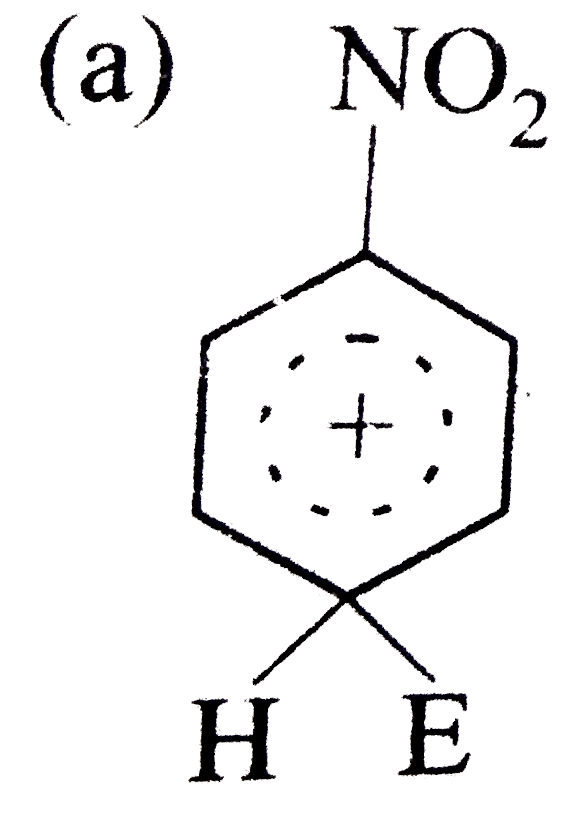
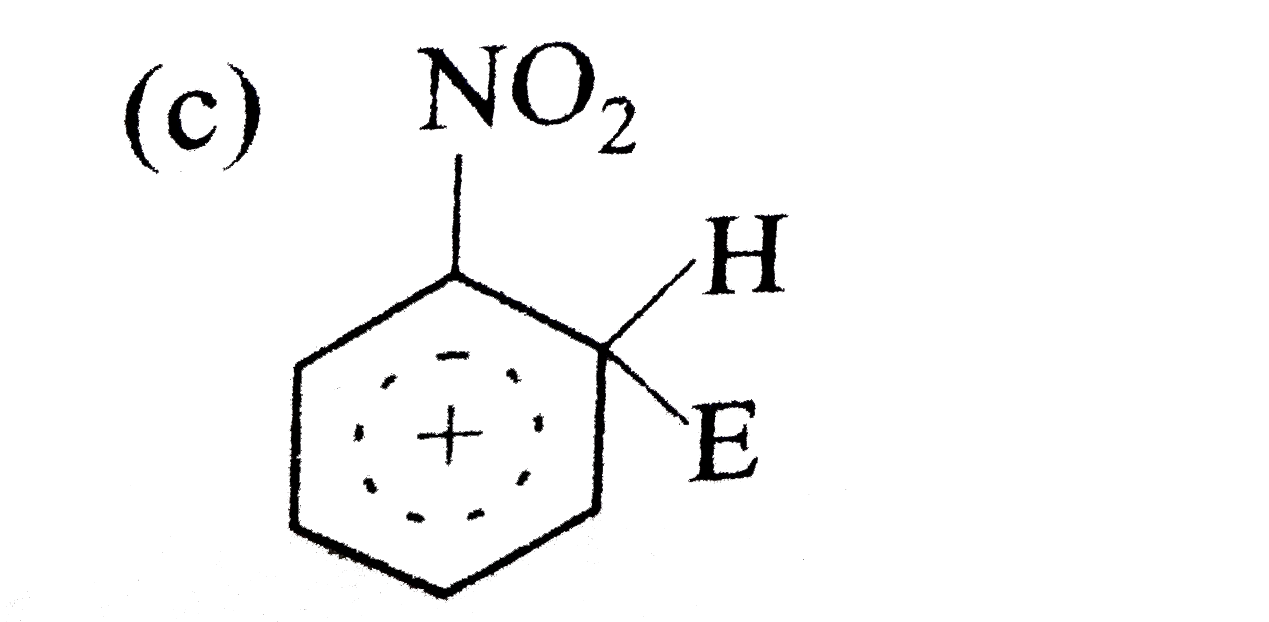
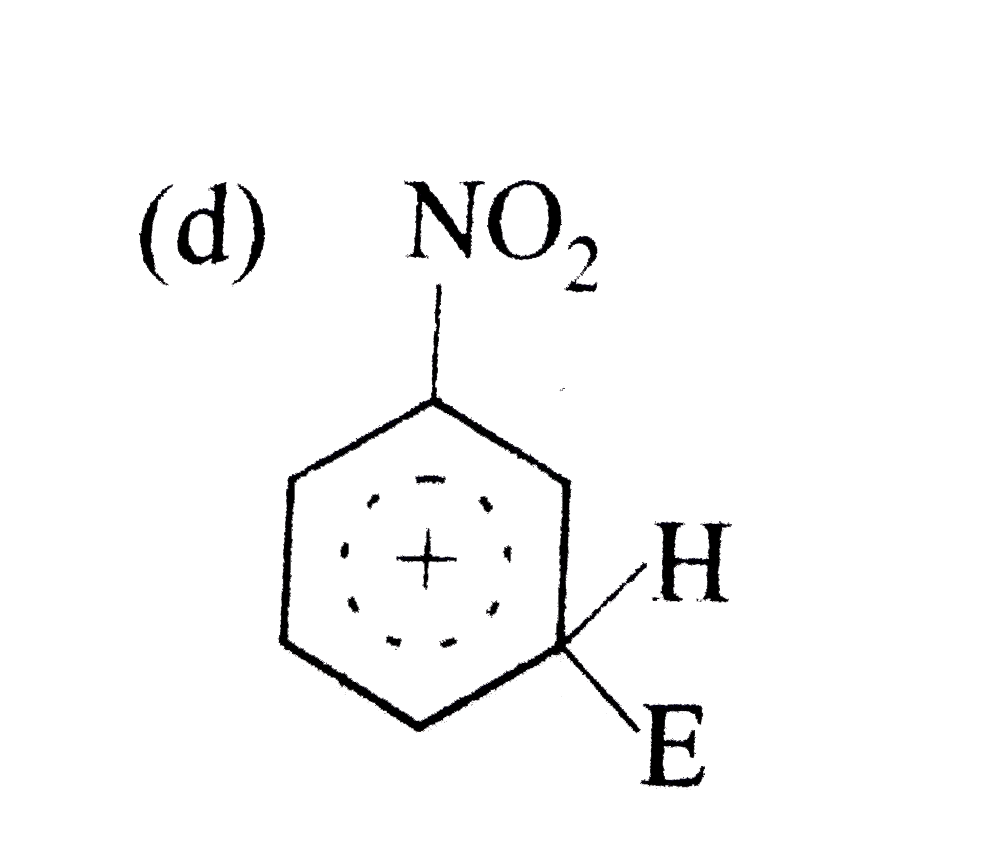
The electrophile, `E^((o+))` attacks the benzene ring to generate the intermediate `sigma`-complex. Of the following which `sigma`-complex is of lowest energy?

A

B

C

D

Text Solution

AI Generated Solution

The correct Answer is:

To determine which sigma-complex is of lowest energy among the given options, we need to analyze the stability of the sigma-complexes formed when an electrophile attacks the benzene ring. Here’s a step-by-step solution: ### Step 1: Understand the Formation of Sigma-Complex When an electrophile (E⁺) attacks the benzene ring, it disrupts the aromaticity of the benzene and forms a sigma-complex (also known as an arenium ion). The positive charge in the sigma-complex can be stabilized by resonance. ### Step 2: Identify the Influence of Substituents The stability of the sigma-complex is influenced by the nature of the substituents on the benzene ring: - **Electron-withdrawing groups (EWGs)**, such as NO₂, decrease the stability of the sigma-complex by pulling electron density away from the ring, increasing the positive charge density on the carbon where the electrophile is attached. - **Electron-donating groups (EDGs)**, such as alkyl groups, increase the stability of the sigma-complex by donating electron density to the ring, thus reducing the positive charge density. ### Step 3: Analyze the Given Sigma-Complexes Assuming we have four sigma-complexes labeled A, B, C, and D: - **Complexes A, C, and D** contain the NO₂ group, which is an electron-withdrawing group. This destabilizes the sigma-complex due to increased positive charge density. - **Complex B** does not have any electron-withdrawing groups and is therefore more stable. ### Step 4: Conclusion on Stability Since Complex B lacks destabilizing substituents, it will be the most stable among the options provided. Therefore, it will have the lowest energy. ### Final Answer The sigma-complex of lowest energy is **B**.

To determine which sigma-complex is of lowest energy among the given options, we need to analyze the stability of the sigma-complexes formed when an electrophile attacks the benzene ring. Here’s a step-by-step solution: ### Step 1: Understand the Formation of Sigma-Complex When an electrophile (E⁺) attacks the benzene ring, it disrupts the aromaticity of the benzene and forms a sigma-complex (also known as an arenium ion). The positive charge in the sigma-complex can be stabilized by resonance. ### Step 2: Identify the Influence of Substituents The stability of the sigma-complex is influenced by the nature of the substituents on the benzene ring: - **Electron-withdrawing groups (EWGs)**, such as NO₂, decrease the stability of the sigma-complex by pulling electron density away from the ring, increasing the positive charge density on the carbon where the electrophile is attached. ...
Promotional Banner

Topper's Solved these Questions

  • SOME BASIC PRINCIPALS OF ORGANIC CHEMISTRY

    A2Z|Exercise Structure Isomerism|28 Videos
  • SOME BASIC PRINCIPALS OF ORGANIC CHEMISTRY

    A2Z|Exercise Tautomerism|16 Videos
  • SOME BASIC PRINCIPALS OF ORGANIC CHEMISTRY

    A2Z|Exercise Acid And Basic Strength|29 Videos
  • SOME BASIC CONCEPTS OF CHEMISTRY

    A2Z|Exercise Section D - Chapter End Test|30 Videos
  • STATES OF MATTER

    A2Z|Exercise Section D - Chapter End Test|30 Videos

Similar Questions

Explore conceptually related problems

Those groups which activate the benzene ring are generally

Which of the following complexes has lowest molar conductance ?

Which of the following complex is with lowest number of unpaired electron

Which of the following complexes is a paramagnetic complex?

A2Z-SOME BASIC PRINCIPALS OF ORGANIC CHEMISTRY-Bond Fission, Reagents, Reactive Intermediates And Their Stability
  1. Which of the following is not a nucleophile?

    Text Solution

    |

  2. The stability order of following carbocation is

    Text Solution

    |

  3. The electrophile, E^((o+)) attacks the benzene ring to generate the in...

    Text Solution

    |

  4. The compound which would give the most stable carbocation on dehydrati...

    Text Solution

    |

  5. Which of the following is the rearranged more stable carbocation of th...

    Text Solution

    |

  6. Which of the following is the rearranged more stable carbocation of th...

    Text Solution

    |

  7. Which of the following is the least stable carbanion?

    Text Solution

    |

  8. Arrange the following carbocation in decreasing order of stability.

    Text Solution

    |

  9. Arrange the following carbocation in decreasing order of stability.

    Text Solution

    |

  10. Among the following, the paramagnetic species is:

    Text Solution

    |

  11. The increasing order of stability of the following free radicals is:

    Text Solution

    |

  12. The hybrid state of positively charged carbon in vinyl (CH2 = CH^+ ) c...

    Text Solution

    |

  13. The stability of given free radicals in decreasing order is (i) CH(3...

    Text Solution

    |

  14. Which of the following is the correct order of stability of free radic...

    Text Solution

    |

  15. In the following carbocations, the stability order is:

    Text Solution

    |

  16. The decreasing order of stability of the following cations is unders...

    Text Solution

    |

  17. Which of the following is most stable carbocation?

    Text Solution

    |

  18. Which of the following is most stable carbocation?

    Text Solution

    |

  19. The most stable carbocation is:

    Text Solution

    |

  20. Arrange the following carbanions in decreasing order of stability: ...

    Text Solution

    |
