Home
Class 12
CHEMISTRY
Which of the following curves represents...

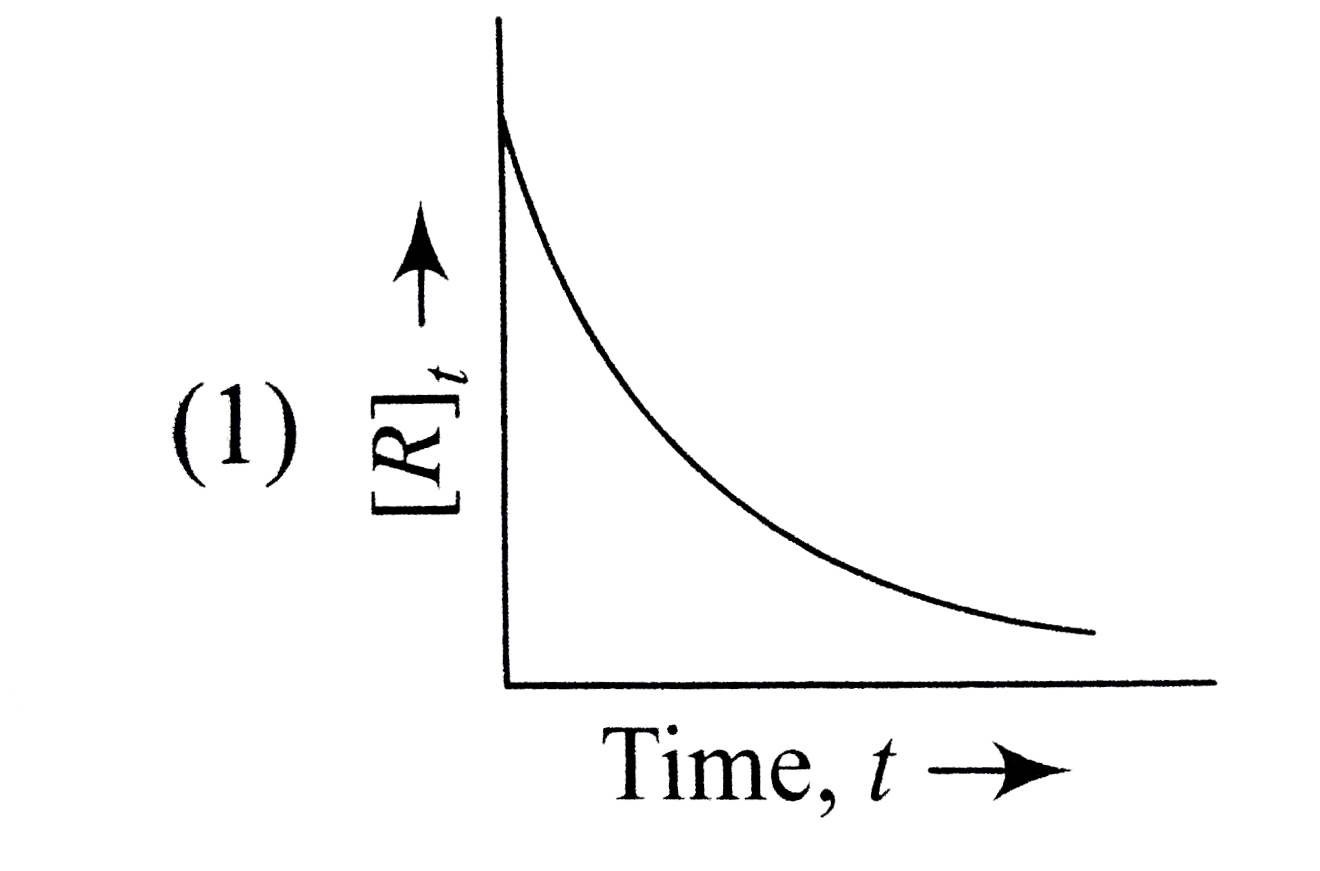
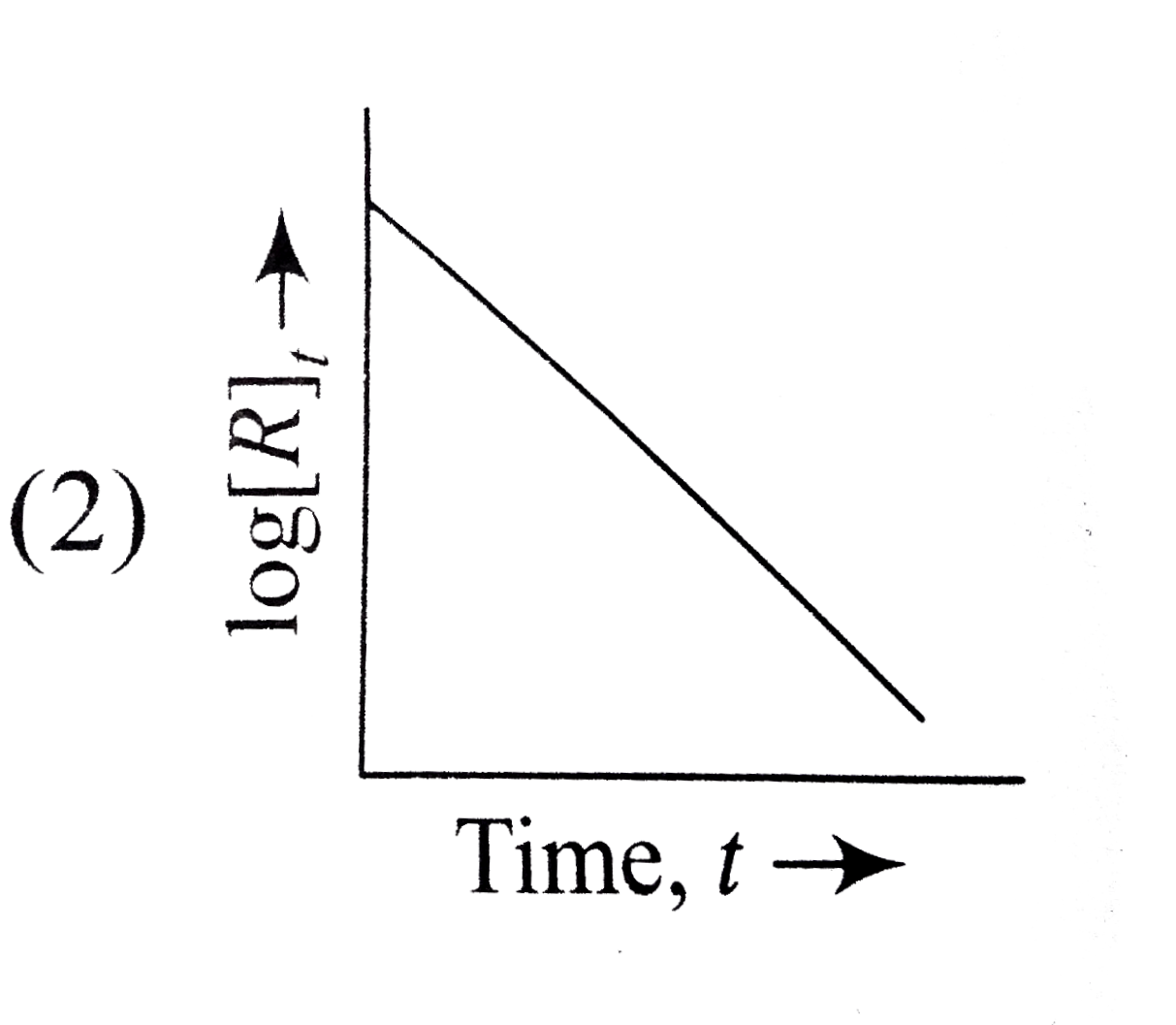
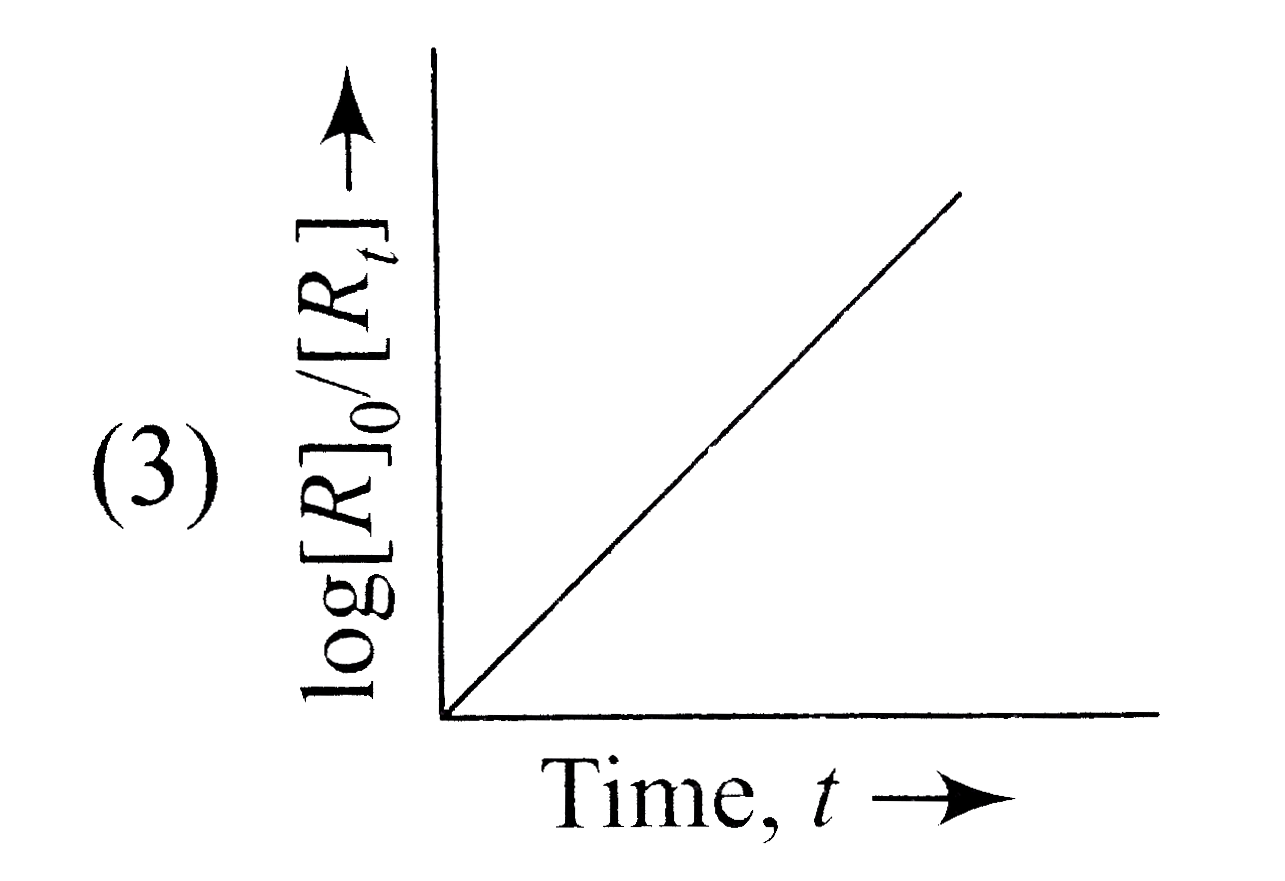
Which of the following curves represents a first order reaction.

A

B

C

D

All of these

Text Solution

AI Generated Solution

The correct Answer is:

To determine which of the given curves represents a first-order reaction, we need to analyze the integrated rate law for first-order reactions. ### Step-by-Step Solution: 1. **Understanding the Rate Law for First-Order Reactions**: The rate of a first-order reaction can be expressed as: \[ -\frac{d[R]}{dt} = k[R] \] where \([R]\) is the concentration of the reactant, \(t\) is time, and \(k\) is the rate constant. 2. **Integrated Rate Law**: For a first-order reaction, the integrated rate law is given by: \[ \ln\left(\frac{[R_0]}{[R]}\right) = kt \] where \([R_0]\) is the initial concentration of the reactant and \([R]\) is the concentration at time \(t\). 3. **Identifying the Graphs**: - **First Curve**: This curve shows the concentration of the reactant \([R]\) versus time \(t\). For a first-order reaction, this curve would typically show an exponential decay. - **Second Curve**: This curve shows \(\ln[R]\) versus time \(t\). For a first-order reaction, this plot should yield a straight line with a negative slope. - **Third Curve**: This curve shows \(\ln\left(\frac{[R_0]}{[R]}\right)\) versus time \(t\). According to the integrated rate law, this should also yield a straight line with a positive slope. 4. **Conclusion**: The second and third curves represent first-order reactions, as they yield straight lines when plotted. However, the most common representation of a first-order reaction is the plot of \(\ln[R]\) versus time, which is the second curve. ### Final Answer: The second curve (log concentration of reactant at time \(t\) versus time \(t\)) represents a first-order reaction. ---

To determine which of the given curves represents a first-order reaction, we need to analyze the integrated rate law for first-order reactions. ### Step-by-Step Solution: 1. **Understanding the Rate Law for First-Order Reactions**: The rate of a first-order reaction can be expressed as: \[ -\frac{d[R]}{dt} = k[R] ...
Promotional Banner

Topper's Solved these Questions

  • CHEMICAL KINETICS

    R SHARMA|Exercise Follow-up 5|12 Videos
  • CHEMICAL KINETICS

    R SHARMA|Exercise Follow-up 6|2 Videos
  • CHEMICAL KINETICS

    R SHARMA|Exercise Follow-up 3|10 Videos
  • BIOMOLECULES

    R SHARMA|Exercise Archives|47 Videos
  • CHEMISTRY IN EVERYDAY LIFE

    R SHARMA|Exercise Archives|11 Videos

Similar Questions

Explore conceptually related problems

Which of the following curves represents a third order reaction ?

Which of the following graphs represents a first order reaction ?

Which of the following curves represents a second order reaction ? [x = product oncentration (a-x) = reactant concentration)

Which of the following does not represent a first order reation?

Which of the following curve represent zero order reaction of A rarr products ?

R SHARMA-CHEMICAL KINETICS-Follow-up 4
  1. For a zero order reaction of the type A rarr products, the integrated ...

    Text Solution

    |

  2. Reactant 'A' (initial concentration, a) reacts according to zero order...

    Text Solution

    |

  3. The reaction A(g)rarrB(g) is found to be zero order with respect to A(...

    Text Solution

    |

  4. Which of the following graphs is the characteristic of a zero order r...

    Text Solution

    |

  5. How many half-lives are needed to complete the zeroth order reaction ?

    Text Solution

    |

  6. In a certain reaction, 10% of the reactant decomposes in one hour, 20%...

    Text Solution

    |

  7. For a first order reaction. When the initial concentration, a is not k...

    Text Solution

    |

  8. The reaction 2N(2)O(5)(g)rarr4NO(2)(g)+O(2)(g) is found to be firt...

    Text Solution

    |

  9. The concept of half life is useful for the reactions of

    Text Solution

    |

  10. The integrated rate expression for a first order reaction can be writt...

    Text Solution

    |

  11. Which of the following curves represents a first order reaction.

    Text Solution

    |

  12. For a first order reaction

    Text Solution

    |

  13. Which of the following curves represents a second order reaction ? [x ...

    Text Solution

    |

  14. A gaseous substance (AB(3)) decomposes according to the overall equati...

    Text Solution

    |

  15. The time required for the decompoistion of 99.9% fraction of a first o...

    Text Solution

    |

  16. At 373 k, the following reaction A(g)rarr2B(g)+C(g) is found to be of...

    Text Solution

    |

  17. The rate law of the reaction A+2Brarr Product is given by (d("Product"...

    Text Solution

    |

  18. Which of the following is an example of a pseudop first order reaction...

    Text Solution

    |

  19. Rate for a zero order reaction is 2xx10^(-2) mol L^(-1) s^(-1) . If th...

    Text Solution

    |

  20. Which of the following curves represents a third order reaction ?

    Text Solution

    |
