Text Solution
Verified by Experts



Topper's Solved these Questions
P BLOCK ELEMENTS
RESONANCE|Exercise ALP PART 1 OBJECTIVE Assertion/ Reasonig|6 VideosP BLOCK ELEMENTS
RESONANCE|Exercise ALP PART 1 Comprehension # 1 OBJECTIVE|8 VideosP BLOCK ELEMENTS
RESONANCE|Exercise ALP PART CBSC- III SUBJECTIVE|1 VideosNUCLEAR CHEMISTRY
RESONANCE|Exercise STAGE-II|1 VideosP-BLOCK ELEMENT (BORON AND CARBON FAMILY)
RESONANCE|Exercise PART - III : OLYMPIAD PROBLEMS (PREVIOUS YEARS) STAGE - V (INTERNATIONAL CHEMISTRY OLYMPIAD (IChO)) Problem 3|8 Videos
Similar Questions
Explore conceptually related problems
RESONANCE-P BLOCK ELEMENTS-ALP PART 1 OBJECTIVE
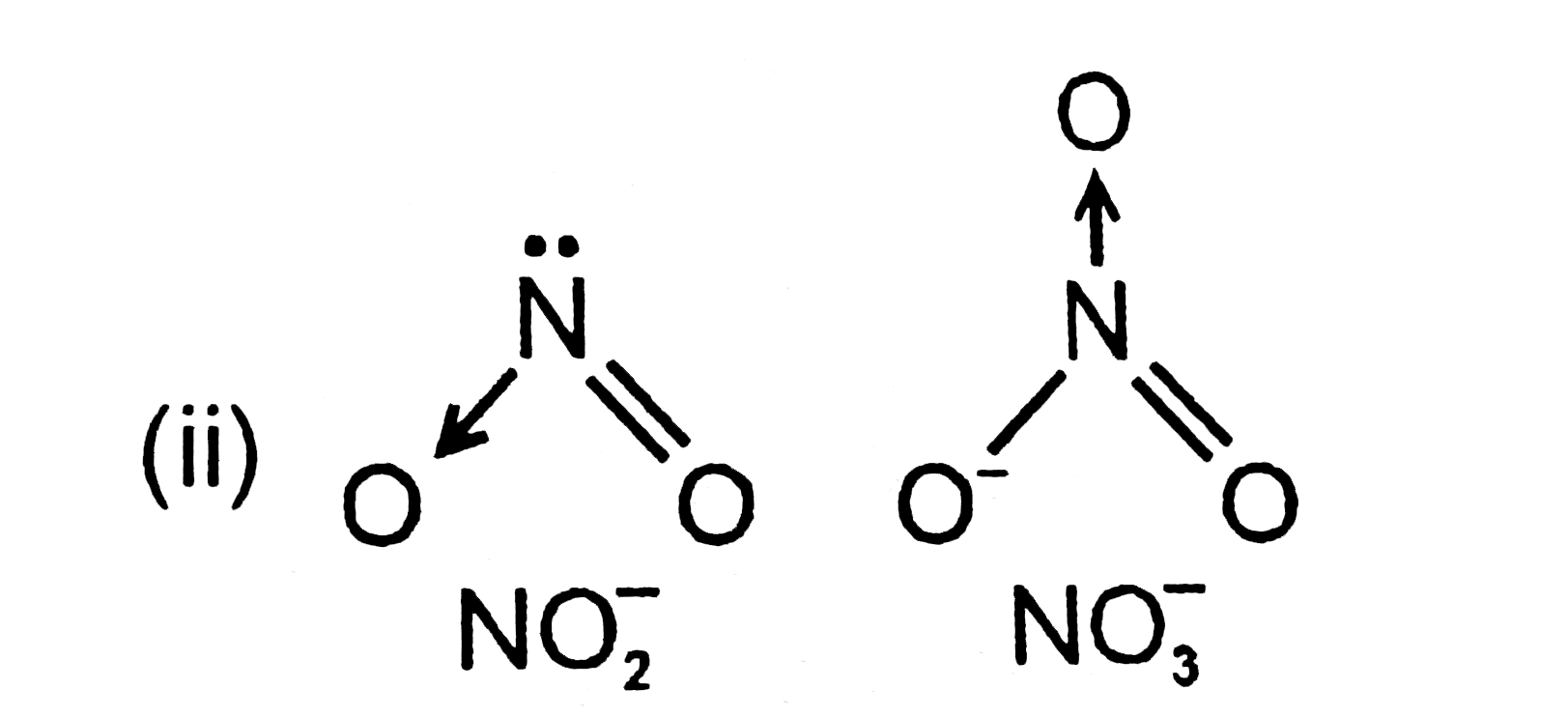
- State reasons for each of the following : (i) "The" N-O "bond in" NO...
Text Solution
|
- (a) Explain the following : (i) NF(3) is an exothermic compound wher...
Text Solution
|
- How would you account for the following : (i) H(2)S is acidic thanH(...
Text Solution
|
- Why BiH3 is strongest reducing agent amongst group 15 hydrides ?
Text Solution
|
- Explain the following facts giving approciate reason in each case : ...
Text Solution
|
- (A) complete the following chemical equations : (i) Cu+HNO(3) (dilut...
Text Solution
|
- What happens when (i) PCl(5) is heated ? (ii) H(3)PO(3) is heated ...
Text Solution
|
- Nitrogen shows different oxidation states in the range:
Text Solution
|
- Dinitrogen gas is evolved when sodium nitrite is heated :
Text Solution
|
- Dinitrogen cannot be librated by :
Text Solution
|
- Dinitrogen can be purified from the impurities of NO and NH(3) by pass...
Text Solution
|
- Ammonia and red hot CuO react to produce :
Text Solution
|
- Which compounds are produced when ammonia reacts with excess of bromin...
Text Solution
|
- A metal X on heating in nitrogen gas gives Y,Y on treatment with H(2)O...
Text Solution
|
- Which of the following is not correct ?
Text Solution
|
- Which is not produced when Nl(3)NH(3) is rubbed against the hard surfa...
Text Solution
|
- Which will not give precipitate with NH(4)OH Solution ?
Text Solution
|
- Which of the following cannot result in the formation of NO ?
Text Solution
|
- A lighting flash through air may result in the formation of :
Text Solution
|
- Which of the following does not give NO(2) by heating at 500^(circ)C ?
Text Solution
|