
Home
Class 12
CHEMISTRY
Alkenes undergo electrophilic addition r...

Alkenes undergo electrophilic addition reactions. Electrophilic addition to unsymmetrical alkenes involve the formation of a more stable carbocation intermediate in the first step which is rate determining and carbocation is then attacked by a nuclephile to form product
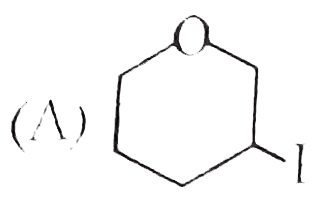
`HO-CH_(2)-CH_(2)-CH_(2)-CH=CH_(2)underset(NaHCO_(3))overset(I_(2))rarr` major product formed is

A

B

C

`HO-CH_(2)-CH_(2)-underset(I)underset(l)CH-underset(l)underset(I)CH_(2)`

D

`CH_(2)=CH-CH_(2)-CH_(2)-CHO`

Text Solution

Verified by Experts

The correct Answer is:

B
Promotional Banner

Topper's Solved these Questions

Similar Questions

Explore conceptually related problems

Alkenes undergo electrophilic addition reactions. Electrophilic addition to unsymmetrical alkenes involve the formation of a more stable carbocation intermediate in the first step which is rate determining and carbocation is then attacked by a nuclephile to form product +H_(2)O overset(H_(2)SO_(4))rarr Product

Alkenes undergo electrophilic addition reactions. Electrophilic addition to unsymmetrical alkenes involve the formation of a more stable carbocation intermediate in the first step which is rate determining and carbocation is then attacked by a nuclephile to form product Which one of the following alkene reacts most readily with HCI ?

(CH_(3))_(2)C=CH_(2)underset(H_(2)O)overset(Br_(2))rarr The major product of the reaction is

CH_(2)=CH-CH=CH_(2)overset(CCI_(3)Br)rarr product.The major product is:

CH_(2)-CH_(2)-CH_(2)-CH_(3)overset(Br_(2)//hv)(to) Major product in the above reaction is:

CH_(3)CH_(3)+CH_(2)N_(2)underset(or Delta)overset(hv)rarr The product of the reaction is

CH_(3)MgBr underset((ii)H^(+))overset((i)CH_(3)ONH_(2))rarr "Major product is" :

In the reaction (CH_(3))_(3)C-O-CH_(2)CH_(3)+underset((1"mole"))(HI)overset(heat)(rarr) the products formed is (are)

CH_(3)-overset(CH_(2)CH_(3))overset(|)(CH)CH=CHCH_(3)overset(H_(3)O^(+))rarr Major product of the reaction

ALLEN-TEST PAPERS-part-2 chemistry
  1. The most important copper oxide containing minerals are azurite {Cu(3)...

    Text Solution

    |

  2. Alkenes undergo electrophilic addition reactions. Electrophilic additi...

    Text Solution

    |

  3. Alkenes undergo electrophilic addition reactions. Electrophilic additi...

    Text Solution

    |

  4. Alkenes undergo electrophilic addition reactions. Electrophilic additi...

    Text Solution

    |

  5. Match the pairs of compounds (to be distinguished) given in Column-(I)...

    Text Solution

    |

  6. {:("Coloumn-I",,"Column-II"),("(Aqueous solution in standard condition...

    Text Solution

    |

  7. Roasting is carried out in extraction of metal in how many ores/minera...

    Text Solution

    |

  8. Calculate number of significant digits in Avogadro number if Boltzmann...

    Text Solution

    |

  9. We have taken a saturated solution of AgBr, whose K(sp) is 12xx10^(-14...

    Text Solution

    |

  10. 2 moles of KMnO(4) can oxidise x moles of hydrogen peroxide in weakly ...

    Text Solution

    |

  11. Select the correct statement for a real gas (i)The behaviour of the ...

    Text Solution

    |

  12. Select the incorrect statement

    Text Solution

    |

  13. Two stereoisomers (Shown in fischer projection ) from an epoxide, when...

    Text Solution

    |

  14. Match each of the following four structures with one of the compound A...

    Text Solution

    |

  15. A white crystalline solid (A) on boiling with caustic soda solution ga...

    Text Solution

    |

  16. A reagent is added to a solution of manganous salt in cold dil. HNO(3...

    Text Solution

    |

  17. Defects are basically irregularities in the arrangement of constituent...

    Text Solution

    |

  18. Defects are basically irregularities in the arrangement of constituent...

    Text Solution

    |

  19. Compound (A) has molecular formula C(5)H(12)O. It liberates H(2) gas o...

    Text Solution

    |

  20. compound (A) forms a ketone. It undergoes in following reaction scheme...

    Text Solution

    |
