Home
Class 12
CHEMISTRY
Alkenes undergo electrophilic addition r...

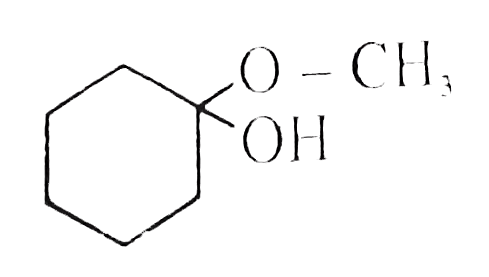
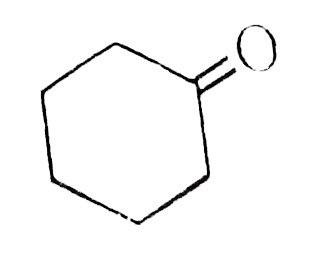
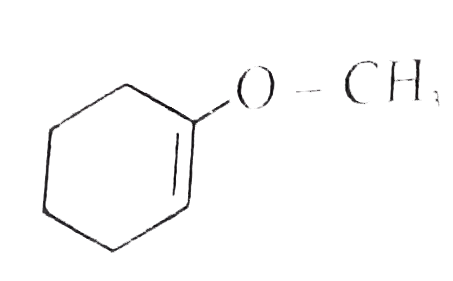
Alkenes undergo electrophilic addition reactions. Electrophilic addition to unsymmetrical alkenes involve the formation of a more stable carbocation intermediate in the first step which is rate determining and carbocation is then attacked by a nuclephile to form product
`+H_(2)O overset(H_(2)SO_(4))rarr` Product

A

The major product is

B

The major product is

C

Major product give +ve Tollen's test

D

Major product give +ve iodoform test

Text Solution

Verified by Experts

The correct Answer is:

B
Promotional Banner

Topper's Solved these Questions

Similar Questions

Explore conceptually related problems

Alkenes undergo electrophilic addition reactions. Electrophilic addition to unsymmetrical alkenes involve the formation of a more stable carbocation intermediate in the first step which is rate determining and carbocation is then attacked by a nuclephile to form product HO-CH_(2)-CH_(2)-CH_(2)-CH=CH_(2)underset(NaHCO_(3))overset(I_(2))rarr major product formed is

Alkenes undergo electrophilic addition reactions. Electrophilic addition to unsymmetrical alkenes involve the formation of a more stable carbocation intermediate in the first step which is rate determining and carbocation is then attacked by a nuclephile to form product Which one of the following alkene reacts most readily with HCI ?

The major product (A) formed in the reaction- overset(H_(2)SO_(4))rarrA is:

The major product formed in the reaction is : +HNO_(3)overset("conc."H_(2)SO_(4))rarr

Electrophillic addition reaction proceed in two steps. The first step involves the addition of an electrophile. Name the type of intermediate formed in the first step of the following addition reaction. H_(2)C-HC=CH_(2)+H^(+) rarr ?

Electrophilic additions reactions proceed in two steps. The first step involves the additions of an electrophile. Name the type of intermediate formed in the first step of the following addition reaction H_(3)C - HC = CH_(2) + H^(+) rarr ?

Reaction Mechanism : 1) electrophilic addition on alkenes and alkynes,2) rate comparison/solvent participation,3) stereochemistry OF reaction

A : Alkynes is more reactive than alkene towards electrophilic addition reaction. R : Alkynes form stable carbocation than alkene.

ALLEN-TEST PAPERS-part-2 chemistry
  1. Alkenes undergo electrophilic addition reactions. Electrophilic additi...

    Text Solution

    |

  2. Alkenes undergo electrophilic addition reactions. Electrophilic additi...

    Text Solution

    |

  3. Alkenes undergo electrophilic addition reactions. Electrophilic additi...

    Text Solution

    |

  4. Match the pairs of compounds (to be distinguished) given in Column-(I)...

    Text Solution

    |

  5. {:("Coloumn-I",,"Column-II"),("(Aqueous solution in standard condition...

    Text Solution

    |

  6. Roasting is carried out in extraction of metal in how many ores/minera...

    Text Solution

    |

  7. Calculate number of significant digits in Avogadro number if Boltzmann...

    Text Solution

    |

  8. We have taken a saturated solution of AgBr, whose K(sp) is 12xx10^(-14...

    Text Solution

    |

  9. 2 moles of KMnO(4) can oxidise x moles of hydrogen peroxide in weakly ...

    Text Solution

    |

  10. Select the correct statement for a real gas (i)The behaviour of the ...

    Text Solution

    |

  11. Select the incorrect statement

    Text Solution

    |

  12. Two stereoisomers (Shown in fischer projection ) from an epoxide, when...

    Text Solution

    |

  13. Match each of the following four structures with one of the compound A...

    Text Solution

    |

  14. A white crystalline solid (A) on boiling with caustic soda solution ga...

    Text Solution

    |

  15. A reagent is added to a solution of manganous salt in cold dil. HNO(3...

    Text Solution

    |

  16. Defects are basically irregularities in the arrangement of constituent...

    Text Solution

    |

  17. Defects are basically irregularities in the arrangement of constituent...

    Text Solution

    |

  18. Compound (A) has molecular formula C(5)H(12)O. It liberates H(2) gas o...

    Text Solution

    |

  19. compound (A) forms a ketone. It undergoes in following reaction scheme...

    Text Solution

    |

  20. {:(,"List-I",,"List-II",),(,"Type of ionic compound",,,),((P),"NaCI ty...

    Text Solution

    |