

Home
Class 11
CHEMISTRY
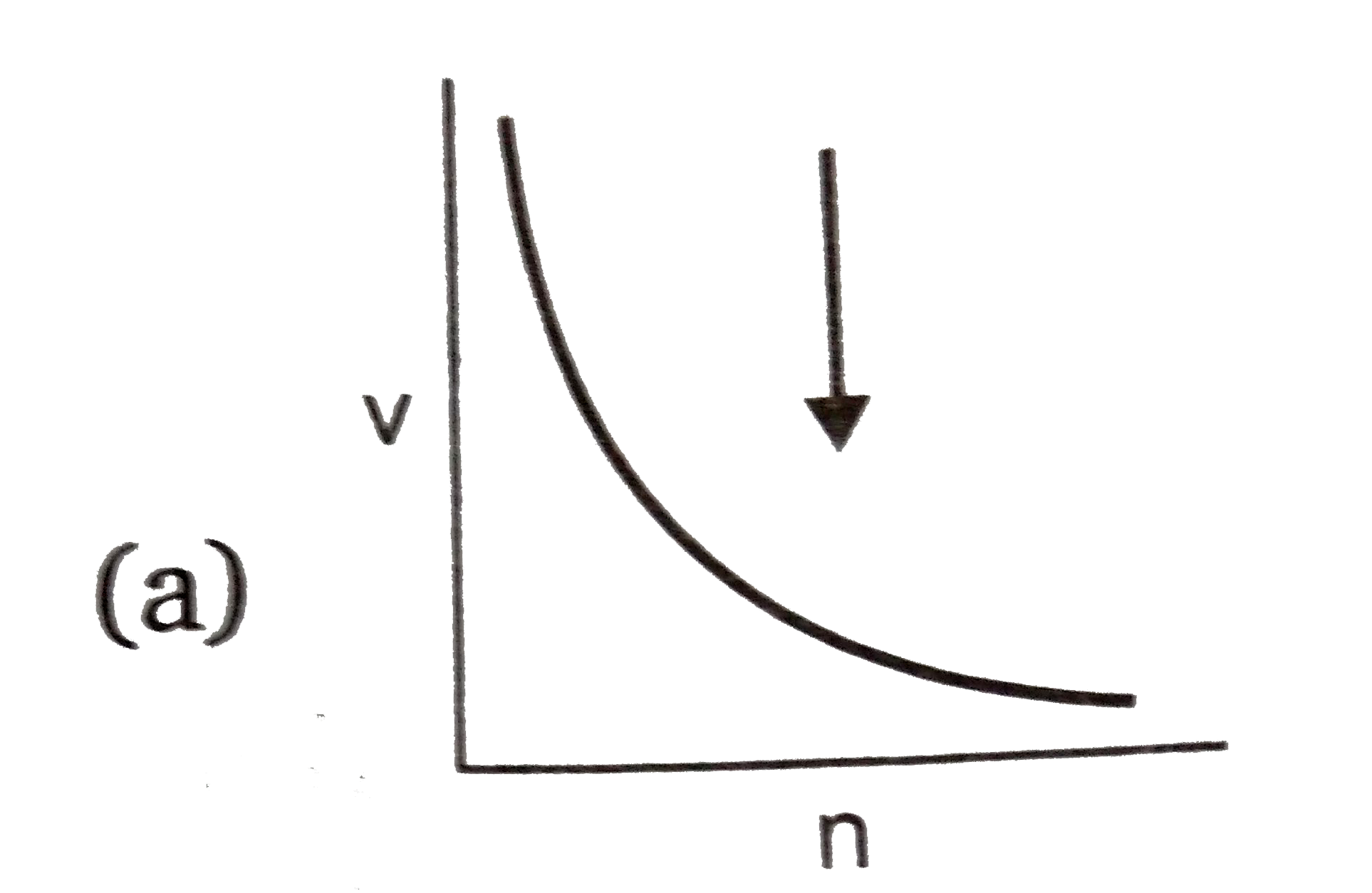
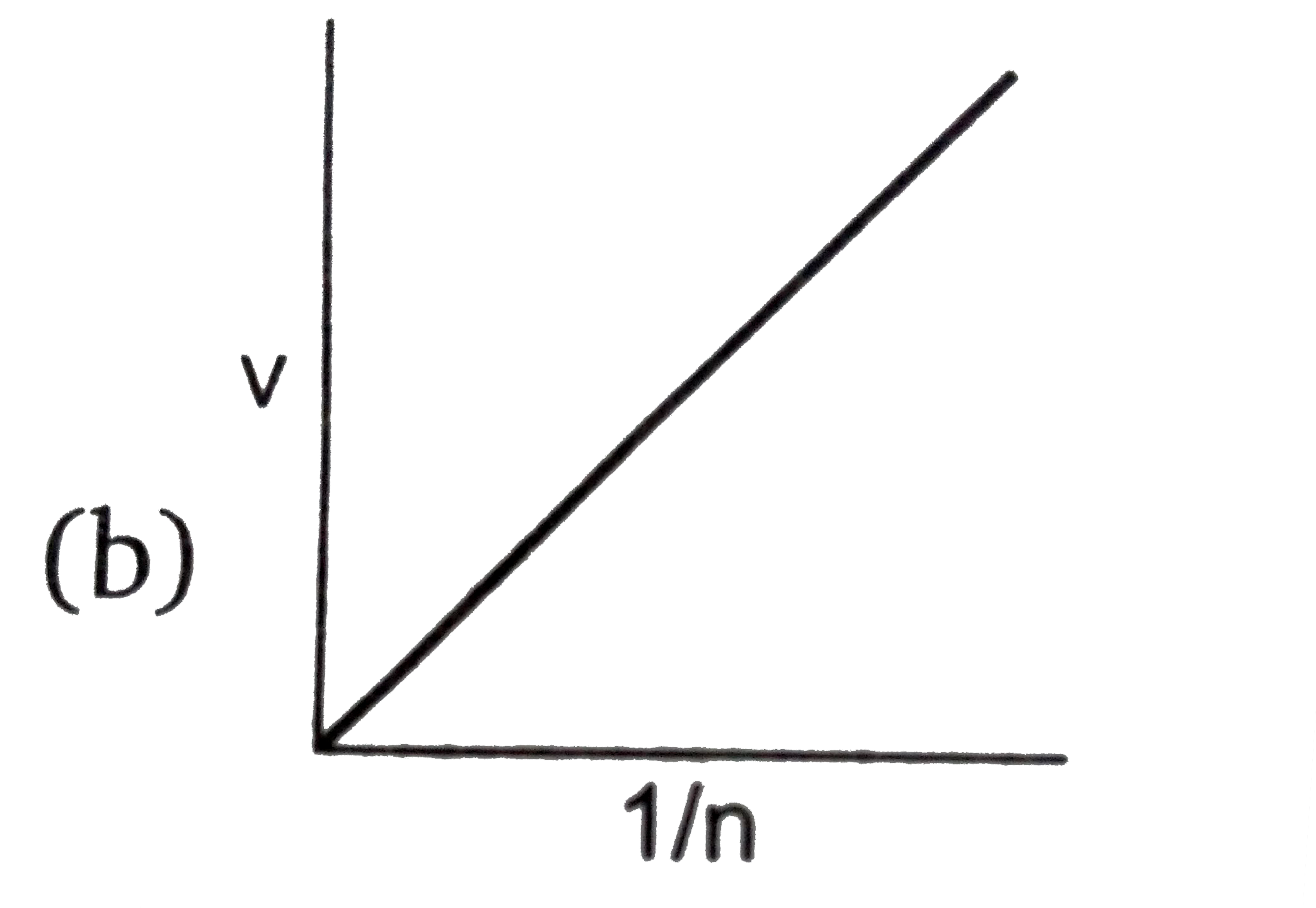
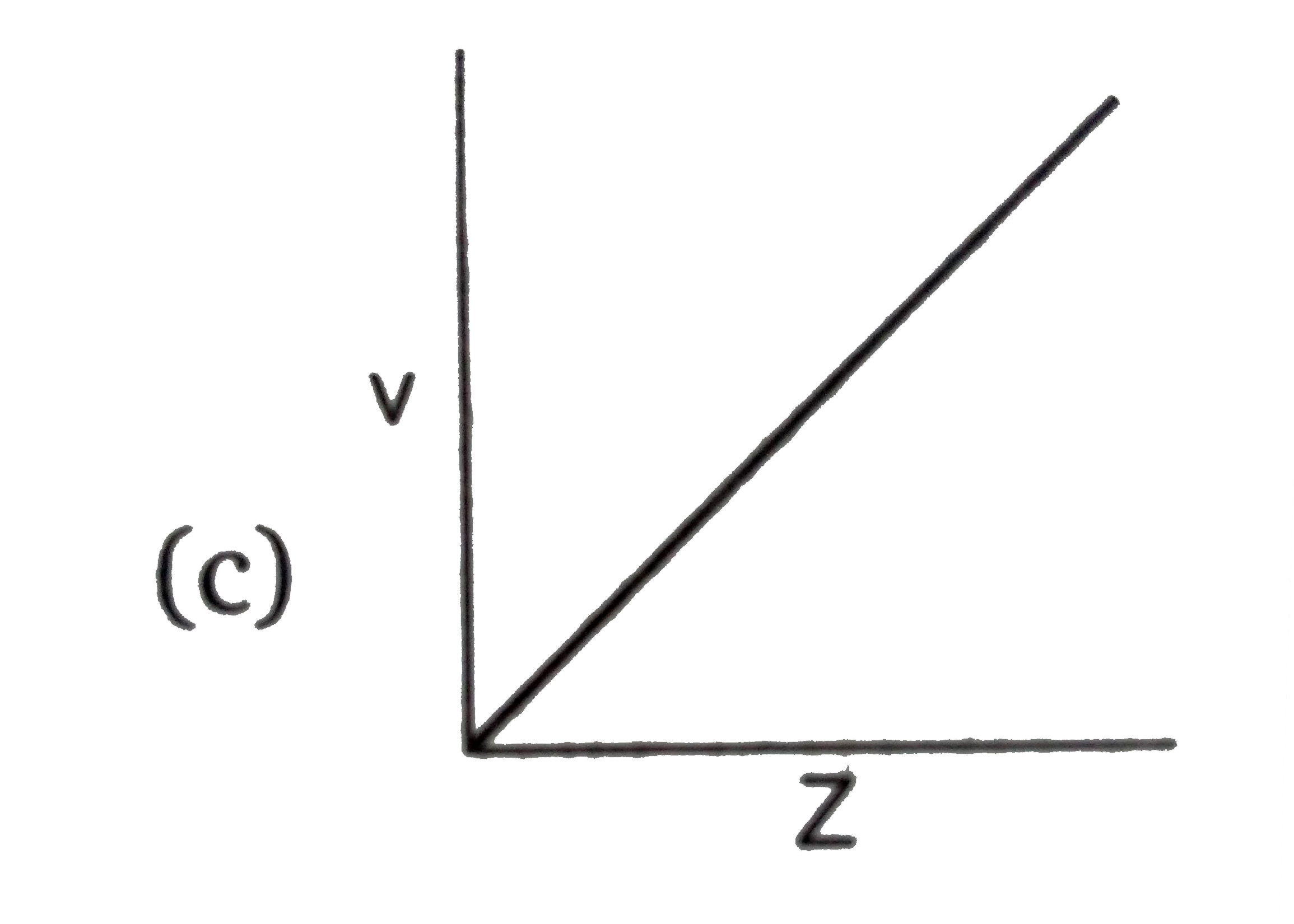
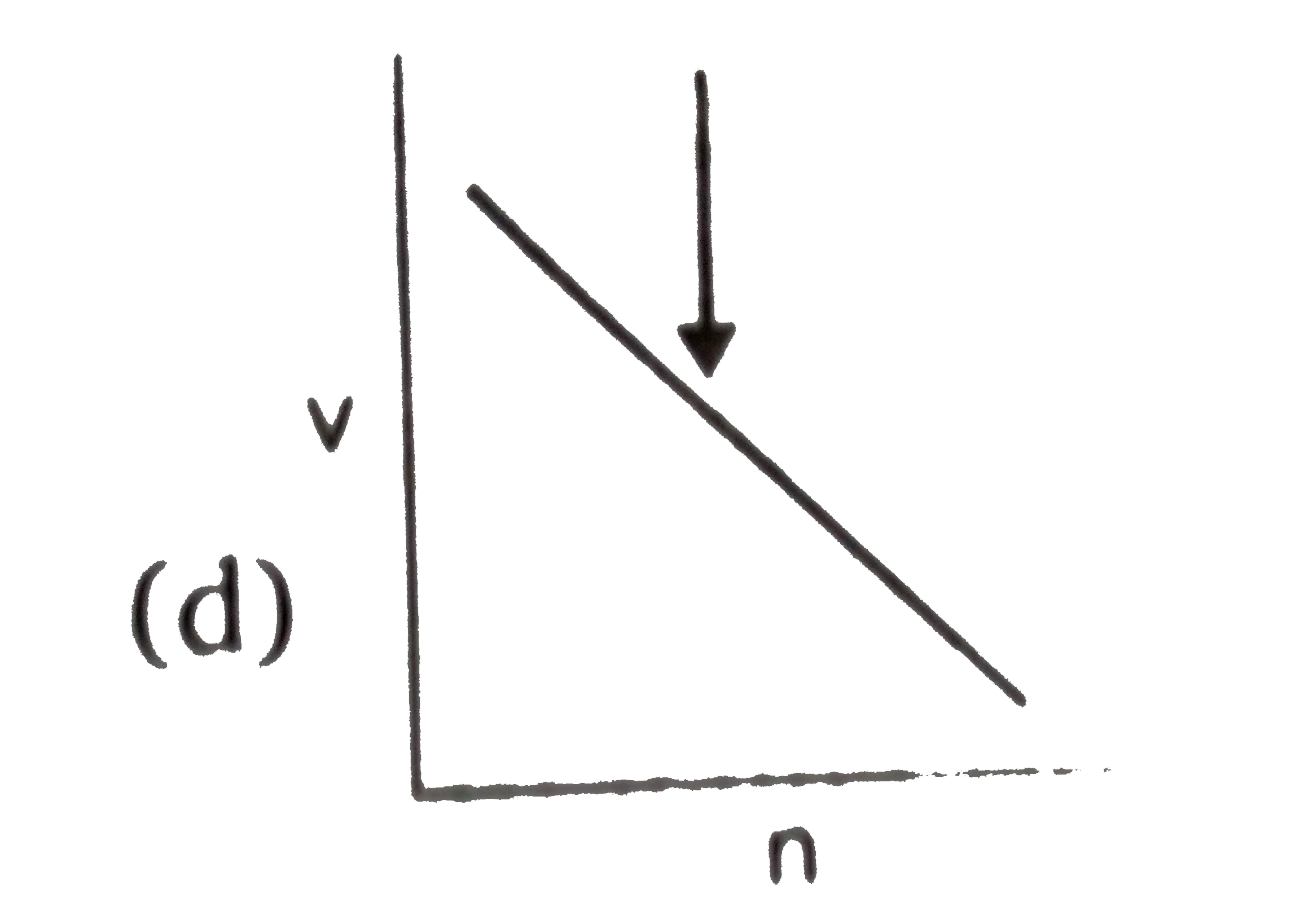
Select the incorrect graph for velocity ...

Select the incorrect graph for velocity of `e^(-)` in an orbit vs. Z, `1/n` and n :

A

B

C

D

Text Solution

AI Generated Solution

The correct Answer is:
To solve the problem of selecting the incorrect graph for the velocity of an electron (e^(-)) in an orbit versus Z, 1/n, and n, we will follow these steps: ### Step 1: Understand the relationship between velocity, Z, and n The velocity (V) of an electron in an orbit is given by the formula: \[ V = 2.18 \times 10^6 \frac{Z}{n} \] where: - Z is the atomic number, - n is the principal quantum number (the orbit number). ### Step 2: Analyze the relationship of V with n From the formula, we can see that: \[ V \propto \frac{Z}{n} \] This means that the velocity is inversely proportional to n. Therefore, if we plot V against n, we would expect to see a hyperbolic relationship. ### Step 3: Analyze the relationship of V with 1/n Since V is inversely proportional to n, it is directly proportional to 1/n: \[ V \propto \frac{1}{n} \] If we plot V against 1/n, we would expect to see a linear relationship (straight line). ### Step 4: Analyze the relationship of V with Z Since V is directly proportional to Z: \[ V \propto Z \] If we plot V against Z, we would also expect to see a linear relationship (straight line). ### Step 5: Evaluate the options Now, let's evaluate the options based on our analysis: - **Option A (V vs n)**: This should be a hyperbolic graph. **(Correct)** - **Option B (V vs 1/n)**: This should be a straight line. **(Correct)** - **Option C (V vs Z)**: This should also be a straight line. **(Correct)** - **Option D (V vs n)**: This is incorrectly stated as a straight line, but it should be a hyperbolic graph. **(Incorrect)** ### Conclusion The incorrect statement is found in **Option D**, where it incorrectly states that the graph of V against n is a straight line, when it should actually be a hyperbola.
Promotional Banner

Topper's Solved these Questions

  • CHEMICAL EQUILIBRIUM

    NARENDRA AWASTHI|Exercise Level 2|1 Videos

Similar Questions

Explore conceptually related problems

Which of the following graphs are correct for velocity of e^(-) in an orbita vs Z,(1)/(n) and n?

Select the incorrect statements about the plots of ln K vs 1/T

Draw position vs time graph of uniform velocity.

If an electron is moving in the n^(th) orbit of the hydrogen atom, then its velocity (v_(n)) for the n^(th) orbit is given as :

If the velocity of the revolving electron of He^(+) in the first orbit (n= 1) is v. the velocity of the electron in the second orbit is:

Bohr's model enables us to derive the energy of an electron revolving in nth orbit. For H-atom and hydrogen like species : E_n = (2 pi^2 m e^4 Z^2)/(n^2 h^2) or = - (13.6 Z^2)/(n^2) eV "atom"^(-1) = (21.8 xx 10^(-19) Z^2)/(n^2) J "atom"^(-1) This helps to calculate the radius of an orbit, r_n = (0.529 n^2)/(Z) Å Bohr's model also explains the occurrence of different spectral lines. The wavelengths of difference line can be given as : 1/lambda = barv ("in" cm^(-1)) = R (1/(n_1^2) - 1/(n_2^2)) R = 109678 cm^(-1) and n_2 > n_1 . What is the ratio of radius of 4th orbit of hydrogen and 3rd orbit of Li^(2+) ion ?

An electron in a hydrogen atom is considered to be revolving around a proton with a velocity (e^2)/(n) in a circular orbit of radius (n^2)/(me^2) . If I is the equivalent current, express it in terms of m, e, n.

Bohr's model enables us to derive the energy of an electron revolving in nth orbit. For H-atom and hydrogen like species : E_n = (2 pi^2 m e^4 Z^2)/(n^2 h^2) or = - (13.6 Z^2)/(n^2) eV "atom"^(-1) = (21.8 xx 10^(-19) Z^2)/(n^2) J "atom"^(-1) This helps to calculate the radius of an orbit, r_n = (0.529 n^2)/(Z) Å Bohr's model also explains the occurrence of different spectral lines. The wavelengths of difference line can be given as : 1/lambda = barv ("in" cm^(-1)) = R (1/(n_1^2) - 1/(n_2^2)) R = 109678 cm^(-1) and n_2 > n_1 . Which transition between Bohr's orbits corresponds to third line in Lyman series?

Which of the following option(s) is/are independent of both n and Z for H- like species? U_(n) = Potential energy of electron in n^(th) orbit KE_(n) = Kinetic energy of electron in n^(th) orbit l_(n) = Angular momentam of electoron in n^(th) orbit v_(n) = Velcity of electron in n^(th) orbit f_(n) = Frequency of electron in n^(th) orbit T_(n) = Time period of revolution of electron in n^(th) orbit

NARENDRA AWASTHI-ATOMIC STUCTURE-Exercise
  1. If radius of second stationary orbit (in Bohr's atom) is R then radius...

    Text Solution

    |

  2. Which state of the triply ionized Beryllium (Be^(3+)) has the same orb...

    Text Solution

    |

  3. Select the incorrect graph for velocity of e^(-) in an orbit vs. Z, 1/...

    Text Solution

    |

  4. What is the frequency of revolution of electron present in 2nd Bohr's ...

    Text Solution

    |

  5. According to Bohr's atomic theory, which of the following is correct ?

    Text Solution

    |

  6. Number of waves produced by an electron in one complete revolution in ...

    Text Solution

    |

  7. Which of the following statement does not form part of Bohr's model o...

    Text Solution

    |

  8. What is the separation energy (in eV ) for Be^(3+) in the first excite...

    Text Solution

    |

  9. If in Bohr's model, for unielectronic atom, time period of revolution ...

    Text Solution

    |

  10. Which of the following is discreted in Bohr's theory?

    Text Solution

    |

  11. What is the ratio of time periods (T(1)//T(2)) in second orbit of hydr...

    Text Solution

    |

  12. The mass of an electron is m, charge is e and it is accelerated form r...

    Text Solution

    |

  13. If the ionization energy of He^(+) is 19.6xx10^(-18) J per atom then t...

    Text Solution

    |

  14. The energy of the second Bohr orbit in the hydrogen atom is -3.41eV. T...

    Text Solution

    |

  15. The energy of an electron moving in n^(th) Bohr's orbit of an element ...

    Text Solution

    |

  16. If epsilon(0) be the permittivity of vacuum and r be the radius of orb...

    Text Solution

    |

  17. Which of the following statement(s) is//are consistent with the Bohr t...

    Text Solution

    |

  18. The ionization potential for the electron in the ground state of the h...

    Text Solution

    |

  19. What is the energy content per photon (J) for light of frequency 4.2xx...

    Text Solution

    |

  20. Wavelength for high energy EMR transition in H-atom is 91 nm. What ene...

    Text Solution

    |