Home
Class 12
CHEMISTRY
For the reversible reaction A underset(k...


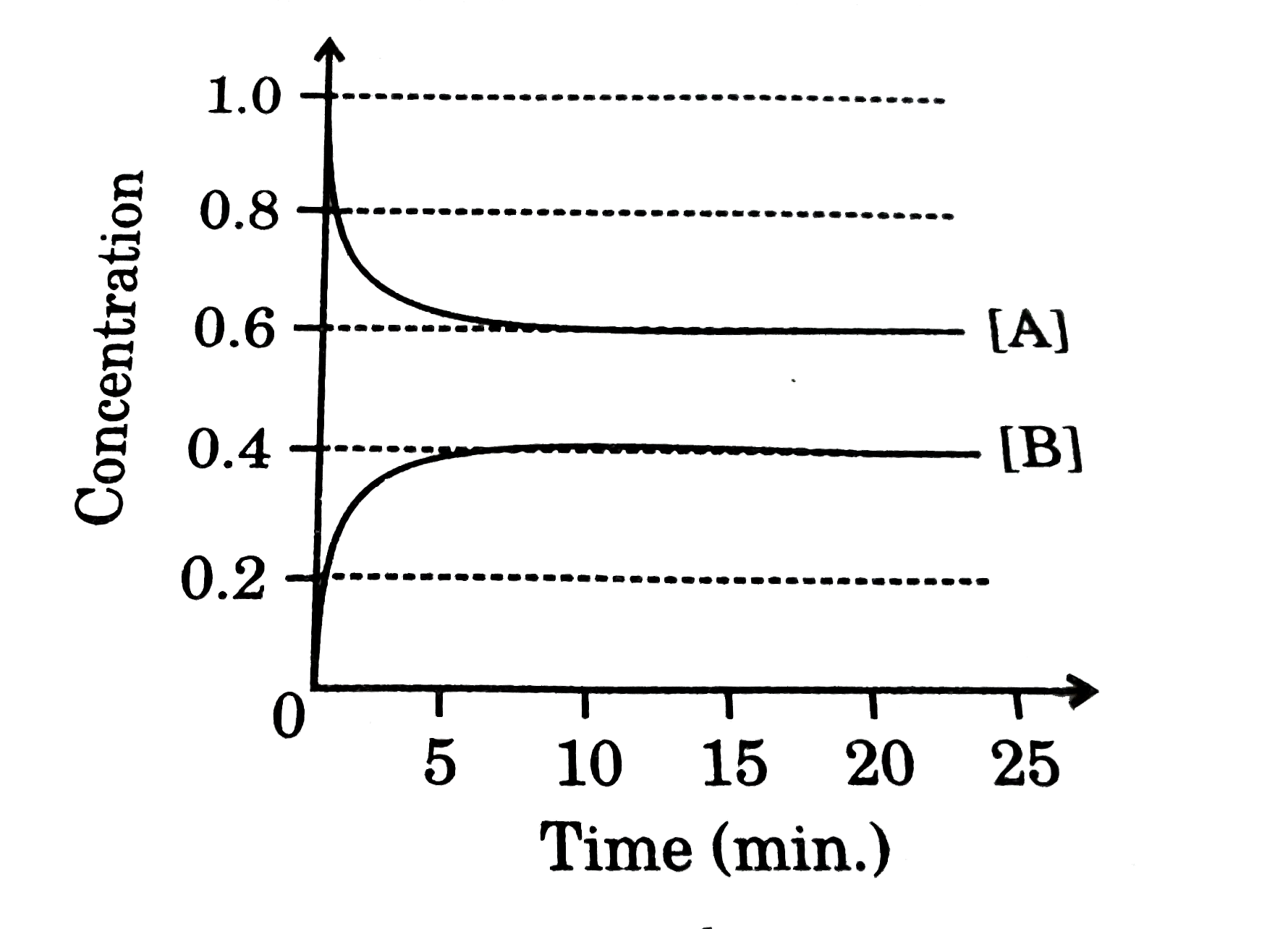
For the reversible reaction `A underset(k_(b))overset(k_(f))(hArr)B` (having Ist order in both direction) the concentration as a function of time are given for a certain experimantal run.
At what time (t) is the rete of change of concentration A equal to the rate of change of concentration of B in magnitude?

A

`t=0`only

B

`tge t_("equilibrium")"only"`

C

`t=0`min only

D

At all times

Text Solution

Verified by Experts

The correct Answer is:

D
Promotional Banner

Topper's Solved these Questions

  • GRAPHICAL INTERPRETATION

    GRB PUBLICATION|Exercise Comprehension 15|1 Videos
  • GRAPHICAL INTERPRETATION

    GRB PUBLICATION|Exercise Comprehension 16|1 Videos
  • GRAPHICAL INTERPRETATION

    GRB PUBLICATION|Exercise Comprehension 13|1 Videos
  • F-BLOCK ELEMENTS

    GRB PUBLICATION|Exercise Subjective type|7 Videos
  • HYDROCARBON (ALIPHATIC)

    GRB PUBLICATION|Exercise Previous years jee questions|28 Videos

Similar Questions

Explore conceptually related problems

For the reversible reaction A underset(k_(b))overset(k_(f))(hArr)B (having Ist order in both direction) the concentration as a function of time are given for a certain experimantal run. Calculate [B] at time t=1/5 min. ["Given" : k_(b) =3 "min"^(-1) "and"1/e=0.37]

In a first order reaction the concentration of product ’x’ at time 't' is given by the expression (a=initial concentration, k=rate constant, n=order)

If the rate of reaction A to B triples on increasing the concentration of A by 9 times, then the order of reaction is

The reaction A+B to products is first order in each of the reactants. (a) How does the rate of reaction change if the concentration of A is increased by factor 3 ? (b) What is the change in the rate of reaction if the concentration of A is halved and concentration of B is doubled ?

For the two step reaction in which both the steps are first order R overset(k_(1))rarr I I overset(k_(2))rarr P the rate of change of concentration of I is given by the plot

Consider the reaction A to B . The concentration of both the reactants and the products varies exponentially with time. Which of the following figure correctly describes the change in concentration of reactants and products with time ?
