A
B
C
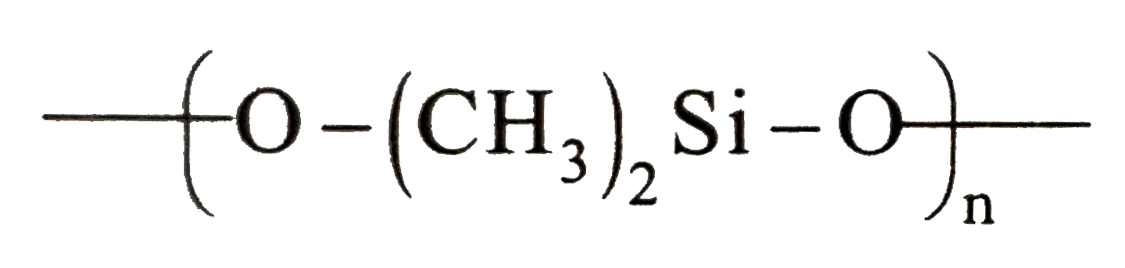
D
Text Solution
Verified by Experts
The correct Answer is:



Topper's Solved these Questions
14TH GROUP ELEMENTS
NARAYNA|Exercise Multiple Answer Type|16 Videos14TH GROUP ELEMENTS
NARAYNA|Exercise Comprehension Type|11 Videos14TH GROUP ELEMENTS
NARAYNA|Exercise Level-III (H.W)|12 Videos13TH GROUP ELEMENTS
NARAYNA|Exercise Comphensive Type Question|22 VideosACIDS & BASES
NARAYNA|Exercise EXERCISE-III|43 Videos
Similar Questions
Explore conceptually related problems
NARAYNA-14TH GROUP ELEMENTS-Level - V Single Answer Type
- Amphilbole silicate structure has 'x' number of corner shared per tetr...
Text Solution
|
- CCl(4) is stable towards hydrolysis in water whereas SiCl(4) is easily...
Text Solution
|
- (CH(3))(2) SiCl(2) on hydrolysis and on subsequent polymerisation will...
Text Solution
|
- Silly putty is
Text Solution
|
- Water glass is:
Text Solution
|
- The phenomena 'etching' on glass is due to the formation of
Text Solution
|
- The structure and hybridisation of Si in Si(CH(3))(4) is
Text Solution
|
- Which of the following is used for the absorption of CO?
Text Solution
|
- (COOH)(2) overset("heat") (to) x ("gas')+Y("gas")+Z("gas") Y and Z b...
Text Solution
|
- Which of the following statement is correct ?
Text Solution
|
- H(2)SO(4) is not used for preparation of CO(2) from marble chips becau...
Text Solution
|
- On heating potassium ferrocyanide with concentrated sulphuric acid pro...
Text Solution
|
- A silicate anion in a mineral is a linear chain of three silicate tetr...
Text Solution
|
- is the compound which can remove both oxygen and nitrogen of the air w...
Text Solution
|
- Select incorrect statement ?
Text Solution
|
- C(60) (fullerene) has the shape of a soccer ball, consider the followi...
Text Solution
|
- Which of the following occurs as a consequence of inert pair effect ? ...
Text Solution
|
- In the following sub quenstions, choose the correct answer from among ...
Text Solution
|
- K(4)[Fe(CN)(6)]+dil.H(2)SO(4) to "gas" (G(1)) K(4)[Fe(CN)(6)]+"conc"...
Text Solution
|
- Which of the following is formed when CO is absorbed in cuprous chlori...
Text Solution
|