Home
Class 12
CHEMISTRY
Maximum dehydration takes place in that ...

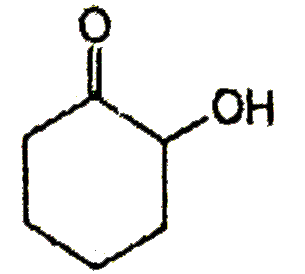
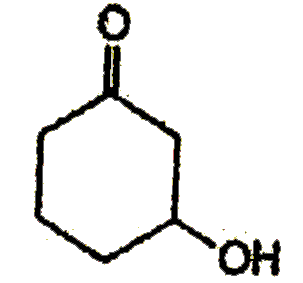
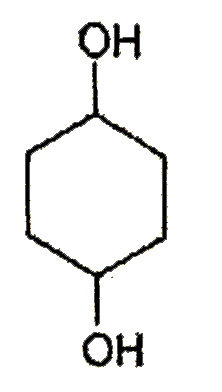
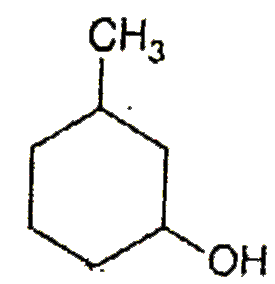
Maximum dehydration takes place in that of

A

B

C

D

Text Solution

AI Generated Solution

The correct Answer is:

To determine which compound undergoes maximum dehydration, we need to analyze the options based on the presence of electron-withdrawing and electron-donating groups, as well as the stability of the resulting carbocation after dehydration. ### Step-by-Step Solution: 1. **Identify the Functional Groups**: - Each option contains a hydroxyl (OH) group, which is crucial for dehydration (removal of water). - We need to consider the structure of each compound and the presence of any electron-withdrawing or electron-donating groups. 2. **Analyze Electron-Withdrawing Groups**: - Electron-withdrawing groups (EWGs) increase the acidity of the hydrogen atoms attached to the carbon adjacent to the hydroxyl group. This makes it easier for these hydrogens to be removed as protons (H⁺) during dehydration. - In the first and second options, the presence of carbonyl (C=O) groups acts as electron-withdrawing groups, enhancing dehydration. 3. **Consider the Stability of Carbocation**: - After the removal of water (H₂O), a carbocation is formed. The stability of this carbocation is crucial for the dehydration process. - The more stable the carbocation, the more likely dehydration will occur. Stability can be influenced by hyperconjugation and the presence of electron-donating or electron-withdrawing groups. 4. **Evaluate Each Option**: - **Option 1**: Contains a carbonyl group, which is an EWG. However, the absence of acidic hydrogen adjacent to the hydroxyl group makes dehydration less favorable. - **Option 2**: Also has a carbonyl group and is likely to form a stable carbocation due to hyperconjugation. This option shows the highest potential for dehydration. - **Option 3**: Contains two hydroxyl groups, which do not enhance dehydration due to lack of electron-withdrawing effects. - **Option 4**: Contains a methyl group (an electron-donating group), which decreases the acidity of the adjacent hydrogen, making dehydration less favorable. 5. **Conclusion**: - Based on the analysis, **Option 2** is the compound that undergoes maximum dehydration due to the presence of an electron-withdrawing group and the stability of the resulting carbocation. ### Final Answer: **Maximum dehydration takes place in Option 2.** ---

To determine which compound undergoes maximum dehydration, we need to analyze the options based on the presence of electron-withdrawing and electron-donating groups, as well as the stability of the resulting carbocation after dehydration. ### Step-by-Step Solution: 1. **Identify the Functional Groups**: - Each option contains a hydroxyl (OH) group, which is crucial for dehydration (removal of water). - We need to consider the structure of each compound and the presence of any electron-withdrawing or electron-donating groups. ...
Promotional Banner

Topper's Solved these Questions

  • ALDEHYDE AND KETONES

    BITSAT GUIDE|Exercise Bitsat Archives|14 Videos
  • ALCOHOLS, PHENOLS AND ETHERS

    BITSAT GUIDE|Exercise BITSAT Archives|14 Videos
  • CARBOXYLIC ACID AND DERIVATIVES

    BITSAT GUIDE|Exercise All Questions|34 Videos

Similar Questions

Explore conceptually related problems

Maximum hydration takes place of :

Maximum enolisation takes place in

Maximum diffraction takes place in a given slit for

Oxidation takes place with -

Maximum digestion takes place in which part of cockroach ?
