Text Solution
Verified by Experts



Topper's Solved these Questions
ELECTRIC CHARGES AND FIELDS
SUBHASH PUBLICATION|Exercise FIVE MARKS QUESTIONS WITH ANSWERS|7 VideosELECTRIC CHARGES AND FIELDS
SUBHASH PUBLICATION|Exercise NUMERICALS WITH SOLUTIONS|21 VideosELECTRIC CHARGES AND FIELDS
SUBHASH PUBLICATION|Exercise TWO MARKS QUESTIONS WITH ANSWERS|19 VideosDUAL NATURE OF RADIATION AND MATTER
SUBHASH PUBLICATION|Exercise NUMERICALS WITH SOLUTIONS|21 VideosELECTROMAGNETIC INDUCTION
SUBHASH PUBLICATION|Exercise NUMERICALS WITH SOLUTIONS|19 Videos
Similar Questions
Explore conceptually related problems
SUBHASH PUBLICATION-ELECTRIC CHARGES AND FIELDS-THREE MARKS QUESTIONS WITH ANSWERS
- Represent electric field lines around (i) a positive point charge (ii)...
Text Solution
|
- Mention any three properties of an electric charge.
Text Solution
|
- Write any three characteristics of electrostatic force.
Text Solution
|
- What decreases of a mass of a body is observed when charged to +10C?
Text Solution
|
- If the distance between the two point charges is doubled then what wil...
Text Solution
|
- The sum of charge on two point charges is Q.What should be the values ...
Text Solution
|
- For a given separation between the two point charges, the force betwee...
Text Solution
|
- Represent the force between the two point charges in terms of position...
Text Solution
|
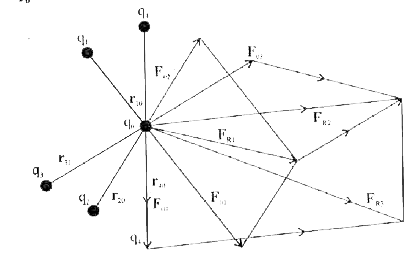
- Represent the resultant force acting on a charge q(0) due to point cha...
Text Solution
|
- Represent the electric field intensity at a point (where a unit positi...
Text Solution
|
- Represent pictorially how electric flux may be taken as the dot produc...
Text Solution
|
- State and explain Gauss's theorem in Electrostatics.
Text Solution
|