Home
Class 12
CHEMISTRY
Which of the following reactions are not...

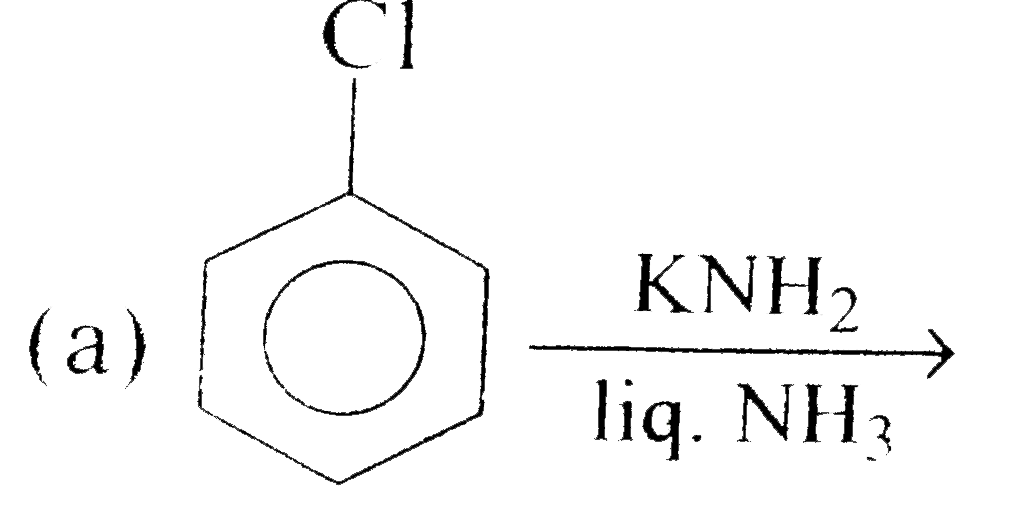
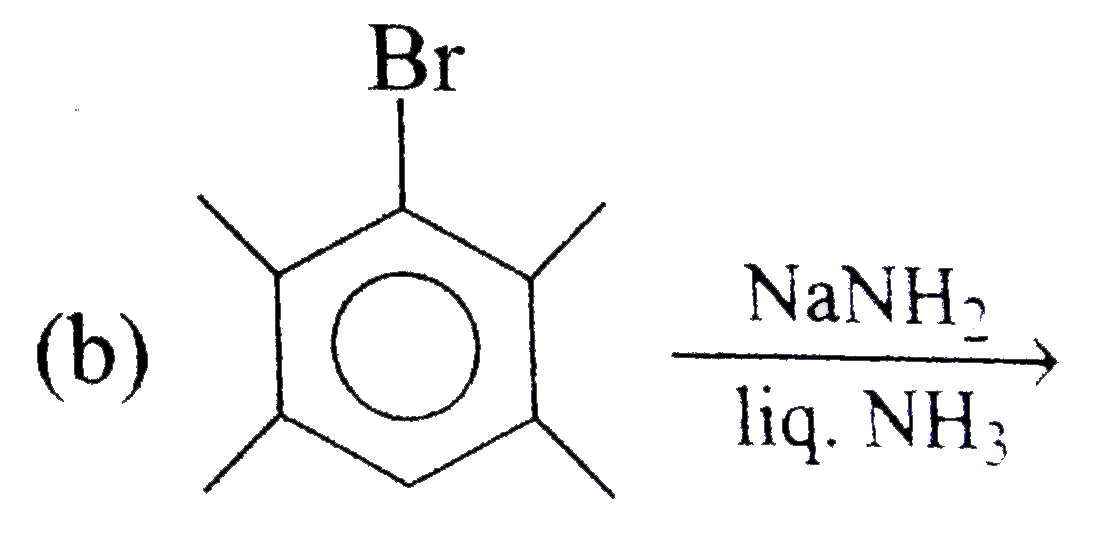
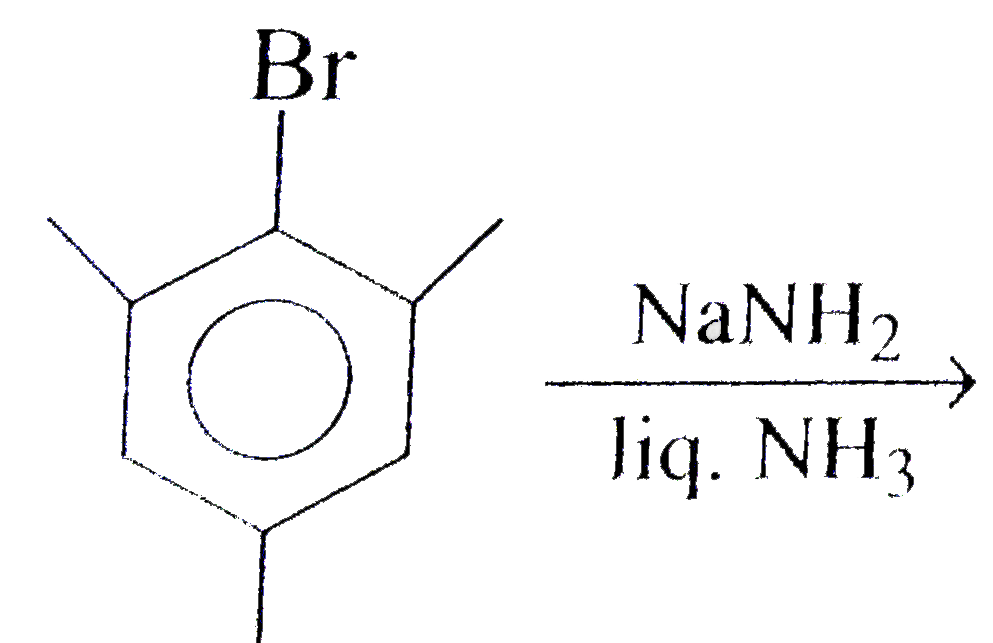
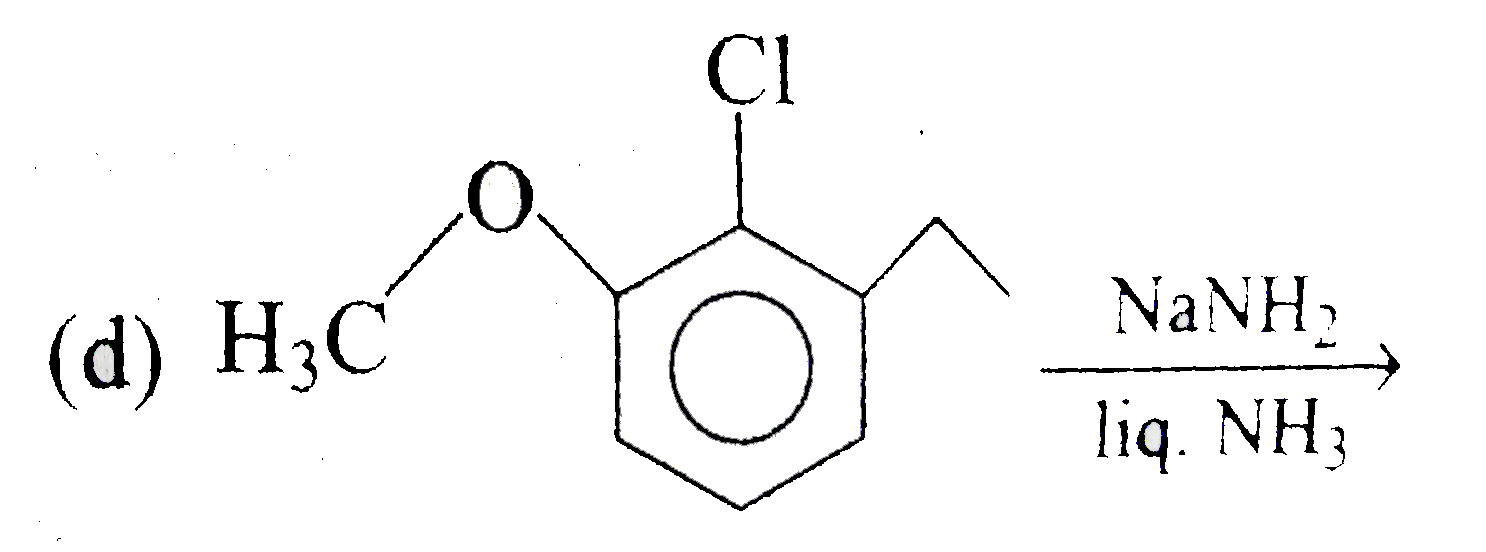
Which of the following reactions are not feasible?

A

B

C

D

Text Solution

AI Generated Solution

The correct Answer is:

To determine which of the following reactions are not feasible, we need to analyze the reactions involving KNH2 (potassium amide) as a strong base. The key points to consider are the presence of hydrogen atoms on the beta position relative to the leaving group (in this case, the halide). **Step-by-Step Solution:** 1. **Identify the Reactions:** We need to look at the given reactions (A, B, C, D) and identify the structure of each compound involved in the reactions. 2. **Understand the Role of KNH2:** KNH2 is a strong base that can deprotonate hydrogen atoms (H) from the beta position of the carbon chain where the leaving group (Cl) is attached. The reaction will proceed if there are hydrogen atoms available on the beta carbon. 3. **Analyze Each Reaction:** - **Reaction A:** There is a beta hydrogen available. The KNH2 can remove this hydrogen, leading to the formation of a triple bond and the elimination of Cl. This reaction is feasible. - **Reaction B:** Both beta positions do not have hydrogen atoms available for removal. Therefore, KNH2 cannot deprotonate, making this reaction not feasible. - **Reaction C:** Similar to B, if there are no beta hydrogens available, the reaction cannot proceed. Hence, this reaction is also not feasible. - **Reaction D:** In this case, if both beta positions lack hydrogen atoms, the reaction cannot proceed as well. Thus, this reaction is not feasible. 4. **Conclusion:** Based on the analysis, the reactions that are not feasible are B, C, and D. **Final Answer:** The reactions that are not feasible are B, C, and D. ---
Promotional Banner

Topper's Solved these Questions

  • HALIDES

    HIMANSHU PANDEY|Exercise Linked Comprehension Type (Q.1 To Q.25)|25 Videos
  • HALIDES

    HIMANSHU PANDEY|Exercise Linked Comprehension Type (Q.26 To Q.27)|2 Videos
  • HALIDES

    HIMANSHU PANDEY|Exercise More Than One Correct (Q.1 To Q.25)|25 Videos
  • GENERAL ORGANIC CHEMISTRY

    HIMANSHU PANDEY|Exercise Subjective Type Problems|19 Videos
  • ISOMERISM

    HIMANSHU PANDEY|Exercise Subjective Type Problems|11 Videos

Similar Questions

Explore conceptually related problems

Which of the following reaction are not feasible?

Which of the following reactions is not feasible?

Which of the following reactions is not feasible ?

Which of the following reaction is not feasible?

Which of the following reaction is not feasible.

HIMANSHU PANDEY-HALIDES-More Than One Correct (Q.26 To Q.50)
  1. Which of the following reactions are not feasible?

    Text Solution

    |

  2. Alkyl iodide can be prepared by :

    Text Solution

    |

  3. Which of the following are S(N^(2)) reactions?

    Text Solution

    |

  4. Which of the following reagents can be used to prepare an alkyl halide...

    Text Solution

    |

  5. H(2)C=CH-Cl can undergo :

    Text Solution

    |

  6. Aryl halide undergo :

    Text Solution

    |

  7. Which of the following reactions take place by S(N^(2)) reaction?

    Text Solution

    |

  8. Which of the following reactions involve free radical as intermediate ...

    Text Solution

    |

  9. Which of the following are possible intermediate in the following reac...

    Text Solution

    |

  10. Which of the following compounds will give racemic mixture by S(N^(1))...

    Text Solution

    |

  11. Which of the following compounds will give E(1) reaction?

    Text Solution

    |

  12. X and Y :

    Text Solution

    |

  13. R-CH(2)-CH(2)-overset(Θ)Ooverset(oplus)Naoverset(CS(2))underset(CH(3)-...

    Text Solution

    |

  14. For the reaction Choose the correct statements :

    Text Solution

    |

  15. Which of the following can give E(1)cb reaction?

    Text Solution

    |

  16. Identify the compounds which may give NGP reaction :

    Text Solution

    |

  17. Which of the following reactions involve benzyne intermediate?

    Text Solution

    |

  18. Which of the following products can be obtained by S(N^(1)) reaction?

    Text Solution

    |

  19. Among the following pair of reactions in which pair second reaction is...

    Text Solution

    |

  20. Which of the following reactions produce the same product?

    Text Solution

    |
