

Home
Class 11
CHEMISTRY
What do you understand by (i) electron-d...

What do you understand by (i) electron-deficient, (ii) electron-precise and (iii) electron-rich compounds of hydrogen? Provide justification with suitable examples.

Text Solution

Verified by Experts

Molecular hydrides are classified on the basis of the process of the total number of electrons and bonds in their Lewis structures as:
1. Electron-deficient hydrides
2. Electrons precise hydrides
3. Electrons rich hydrides
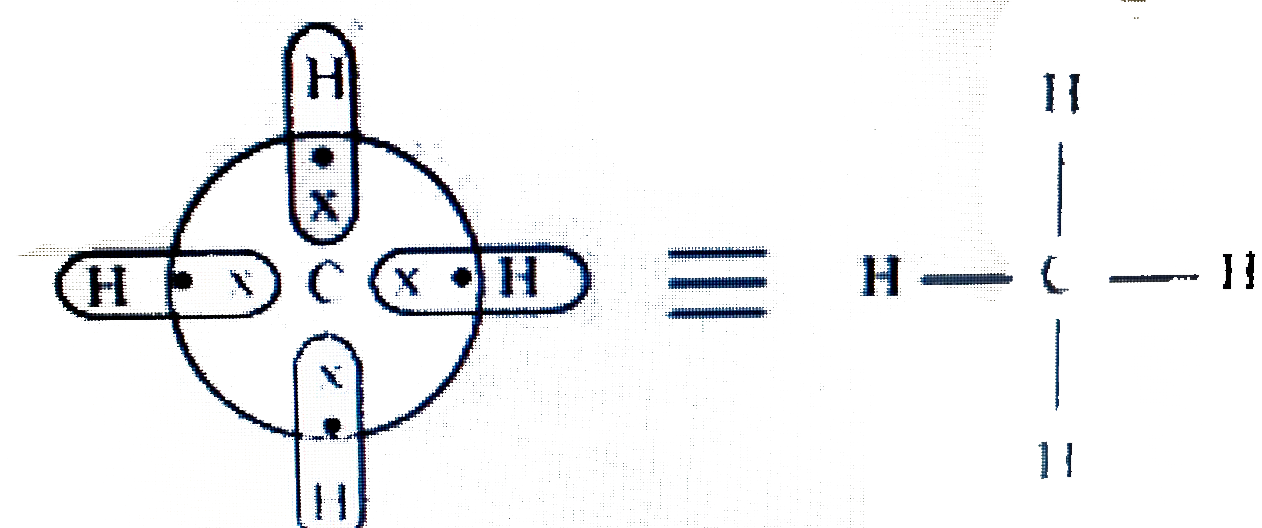
An electrons deficient hydride has a very few electons, less than that required for representing its coventional Lewis structure e.g. diaborane `(B_(2)H_(6))`. In `B_(2)H_(6)` there are six bonds in all, out of which only four, bonds are regular two centered two electrons are shared by three atoms. Hence, its conventional Lewis structure cannote be drawn. An electron precise hydride has a sufficient number of electrons to be represented by its conventional Lewis structure e.g.`CH_(4)`. The Lewsi Structure can be written as:

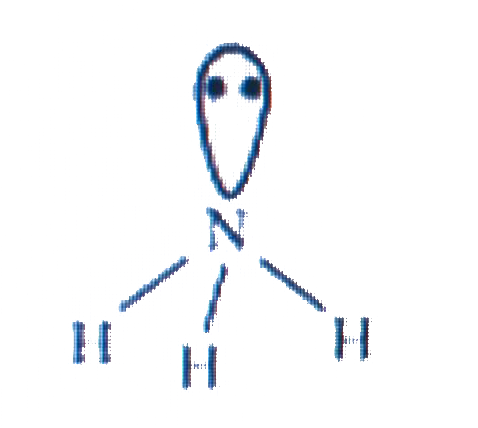
Four regular bonds are formed where two electrons are shared by two atoms. An electrons rich hyrides contains excess electons as lone pairs e.g. `NH_(4)`

There are three regular bonds in alll a lone pair of electrons on the nitrogen atom.
Promotional Banner

Topper's Solved these Questions

  • HYDROGEN

    NCERT|Exercise EXERCISE|36 Videos
  • HYDROCARBONS

    NCERT|Exercise EXERCISE|25 Videos
  • ORGANIC CHEMISTRY- SOME BASIC PRINCIPLES AND TECHNIQUES

    NCERT|Exercise EXERCISE|40 Videos

Similar Questions

Explore conceptually related problems

What do you understand by the terms (i) Ionization enthalpy (ii) Electron gain enthalpy?

Moleular hydrides are classified as electron deficient, electron precise and electron rich compounds. Explain each type with two examples.

BCl_(3) is an electron-deficient compound.

What do you understand by symbiosis ? Explain with an example

Which one is the electron deficient compound ?

NCERT-HYDROGEN-EXERCISE
  1. Complete the following reactions: a.H(2)(g)+M(m)O(o)(s)overset(Delt...

    Text Solution

    |

  2. Discuss the consequences of high enthalpy of H-H bond in terms of chem...

    Text Solution

    |

  3. What do you understand by (i) electron-deficient, (ii) electron-precis...

    Text Solution

    |

  4. What characteristics do you expect from an electron-deficient hydride ...

    Text Solution

    |

  5. Do you expect the carbon hydrides fo the type (C(n)H(2n+2)) to act as ...

    Text Solution

    |

  6. What do you understand by the term “non-stoichiometric hydrides”? Do y...

    Text Solution

    |

  7. How do you expect the metallic hydrides to be useful for hydrogen stor...

    Text Solution

    |

  8. How does the atomic hydrogen or oxy-hydrogen torch funtion for cutting...

    Text Solution

    |

  9. Among NH(3),H(2)O, and HF, which would you expect to have highest magn...

    Text Solution

    |

  10. Saline hydrides are known to react with water violently producing fire...

    Text Solution

    |

  11. Arrange the following (i) CaH(2), BeH(2) and TiH(2) in order of increa...

    Text Solution

    |

  12. Compare the stuctures of H(2)O and H(2)O(2).

    Text Solution

    |

  13. What do you understand by the term 'auto-protolysis' of water? What is...

    Text Solution

    |

  14. Consider the reacton of water with F(2) and suggest, in terms of oxida...

    Text Solution

    |

  15. Complete the following chemical reactions. (i) PbS(s)+H(2)O(2)(aq) t...

    Text Solution

    |

  16. Describe the structure of the common form of ice.

    Text Solution

    |

  17. What causes the temporary and permanent hardness of water ?

    Text Solution

    |

  18. Discuss the principle and method of softening of hard water by synthet...

    Text Solution

    |

  19. Write chemical reactions to show the amphoteric nature of water.

    Text Solution

    |

  20. Write chemical reactions to justifty that hydrogen peroxide can functi...

    Text Solution

    |