

Home
Class 12
CHEMISTRY
When (C-H)sigma electrons are in conjuga...

When `(C-H)sigma` electrons are in conjugation to pi bond this conjugation is known as hyperconjugation. For any compound to show hyperconjugation :
(i) Compound should have one `sp^(2)-hybridised` carbon.
(ii) `alpha-carbon` with respect to `sp^(2)` should be `sp^(3)`
(iii) `alpha-corbon` should contain at least one hydrogen atom.
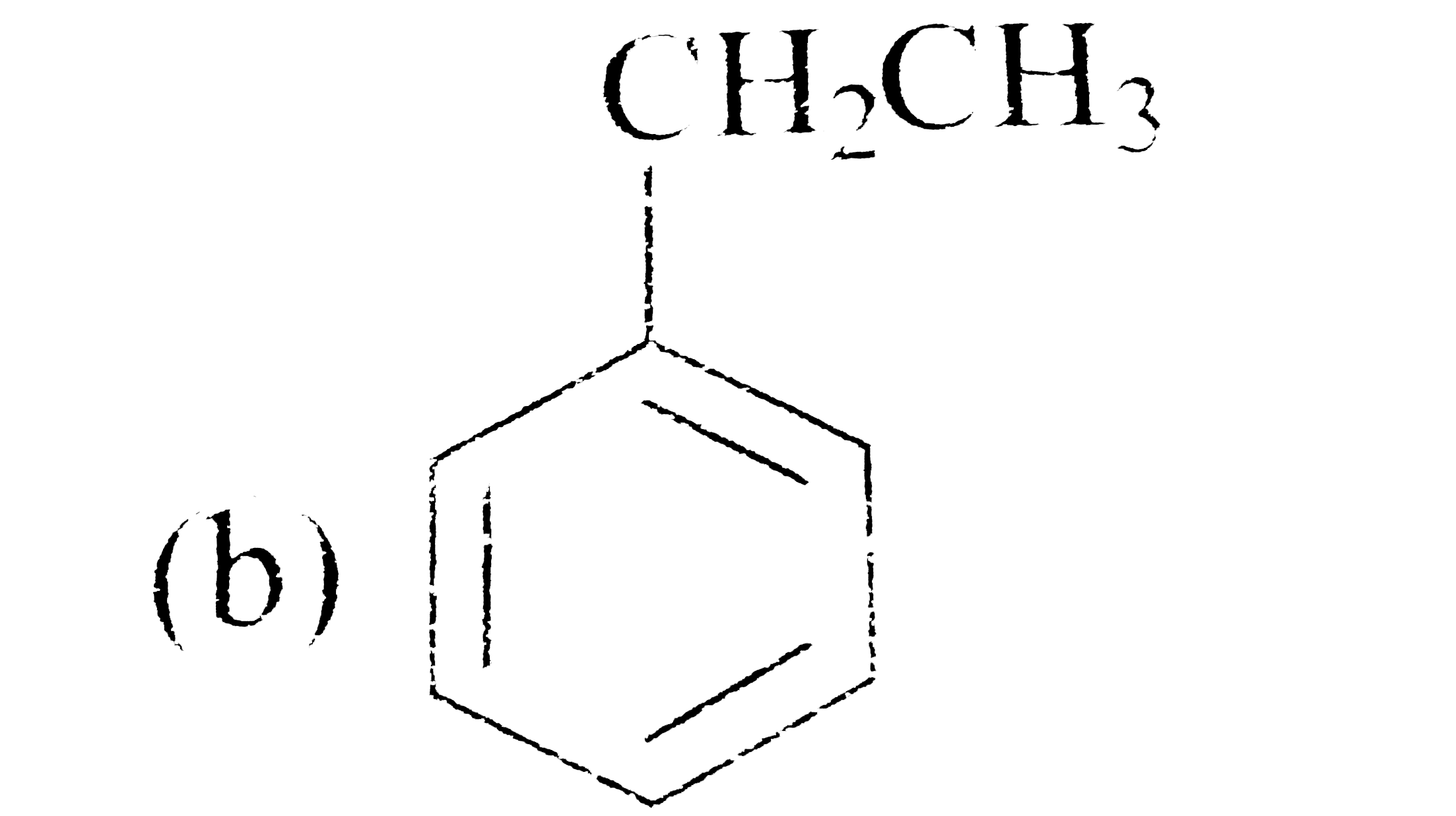
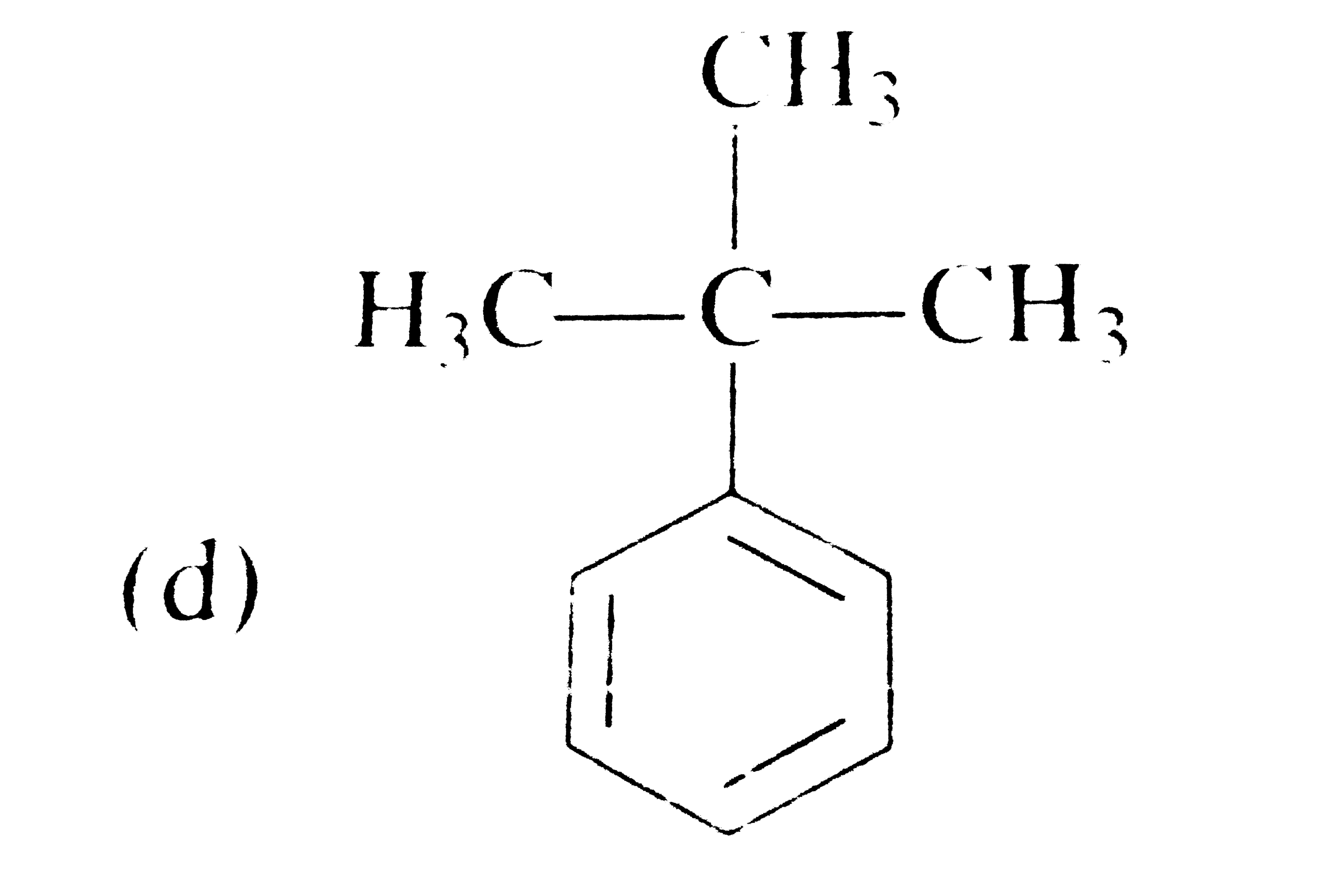
Which of following alkyl benzene has maximum electron density?

A

B

C

D

Text Solution

Verified by Experts

The correct Answer is:

A

Compound contain `3prop-H.`
Promotional Banner

Topper's Solved these Questions

  • GENERAL ORGANIC CHEMISTRY

    HIMANSHU PANDEY|Exercise Linked Comprehension Type (Q.26 To Q.27)|2 Videos
  • GENERAL ORGANIC CHEMISTRY

    HIMANSHU PANDEY|Exercise Match The Column|9 Videos
  • GENERAL ORGANIC CHEMISTRY

    HIMANSHU PANDEY|Exercise More Than One Correct (Q.51 To Q.55)|5 Videos
  • CHEMISTRY IN DAILY LIFE

    HIMANSHU PANDEY|Exercise Integer Answer Type Problems|7 Videos
  • HALIDES

    HIMANSHU PANDEY|Exercise Subjective Type Problems|10 Videos

Similar Questions

Explore conceptually related problems

When (C-H)sigma electrons are in conjugation to pi bond this conjugation is known as hyperconjugation. For any compound to show hyperconjugation : (i) Compound should have one sp^(2)-hybridised carbon. (ii) alpha-carbon with respect to sp^(2) should be sp^(3) (iii) alpha-corbon should contain at least one hydrogen atom. Which of following alkenes is most stabilized?

When (C-H)sigma electrons are in conjugation to pi bond this conjugation is known as hyperconjugation. For any compound to show hyperconjugation : (i) Compound should have one sp^(2)-hybridised carbon. (ii) alpha-carbon with respect to sp^(2) should be sp^(3) (iii) alpha-corbon should contain at least one hydrogen atom. Which of following cations is hyperconjugation destabilized?

Hyperconjugation describes the orbital interactions between the pi -system and the adjacent sigma -bond of the substituent group(s) in organic compounds. Hyperconjugation is called as Baker and Nathan effect. The necessary and sufficient conditions for the hyperconjugation are: (i) Compound should have at least one sp^(2) -hybrid carbon of either alkene, carbocation or alkyl free radical. (ii) alpha -carbon with respect to sp^(2) -hybrid carbon should have at least one hydrogen. Hyperconjugation are of three types: (i) sigma(C-H),pi -conjugation, (ii) sigma(C-H), positive charge conjugation, (iii) sigma(C-H) , odd electron conjugation. The hyperconjugation may be represented as, Number of resonating structures due to hyperconjugation =(n+1) , where n is the numebr of alpha -hydrogen. Greater is the number of such forms, more is the stability of the species under consideration. Which of the following alkenes will show maximum number of hyperconjugation forms?

Hyperconjugation describes the orbital interactions between the pi -system and the adjacent sigma -bond of the substituent group(s) in organic compounds. Hyperconjugation is called as Baker and Nathan effect. The necessary and sufficient conditions for the hyperconjugation are: (i) Compound should have at least one sp^(2) -hybrid carbon of either alkene, carbocation or alkyl free radical. (ii) alpha -carbon with respect to sp^(2) -hybrid carbon should have at least one hydrogen. Hyperconjugation are of three types: (i) sigma(C-H),pi -conjugation, (ii) sigma(C-H), positive charge conjugation, (iii) sigma(C-H) , odd electron conjugation. The hyperconjugation may be represented as, Number of resonating structures due to hyperconjugation =(n+1) , where n is the numebr of alpha -hydrogen. Greater is the number of such forms, more is the stability of the species under consideration. Which of the following carbocations will show highest number of hyperconjugative forms?

Hyperconjugation describes the orbital interactions between the pi -system and the adjacent sigma -bond of the substituent group(s) in organic compounds. Hyperconjugation is called as Baker and Nathan effect. The necessary and sufficient conditions for the hyperconjugation are: (i) Compound should have at least one sp^(2) -hybrid carbon of either alkene, carbocation or alkyl free radical. (ii) alpha -carbon with respect to sp^(2) -hybrid carbon should have at least one hydrogen. Hyperconjugation are of three types: (i) sigma(C-H),pi -conjugation, (ii) sigma(C-H), positive charge conjugation, (iii) sigma(C-H) , odd electron conjugation. The hyperconjugation may be represented as, Number of resonating structures due to hyperconjugation =(n+1) , where n is the numebr of alpha -hydrogen. Greater is the number of such forms, more is the stability of the species under consideration. Which of the following free redicals will not show the phenomena of hyperconjugation?

Hyperconjugation describes the orbital interactions between the pi -system and the adjacent sigma -bond of the substituent group(s) in organic compounds. Hyperconjugation is called as Baker and Nathan effect. The necessary and sufficient conditions for the hyperconjugation are: (i) Compound should have at least one sp^(2) -hybrid carbon of either alkene, carbocation or alkyl free radical. (ii) alpha -carbon with respect to sp^(2) -hybrid carbon should have at least one hydrogen. Hyperconjugation are of three types: (i) sigma(C-H),pi -conjugation, (ii) sigma(C-H), positive charge conjugation, (iii) sigma(C-H) , odd electron conjugation. The hyperconjugation may be represented as, Number of resonating structures due to hyperconjugation =(n+1) , where n is the numebr of alpha -hydrogen. Greater is the number of such forms, more is the stability of the species under consideration. Hyperconjugation is possible in which of the following species?

Hyperconjugation describes the orbital interactions between the pi -system and the adjacent sigma -bond of the substituent group(s) in organic compounds. Hyperconjugation is called as Baker and Nathan effect. The necessary and sufficient conditions for the hyperconjugation are: (i) Compound should have at least one sp^(2) -hybrid carbon of either alkene, carbocation or alkyl free radical. (ii) alpha -carbon with respect to sp^(2) -hybrid carbon should have at least one hydrogen. Hyperconjugation are of three types: (i) sigma(C-H),pi -conjugation, (ii) sigma(C-H), positive charge conjugation, (iii) sigma(C-H) , odd electron conjugation. The hyperconjugation may be represented as, Number of resonating structures due to hyperconjugation =(n+1) , where n is the numebr of alpha -hydrogen. Greater is the number of such forms, more is the stability of the species under consideration. Stability of alkyl carbocations can be explained by

A molecule (X) has (i) four sigma bonds formed by hte overlap of sp^(2) and s orbitals, (ii) one sigma bond formed by sp^(2) and sp^(2) -orbitals nad (iii) on pi -bond formed by p_(z) and p_(z) orbitals. Which of the following is X?

HIMANSHU PANDEY-GENERAL ORGANIC CHEMISTRY-Linked Comprehension Type (Q.1 To Q.25)
  1. When (C-H)sigma electrons are in conjugation to pi bond this conjugati...

    Text Solution

    |

  2. When (C-H)sigma electrons are in conjugation to pi bond this conjugati...

    Text Solution

    |

  3. When (C-H)sigma electrons are in conjugation to pi bond this conjugati...

    Text Solution

    |

  4. In an aromatic ring, a functional group with lone pair of electron exe...

    Text Solution

    |

  5. In an aromatic ring, a functional group with lone pair of electron exe...

    Text Solution

    |

  6. In an aromatic ring, a functional group with lone pair of electron exe...

    Text Solution

    |

  7. The process whereby a hydrogen atom attached to the alpha-carbon of ca...

    Text Solution

    |

  8. The process whereby a hydrogen atom attached to the alpha-carbon of ca...

    Text Solution

    |

  9. The process whereby a hydrogen atom attached to the alpha-carbon of ca...

    Text Solution

    |

  10. In which of the following cations rearrangement takes place?

    Text Solution

    |

  11. Under common reaction conditions, a carboncation rearranges to another...

    Text Solution

    |

  12. Under common reaction conditions, a carboncation rearranges to another...

    Text Solution

    |

  13. Type of anios in which delocatisation of negative charge occrur on mor...

    Text Solution

    |

  14. Type of anios in which delocatisation of negative charge occrur on mor...

    Text Solution

    |

  15. Type of anios in which delocatisation of negative charge occrur on mor...

    Text Solution

    |

  16. In a substance that are resonance hybirds, the measured length of give...

    Text Solution

    |

  17. In a substance that are resonance hybirds, the measured length of give...

    Text Solution

    |

  18. In a substance that are resonance hybirds, the measured length of give...

    Text Solution

    |

  19. Basicity is defined by equilibrium constant for abstracting a proton. ...

    Text Solution

    |

  20. Basicity is defined by equilibrium constant for abstracting a proton. ...

    Text Solution

    |
