

Home
Class 12
CHEMISTRY
Which of the following reactions will yi...

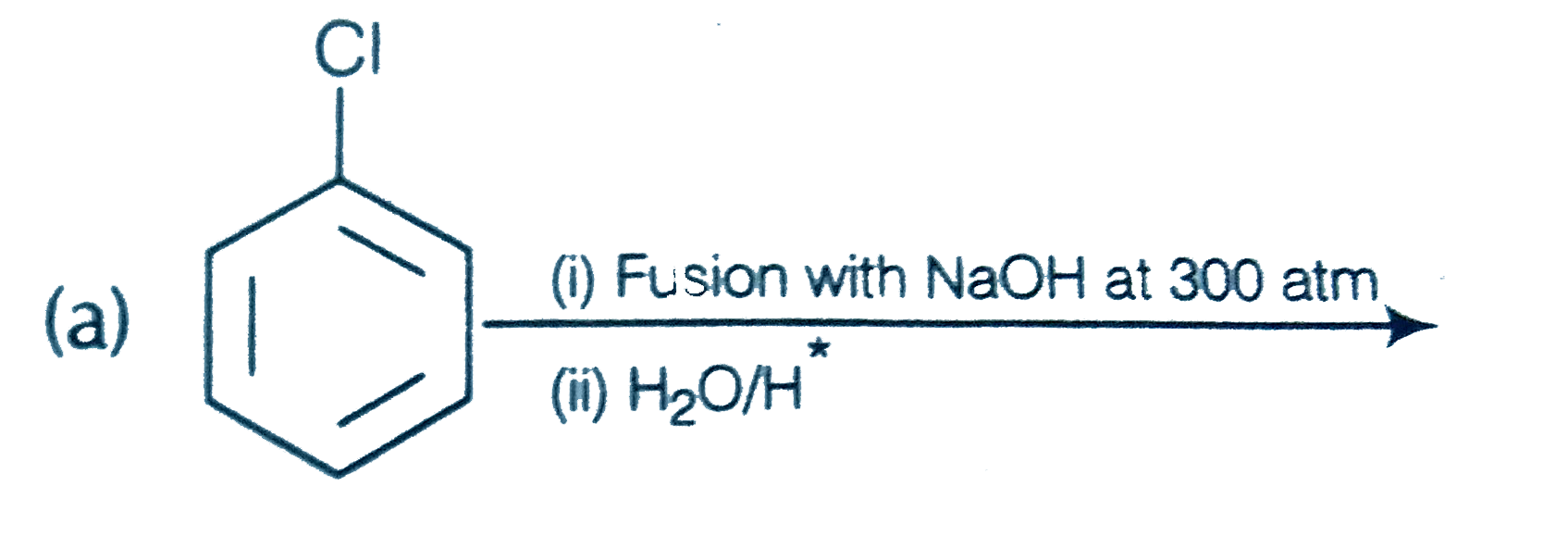
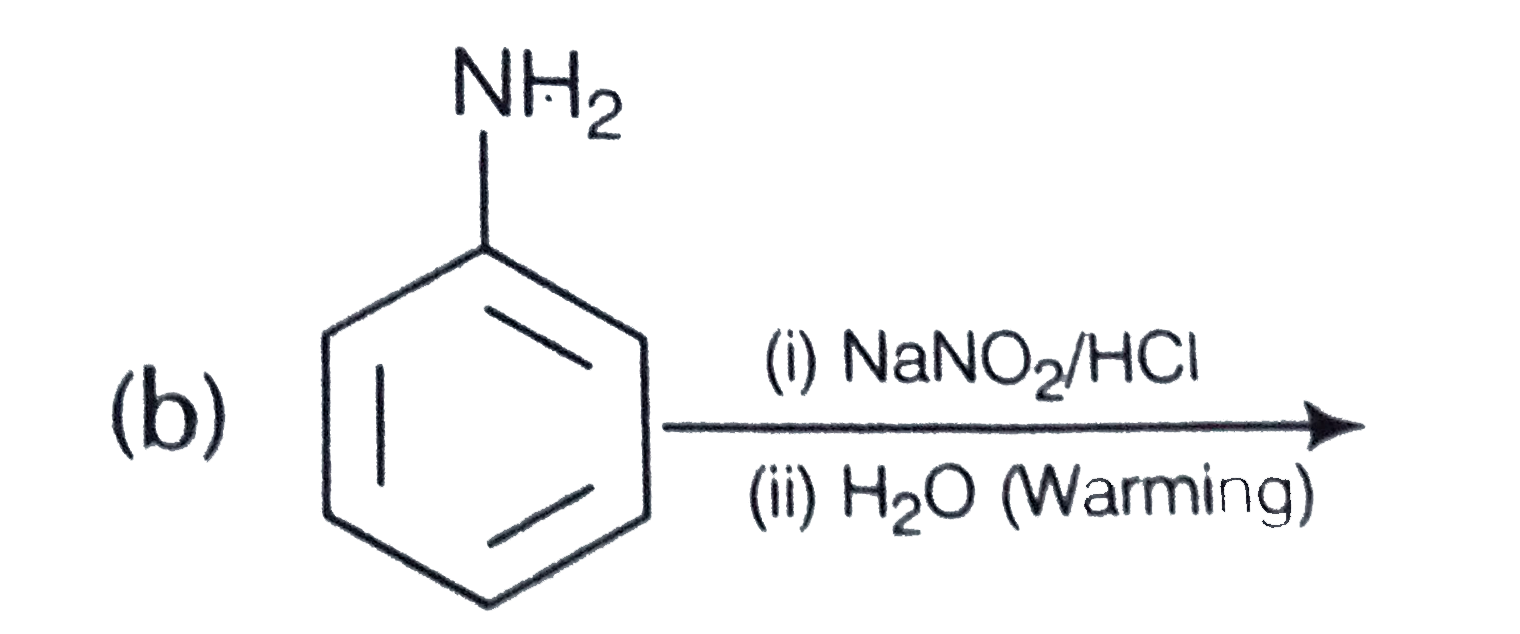
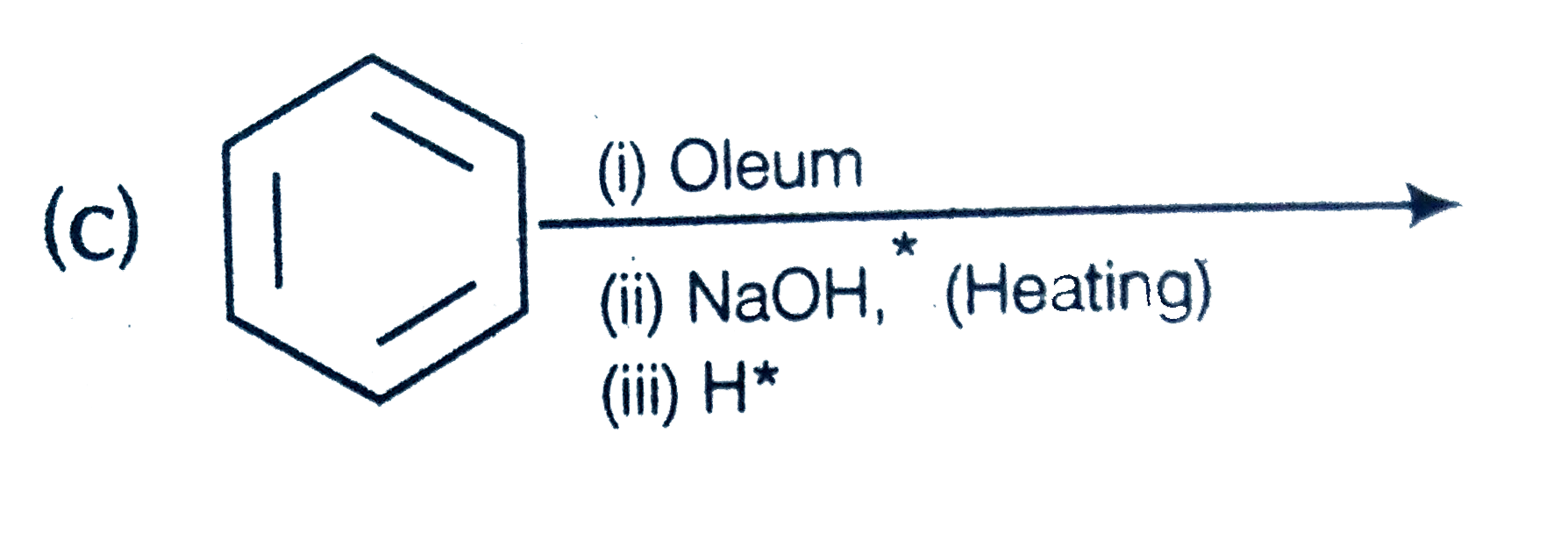
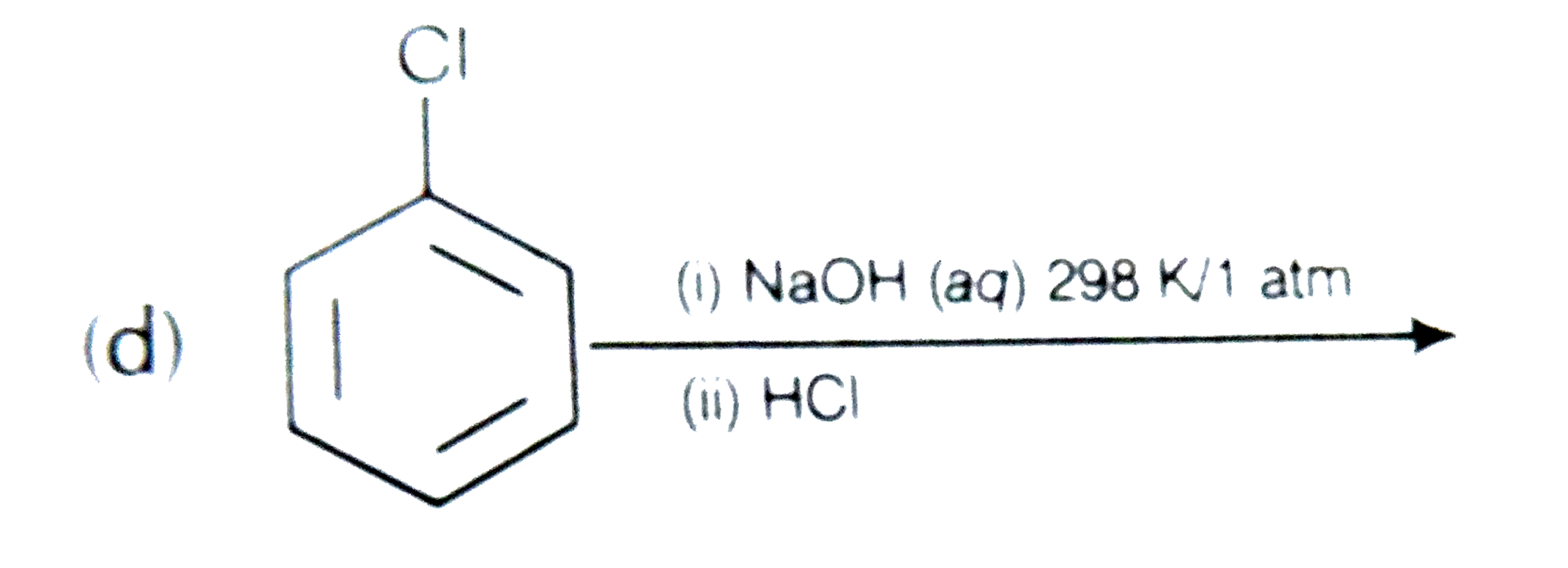
Which of the following reactions will yield phenol ?

A

B

C

D

Text Solution

AI Generated Solution

The correct Answer is:
To determine which of the given reactions will yield phenol, we will analyze each reaction step by step. ### Step 1: Analyze the first reaction - **Reactant**: Chlorobenzene (C6H5Cl) - **Reagent**: Sodium hydroxide (NaOH) at high temperature (623 K) and pressure (300 atm). **Reaction Mechanism**: 1. Chlorobenzene reacts with NaOH where the nucleophilic hydroxide ion (OH⁻) attacks the carbon atom bonded to chlorine (Cl). 2. This leads to the formation of phenoxide ion (C6H5O⁻). 3. Upon hydrolysis (adding water and acid), the phenoxide ion is converted to phenol (C6H5OH). **Conclusion**: This reaction yields phenol. ### Step 2: Analyze the second reaction - **Reactant**: Aniline (C6H5NH2) - **Reagent**: Sodium nitrite (NaNO2) in the presence of hydrochloric acid (HCl). **Reaction Mechanism**: 1. Aniline reacts with NaNO2 and HCl to form a diazonium salt (C6H5N2⁺Cl⁻). 2. When this diazonium salt is treated with warm water, it undergoes hydrolysis. 3. The hydrolysis of the diazonium salt leads to the formation of phenol and nitrogen gas (N2). **Conclusion**: This reaction also yields phenol. ### Step 3: Analyze the third reaction - **Reactant**: Benzene (C6H6) - **Reagent**: Oleum (SO3 in H2SO4). **Reaction Mechanism**: 1. Benzene reacts with oleum to form benzene sulfonic acid (C6H5SO3H). 2. When benzene sulfonic acid is treated with NaOH, it undergoes hydrolysis to yield phenol. **Conclusion**: This reaction yields phenol as well. ### Step 4: Analyze the fourth reaction - **Reactant**: Chlorobenzene (C6H5Cl) - **Reagent**: Sodium hydroxide (NaOH) in aqueous medium followed by hydrochloric acid (HCl). **Reaction Mechanism**: 1. Chlorobenzene reacts with NaOH, but in this case, the reaction does not proceed to form phenol. 2. The presence of HCl after the reaction with NaOH leads to the reformation of chlorobenzene instead of yielding phenol. **Conclusion**: This reaction does not yield phenol. ### Final Conclusion The reactions that yield phenol are: - **First Reaction**: Chlorobenzene + NaOH → Phenol - **Second Reaction**: Aniline + NaNO2 + HCl → Phenol - **Third Reaction**: Benzene + Oleum → Phenol Thus, the correct answers are A, B, and C. ---

To determine which of the given reactions will yield phenol, we will analyze each reaction step by step. ### Step 1: Analyze the first reaction - **Reactant**: Chlorobenzene (C6H5Cl) - **Reagent**: Sodium hydroxide (NaOH) at high temperature (623 K) and pressure (300 atm). **Reaction Mechanism**: 1. Chlorobenzene reacts with NaOH where the nucleophilic hydroxide ion (OH⁻) attacks the carbon atom bonded to chlorine (Cl). ...
Promotional Banner

Topper's Solved these Questions

  • ALDEHYDE, KETONES AND CARBOXYLIC ACIDS

    NCERT EXEMPLAR|Exercise Aldehyde, Ketones And Carboxylic Acids|50 Videos

Similar Questions

Explore conceptually related problems

Which of the following reactions will yield only propan-2-ol ?

Which of the following reactions will not yield p-tert butylphenol?

Which one of the following reactions will not yield propionic acid ?

Which of the following reactions with yield propan -2-ol ?

NCERT EXEMPLAR-ALCOHOLS, PHENOLS AND ETHERS-Alcohols, Phenols And Ethers
  1. Arrange the following compounds in increasing order of boiling point :...

    Text Solution

    |

  2. Which of the following are used to convert RCHO into RCH(2)OH ?

    Text Solution

    |

  3. Which of the following reactions will yield phenol ?

    Text Solution

    |

  4. Which of the following reagents can be used to oxidise primary alcohol...

    Text Solution

    |

  5. Phenol can be distinguished from ethanol by the following reagents exc...

    Text Solution

    |

  6. Which of the following are benzylic alcohols ?

    Text Solution

    |

  7. What is the structure and IUPAC name of glycerol ?

    Text Solution

    |

  8. Write the IUPAC name of the following compounds. (a) CH(3)-underset(...

    Text Solution

    |

  9. Write the IUPAC name of the compound given below. {:(CH(3)-CH(2)-C" ...

    Text Solution

    |

  10. Name the factors responsible for the solubility of alcohols in water.

    Text Solution

    |

  11. What is denatured alcohol ?

    Text Solution

    |

  12. Suggest a reagent for the following conversion.

    Text Solution

    |

  13. Out of 2-chloroethanol and ethanol which is more acidic and why ?

    Text Solution

    |

  14. Suggest a reagent for conversion of ethanol to ethanal.

    Text Solution

    |

  15. Suggest a reagent for conversion of ethanol to ethanoic acid.

    Text Solution

    |

  16. Out of o-nitrophenol and p-nitrophenol, which is more volatile ? Expla...

    Text Solution

    |

  17. Out of o-nitrophenol and o-cresol which is more acidic ?

    Text Solution

    |

  18. When phenol is treated with bromine water, white precipitate is obtain...

    Text Solution

    |

  19. What is the correct increasing order of acidic strength in the followi...

    Text Solution

    |

  20. Alcohols react with active metals e.g., Na, K etc., to give correspond...

    Text Solution

    |