Home
Class 11
BIOLOGY
You have heard about several insectivoro...

You have heard about several insectivorous plants that feed on insects. Nepenthes or the pitcher plant is one such example, which usually gorws in shallow water or in marsh lands. What part of the plant is modified into a pitcher ? How does this modification help the plant for food even through it can photosynthesise like any other green plant ?

Text Solution

Verified by Experts
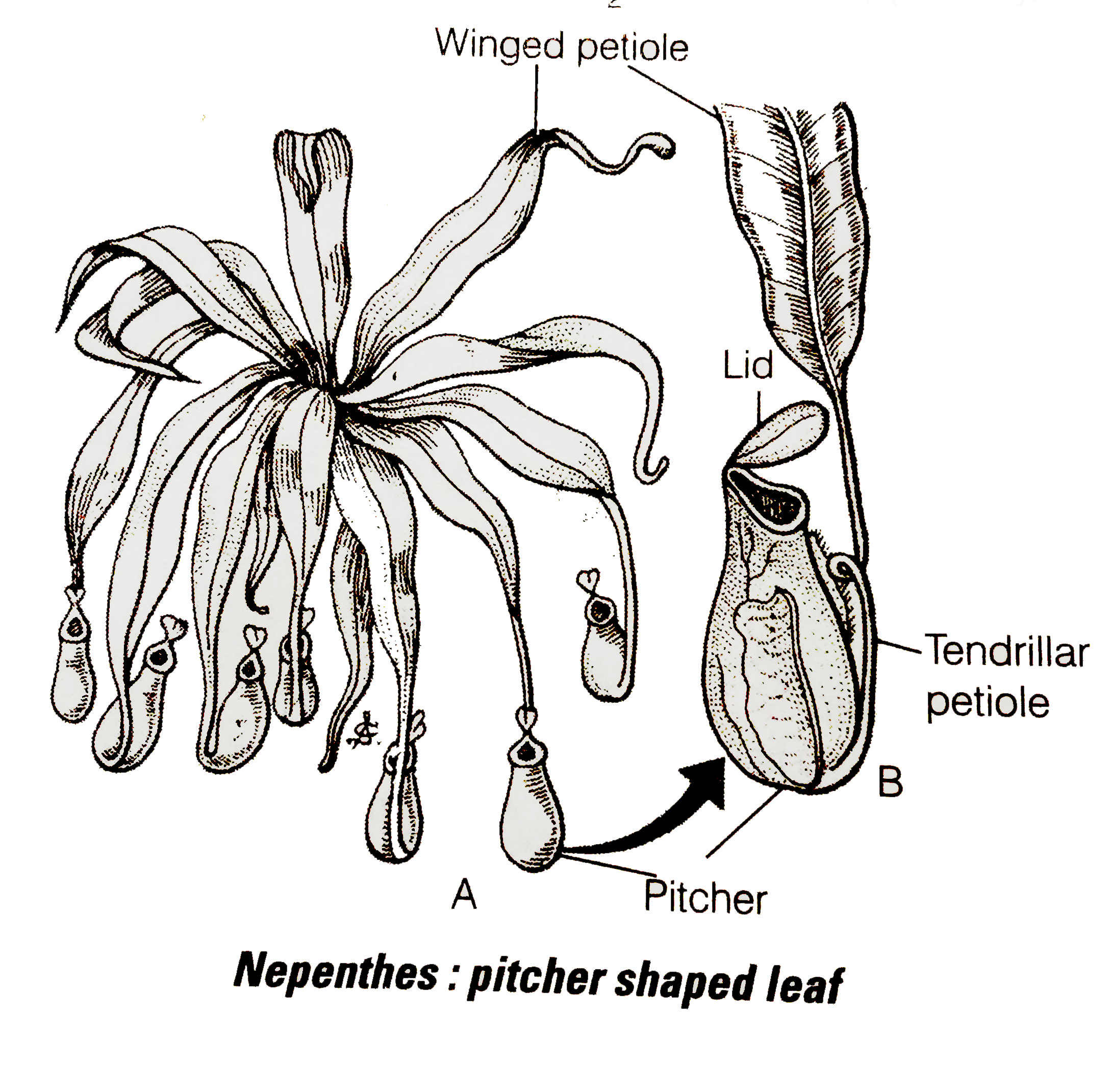
In insectivorous plant e.g., Nepenthes, the leaf lamina gets modified in the form of pitcher and anterior part of petiole coils like tendril which keeps the pitcher in a vertical direction. Posterior part of the petiole remains flattened like a leaf. The apex of lamina forms a lid. Pitcher contains digestive enzyme which the trapped insects .
All these modifications and adaptation are developed to make up the nitrogen deficiency in the plant because these plants are found in `N_(2)` deficient soil, (marshy/swamp soils)
Promotional Banner

Topper's Solved these Questions

  • MORPHOLOGY OF FLOWERING PLANTS

    NCERT EXEMPLAR|Exercise Long Answer Type Questions|8 Videos
  • MORPHOLOGY OF FLOWERING PLANTS

    NCERT EXEMPLAR|Exercise Very Short Answer Type Questions|10 Videos
  • MINERAL NUTRITION

    NCERT EXEMPLAR|Exercise Long Answer Type Questions|8 Videos
  • NEURAL CONTROL AND CO-ORDINATION

    NCERT EXEMPLAR|Exercise LONG ANSWER TYPE QUESTIONS|3 Videos

Similar Questions

Explore conceptually related problems

First read a passage and then answer the questions following that passage. Soil scientists have shown that the soil teems with millions of living things, many of them useful, others harmful. The living things which are useful include earthworms and various kinds of bacteria. Earthworms loosen the soil and so enable air and water to enter it. Bacteria, which are microscopic living things break down dead plants and animals and make humus, or take nitrogen from the air and change it into substances that plants use. The living things that do harm include other bacteria and fungi which cause diseases. Other harmful things are pests such as wire worms which feed on the roots of grass and other plants. While the farmer can usually keep weeds in check by careful cultivation, this alone may not protect his crops from insects, pests and diseases. Nowadays, however, he is much better able to control these enemies. He may plant. specially resistant types of seeds or he may keep the pests and diseases in check with chemicals. With better seeds farmers have been able to increase their crop yield . They can grow crops that ripen more quickly and have a stronger resistance to disease, frost or drought. The farmers today can also select seeds

First read a passage and then answer the questions following that passage. Soil scientists have shown that the soil teems with millions of living things, many of them useful, others harmful. The living things which are useful include earthworms and various kinds of bacteria. Earthworms loosen the soil and so enable air and water to enter it. Bacteria, which are microscopic living things break down dead plants and animals and make humus, or take nitrogen from the air and change it into substances that plants use. The living things that do harm include other bacteria and fungi which cause diseases. Other harmful things are pests such as wire worms which feed on the roots of grass and other plants. While the farmer can usually keep weeds in check by careful cultivation, this alone may not protect his crops from insects, pests and diseases. Nowadays, however, he is much better able to control these enemies. He may plant. specially resistant types of seeds or he may keep the pests and diseases in check with chemicals. With better seeds farmers have been able to increase their crop yield . They can grow crops that ripen more quickly and have a stronger resistance to disease, frost or drought. Scientists who study soil believe that

First read a passage and then answer the questions following that passage. Soil scientists have shown that the soil teems with millions of living things, many of them useful, others harmful. The living things which are useful include earthworms and various kinds of bacteria. Earthworms loosen the soil and so enable air and water to enter it. Bacteria, which are microscopic living things break down dead plants and animals and make humus, or take nitrogen from the air and change it into substances that plants use. The living things that do harm include other bacteria and fungi which cause diseases. Other harmful things are pests such as wire worms which feed on the roots of grass and other plants. While the farmer can usually keep weeds in check by careful cultivation, this alone may not protect his crops from insects, pests and diseases. Nowadays, however, he is much better able to control these enemies. He may plant. specially resistant types of seeds or he may keep the pests and diseases in check with chemicals. With better seeds farmers have been able to increase their crop yield . They can grow crops that ripen more quickly and have a stronger resistance to disease, frost or drought. Nowadays it is possible to reduce the loss caused by pests and harmful bacteria

First read a passage and then answer the questions following that passage. Soil scientists have shown that the soil teems with millions of living things, many of them useful, others harmful. The living things which are useful include earthworms and various kinds of bacteria. Earthworms loosen the soil and so enable air and water to enter it. Bacteria, which are microscopic living things break down dead plants and animals and make humus, or take nitrogen from the air and change it into substances that plants use. The living things that do harm include other bacteria and fungi which cause diseases. Other harmful things are pests such as wire worms which feed on the roots of grass and other plants. While the farmer can usually keep weeds in check by careful cultivation, this alone may not protect his crops from insects, pests and diseases. Nowadays, however, he is much better able to control these enemies. He may plant. specially resistant types of seeds or he may keep the pests and diseases in check with chemicals. With better seeds farmers have been able to increase their crop yield . They can grow crops that ripen more quickly and have a stronger resistance to disease, frost or drought. The living things that do harm

First read a passage and then answer the questions following that passage. Soil scientists have shown that the soil teems with millions of living things, many of them useful, others harmful. The living things which are useful include earthworms and various kinds of bacteria. Earthworms loosen the soil and so enable air and water to enter it. Bacteria, which are microscopic living things break down dead plants and animals and make humus, or take nitrogen from the air and change it into substances that plants use. The living things that do harm include other bacteria and fungi which cause diseases. Other harmful things are pests such as wire worms which feed on the roots of grass and other plants. While the farmer can usually keep weeds in check by careful cultivation, this alone may not protect his crops from insects, pests and diseases. Nowadays, however, he is much better able to control these enemies. He may plant. specially resistant types of seeds or he may keep the pests and diseases in check with chemicals. With better seeds farmers have been able to increase their crop yield . They can grow crops that ripen more quickly and have a stronger resistance to disease, frost or drought. Farmers are always careful

Water and dissolved minerals get into the root hair of a plant by a process called A and enter the conducting tissue B. The C helps the water and dissolved minerals to move up through the tissue B in roots and stem, and reach the leaves of a plant. In the leaves food is made by a process D. This food is then transported to all the parts of a plant through tissue E. The process of distributing food made in the leaves to all the parts of the plant is called F. (a) What are (i) A (ii) B (iii) C (iv) E, and (iv) F ? (b) Which tissue is made up of living cells : B or E ? (c) Name one substance (other than oxygen) which is transported by tissue A in the human body. (d) Which two components of tissue A are the cells without nucleus ? (e) Name any two organisms (animals) which do not have liquid like A in their body.

