

Home
Class 12
BIOLOGY
Fill in the trophic levels (1,2,3 and 4)...

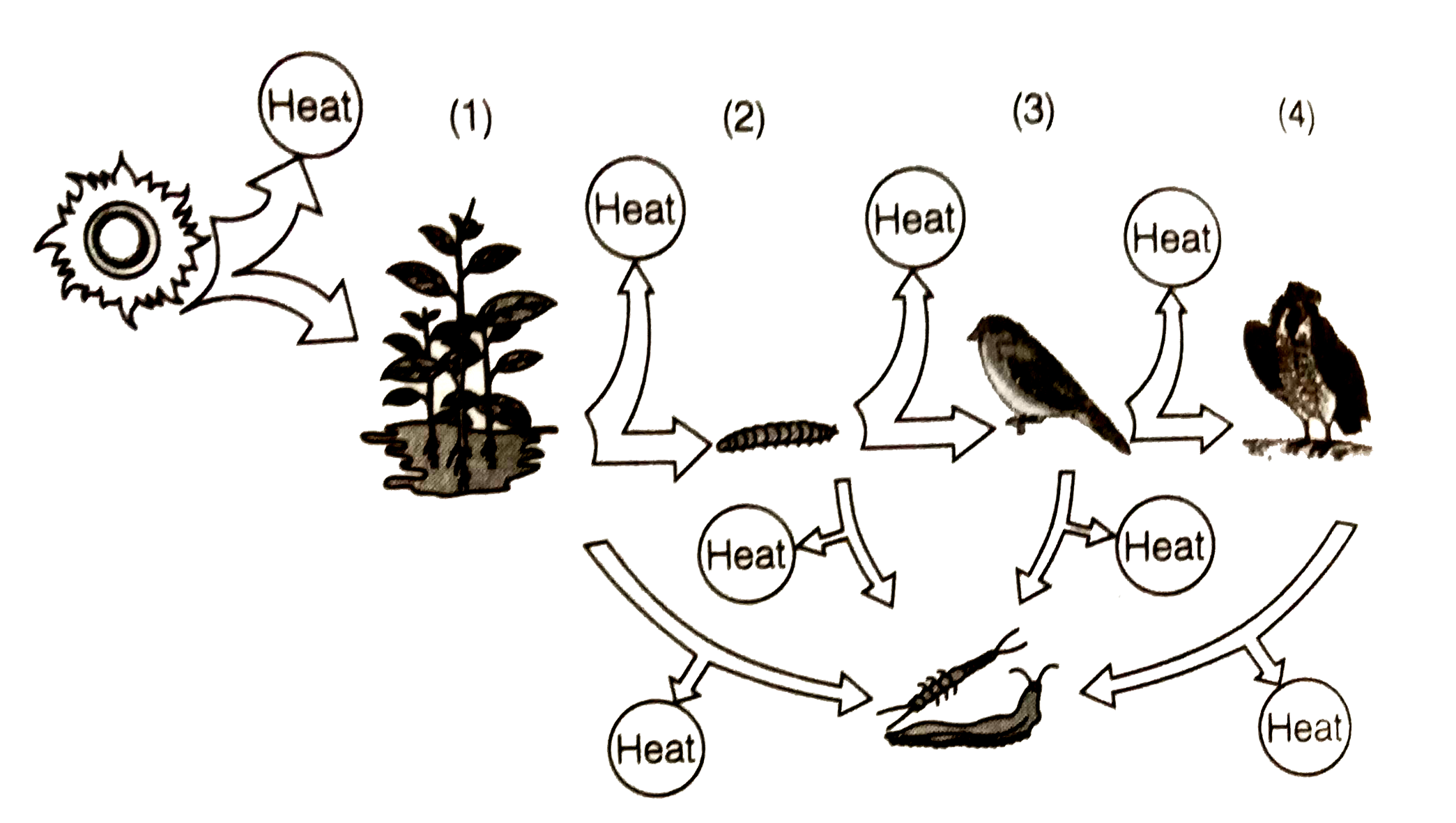
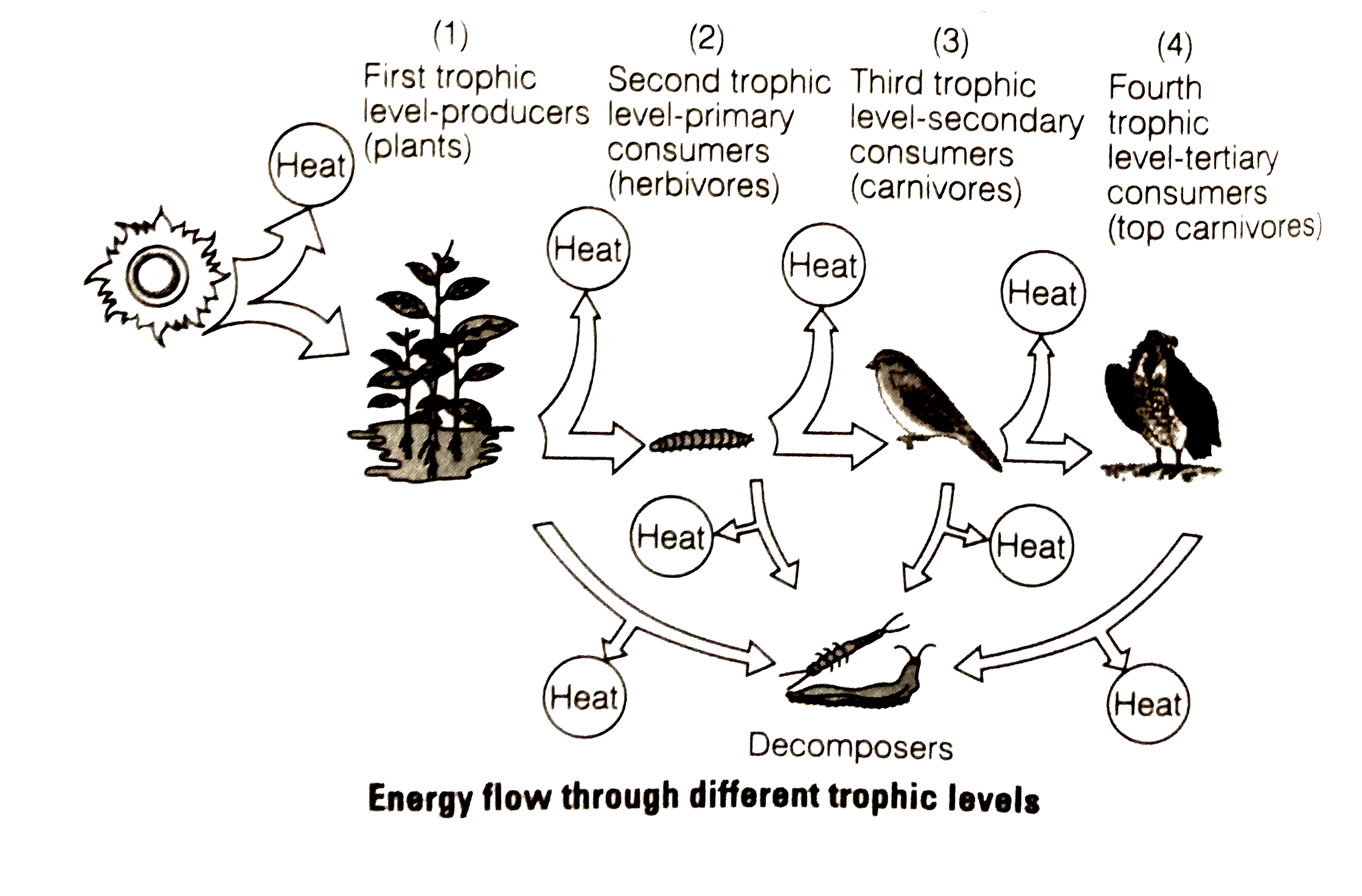
Fill in the trophic levels (1,2,3 and 4) in th eboxes provided in the figure.

Text Solution

Verified by Experts

(1) First trophm mm (producers) Plant
(ii) Second trophic level (primary consumers) Herblvorea
(iii) Third trophic level (secondary consumers) Carnivore
(iv) Fourth trophlc ievel (tertiary consumers) Top carnivores
Promotional Banner

Topper's Solved these Questions

  • BIOTECHNOLOGY PRINCIPLES AND PROCESS

    NCERT EXEMPLAR|Exercise Biotechnology Principles And Process|44 Videos
  • ENVIRONMENTAL ISSUES

    NCERT EXEMPLAR|Exercise Environmental Issues|55 Videos

Similar Questions

Explore conceptually related problems

(a) Name an ideal pyramid existing in an ecosystem. Construct it up to its three trophic levels along with their names. (b) The sun provides 1,000,000 J of sunlight (solar energy) to an ecosystem. Write the amount of energy that is available to the first and third trophic levels, respectively.

Food chains and the energy flow within an ecosystem provide an important understanding of contingencies and mutual dependencies of organisms. The given below flow chart depicts the energy flow within some members of a grassland ecosystem. The grass in the below ecosystem transducer 120,000 J of sunlight and fixes it into 12,000 J of energy. It is established that 90% of the energy of one trophic level is not passed to the next trophic level. Further assume that the energy transferred from one trophic level to the next is equally shared among the different organisms at that trophic level. Based on the above information, indicate the amount of energy that an organism C may have received from an organism from the previous trophic level.

Food chains and the energy flow within an ecosystem provide an important understanding of contingencies and mutual dependencies of organisms. The given below flow chart depicts the energy flow within some members of a grassland ecosystem. The grass in the below ecosystem transducer 120,000 J of sunlight and fixes it into 12,000 J of energy. It is established that 90% of the energy of one trophic level is not passed to the next trophic level. Further assume that the energy transferred from one trophic level to the next is equally shared among the different organisms at that trophic level. Tropic levels are formed by which of the following components?

Food chains and the energy flow within an ecosystem provide an important understanding of contingencies and mutual dependencies of organisms. The given below flow chart depicts the energy flow within some members of a grassland ecosystem. The grass in the below ecosystem transducer 120,000 J of sunlight and fixes it into 12,000 J of energy. It is established that 90% of the energy of one trophic level is not passed to the next trophic level. Further assume that the energy transferred from one trophic level to the next is equally shared among the different organisms at that trophic level. Which organism acts as both the secondary consumer and the tertiary consumer?

Food chains and the energy flow within an ecosystem provide an important understanding of contingencies and mutual dependencies of organisms. The given below flow chart depicts the energy flow within some members of a grassland ecosystem. The grass in the below ecosystem transducer 120,000 J of sunlight and fixes it into 12,000 J of energy. It is established that 90% of the energy of one trophic level is not passed to the next trophic level. Further assume that the energy transferred from one trophic level to the next is equally shared among the different organisms at that trophic level. How many food chains are present in the food web depicted above?

Exercise - 4 Level 1 and 2

In the figure shown, the processes leveled 1,2,3 and 4 are

Food chains and the energy flow within an ecosystem provide an important understanding of contingencies and mutual dependencies of organisms. The given below flow chart depicts the energy flow within some members of a grassland ecosystem. The grass in the below ecosystem transducer 120,000 J of sunlight and fixes it into 12,000 J of energy. It is established that 90% of the energy of one trophic level is not passed to the next trophic level. Further assume that the energy transferred from one trophic level to the next is equally shared among the different organisms at that trophic level. In the food web depicted above, identify the most energy efficient link for tertiary consumer.

NCERT EXEMPLAR-ECOSYSTEM-Ecosystem
  1. In relation to energy transfer in ecosystem, explain the statement ”10...

    Text Solution

    |

  2. Primary productivity caries from ecosystem to ecosystem. Explain ?

    Text Solution

    |

  3. Sometimes due to biotic/abiotic factor the climax remain in a particul...

    Text Solution

    |

  4. What is an incomplete ecosystem? Explain with the help of suitable exa...

    Text Solution

    |

  5. What are the shortcomings of ecological pyramids in the study of ecosy...

    Text Solution

    |

  6. How do you distinguish between humification and mineralisation?

    Text Solution

    |

  7. Fill in the trophic levels (1,2,3 and 4) in th eboxes provided in the ...

    Text Solution

    |

  8. The rate of decomposition of detritus is affected by the abiotic facto...

    Text Solution

    |

  9. A farmer harvests his crop and expresses his harvest in three differen...

    Text Solution

    |

  10. Justify the following statement in terms of ecosystem dynamics. "Natur...

    Text Solution

    |

  11. Which of the following ecosystems will be more productive in terms at:...

    Text Solution

    |

  12. What are the three types of ecological pyramids. What information is c...

    Text Solution

    |

  13. Write a short note on pyramid of numbers and pyramid of biomass.

    Text Solution

    |

  14. Given below is a list of autotrophs and heterotrophs. With your knowle...

    Text Solution

    |

  15. ”The energy flow in the ecosystem follows the second law of thermodyna...

    Text Solution

    |

  16. What will happen to an ecosystem if (a) All producers are removed ...

    Text Solution

    |

  17. Give two examples of artificial or man made ecosystems. List the salie...

    Text Solution

    |

  18. The biodiversity increases when one moves from the pioneer to the clim...

    Text Solution

    |

  19. What is a biogeochemical cycle. What is the role of the reservoir in a...

    Text Solution

    |

  20. What will be the P/R ratio of a climax community and a pioneer communi...

    Text Solution

    |