

Home
Class 11
CHEMISTRY
Four structures are given in options (a)...

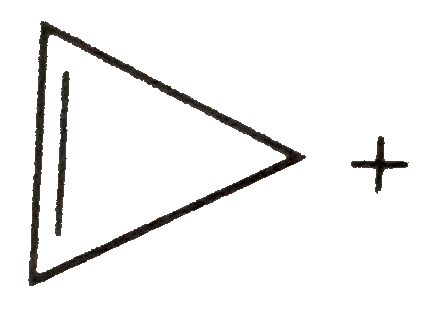
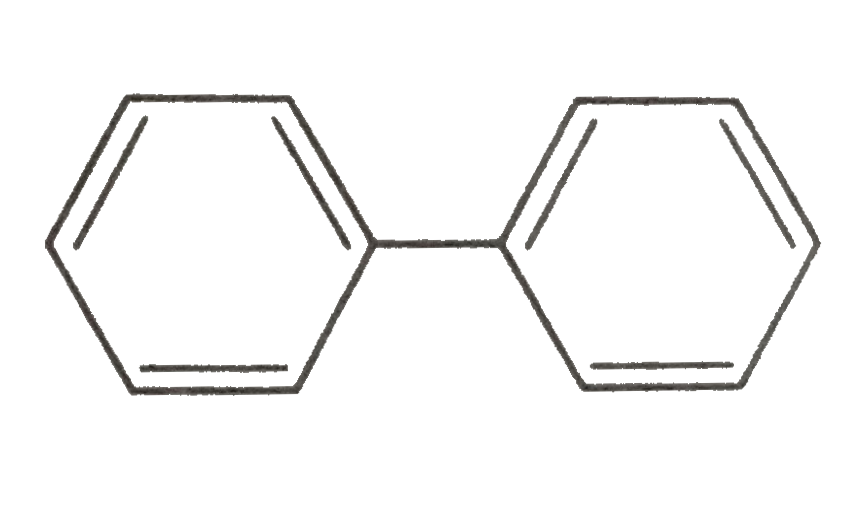
Four structures are given in options (a) to (d) . Examine them and select the aromatic structures.

A

B

C

D

Text Solution

AI Generated Solution

The correct Answer is:

To determine which of the given structures are aromatic, we need to follow the criteria for aromaticity. Here’s a step-by-step solution: ### Step 1: Understand the Criteria for Aromaticity A compound is considered aromatic if it meets the following criteria: 1. **Planarity**: The molecule must be planar, allowing for effective overlap of p-orbitals. 2. **Conjugated Double Bonds**: The molecule must have a continuous ring of p-orbitals, which typically means alternating single and double bonds. 3. **Hückel's Rule**: The molecule must have \(4n + 2\) π electrons, where \(n\) is a non-negative integer (0, 1, 2, ...). ### Step 2: Analyze Each Structure Let’s examine each structure one by one based on the criteria above. #### Structure 1: Cyclopropene with a Positive Charge - **Planarity**: Yes, all carbons are sp² hybridized. - **Conjugation**: There is one double bond, but it does not have conjugated double bonds. - **π Electrons**: There are 2 π electrons (for \(n = 0\), \(4(0) + 2 = 2\)). - **Conclusion**: This structure is aromatic. #### Structure 2: A Compound with 8 π Electrons - **Planarity**: Yes, all carbons are sp² hybridized. - **Conjugation**: There are conjugated double bonds. - **π Electrons**: There are 8 π electrons (for \(n = 2\), \(4(2) + 2 = 10\)). - **Conclusion**: This structure is anti-aromatic (not aromatic). #### Structure 3: Bifenyl - **Planarity**: Yes, both benzene rings are planar and sp² hybridized. - **Conjugation**: Each benzene ring has conjugated double bonds. - **π Electrons**: Each benzene ring has 6 π electrons (for \(n = 1\), \(4(1) + 2 = 6\)). - **Conclusion**: This structure is aromatic. #### Structure 4: A Compound with 4 π Electrons - **Planarity**: Yes, all carbons are sp² hybridized. - **Conjugation**: There are conjugated double bonds. - **π Electrons**: There are 4 π electrons (for \(n = 1\), \(4(1) + 2 = 6\)). - **Conclusion**: This structure is anti-aromatic (not aromatic). ### Final Conclusion The aromatic structures from the given options are: - **Structure 1 (Cyclopropene with a Positive Charge)** - **Structure 3 (Bifenyl)**

To determine which of the given structures are aromatic, we need to follow the criteria for aromaticity. Here’s a step-by-step solution: ### Step 1: Understand the Criteria for Aromaticity A compound is considered aromatic if it meets the following criteria: 1. **Planarity**: The molecule must be planar, allowing for effective overlap of p-orbitals. 2. **Conjugated Double Bonds**: The molecule must have a continuous ring of p-orbitals, which typically means alternating single and double bonds. 3. **Hückel's Rule**: The molecule must have \(4n + 2\) π electrons, where \(n\) is a non-negative integer (0, 1, 2, ...). ...
Promotional Banner

Topper's Solved these Questions

  • HYDROCARBONS

    NCERT EXEMPLAR|Exercise Short Answer Type Questions|20 Videos
  • HYDROCARBONS

    NCERT EXEMPLAR|Exercise Matching The Columns|4 Videos
  • HYDROCARBONS

    NCERT EXEMPLAR|Exercise Long Answer Type Questions|4 Videos
  • ENVIRONMENTAL CHEMISTRY

    NCERT EXEMPLAR|Exercise Long Answer Type|5 Videos
  • HYDROGEN

    NCERT EXEMPLAR|Exercise LONG ANSWER TYPE QUESTIONS|8 Videos

Similar Questions

Explore conceptually related problems

Four structures are given in option (1) to (4). Examine them and select the aromatic structure.

The three structural formulae A, B and C are given here. Identify them and select the correct option.

Resonance energy will be more if (a) canonical structures are equivalent than if canonical structures are non-equivalent. (b) molecule is aromatic than if molecule is not aromatic.

Animals belonging to Phylum Chordata are fundamentally characterised by the presence of structures noted as A, B C and D. Identify them and select the correct option.

Figure 19 .1 7 shows human urinary system with structures labeled A-D. Select the option which correctly identifies them and gives their characteristics and/or functions.

Given figures (i), (ii), (iii) and (iv) represent certain parts/structures of animals. Identify the pairs of structures that are analogous to each other and select the correct option.
