Home
Class 12
CHEMISTRY
Ease of ionization to produce carbocatio...

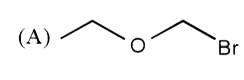
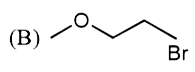
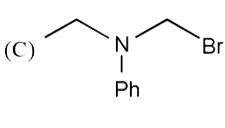
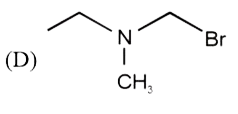
Ease of ionization to produce carbocation and bromide ion under the treatment of `Ag^(o+)` will be maximum in which of the following compounds?

A

B

C

D

Text Solution

AI Generated Solution

The correct Answer is:

To determine which compound will have the maximum ease of ionization to produce a carbocation and bromide ion when treated with `Ag^(o+)`, we need to consider the stability of the resulting carbocation formed after the ionization process. ### Step-by-Step Solution: 1. **Identify the Compounds**: We need to analyze the given compounds (let's denote them as A, B, C, and D) to see how they will react with `Ag^(o+)` and what kind of carbocation will be formed. 2. **Understanding Ionization**: When `Ag^(o+)` is added, it will interact with bromide ions (Br^-) in the compounds. The ionization process will lead to the formation of a carbocation. The stability of this carbocation is crucial for determining which compound ionizes more easily. 3. **Analyzing Compound A**: In compound A, if we add `Ag^(o+)`, it will lead to the formation of a carbocation. We need to check the stability of this carbocation. If it has stabilizing groups (like alkyl groups), it will be more stable. 4. **Analyzing Compound C**: In compound C, there is a nitrogen atom involved. When `Ag^(o+)` is added, the lone pair on nitrogen can stabilize the carbocation formed. However, the presence of a phenyl (pH) ring can affect the stability due to resonance effects. 5. **Analyzing Compound D**: In compound D, the nitrogen is attached to a methyl group (CH3). The methyl group can donate electron density through the inductive effect, which can stabilize the carbocation formed. 6. **Comparing Stability**: - Compound A: The stability of the carbocation depends on the groups attached. If they are not strong electron-donating groups, it may not be very stable. - Compound C: The lone pair on nitrogen can stabilize the carbocation, but the phenyl ring may hinder the stabilization due to resonance. - Compound D: The methyl group provides electron density, enhancing the stability of the carbocation. 7. **Conclusion**: After analyzing the stability of the carbocations formed from each compound, we find that compound D has the most stable carbocation due to the +I effect of the methyl group, which makes it easier to ionize. Therefore, the ease of ionization to produce a carbocation and bromide ion under the treatment of `Ag^(o+)` will be maximum in **compound D**. ### Final Answer: The ease of ionization to produce carbocation and bromide ion under the treatment of `Ag^(o+)` will be maximum in **compound D**.
Promotional Banner

Topper's Solved these Questions

Similar Questions

Explore conceptually related problems

Ease of ionization to produce carbocation and bromide ion under the treatment of Ag^(o+) will be maximum in whichof the following compounds ?

Ease of ionization to produce carbocation and bromide ion under the statement of \(Ag ^{+}\) will be maximum in which of the following compounds?

Which of the following compound or ion is planar?

Ag^+ ion is isoelectronic with which of the following ion?

If ethyl bromide is refluxed with ether and magnesium then which of the following compound is formed ?

For the percipitation reaction of Ag^(o+) ions with NaCI , which of the following statements is true?

Aniline on treatment with sodium nitrite and HCI at 0^@C produces which of the following compound?

MOTION-GOC-Exercise - 2 (Level - I)
  1. Which of the following carbocation will be most stable ?

    Text Solution

    |

  2. Statement-1: Me - overset(o+)CH(2) is more stable than MeO - CH(2)^(o+...

    Text Solution

    |

  3. Ease of ionization to produce carbocation and bromide ion under the tr...

    Text Solution

    |

  4. In which of the following pairs, first species is more stable than sec...

    Text Solution

    |

  5. The order of stability of the following carbanion is (I) CH(3)overse...

    Text Solution

    |

  6. Arrange the carbonions, (CH(3))(3)overset(-)C, overset(-)C Cl(3), (C...

    Text Solution

    |

  7. There are three canonical structures of napthalene. Examine them and f...

    Text Solution

    |

  8. Which of the following has longest C – O bond:

    Text Solution

    |

  9. Among the following molecules, the correct order of C - C bond length ...

    Text Solution

    |

  10. In which of the following molecules pi-electron density in ring is max...

    Text Solution

    |

  11. Which of these cyclopropene systems is aromatic

    Text Solution

    |

  12. Which of these species is anti-aromatic ?

    Text Solution

    |

  13. Which of the following compouds is not aromatic

    Text Solution

    |

  14. The most stable canonical structure of this molecule is

    Text Solution

    |

  15. The most stable canonical structure of this molecule is

    Text Solution

    |

  16. The barrier for rotation about the indicated bonds Will be maximum i...

    Text Solution

    |

  17. Identify the odd species out Which of the species among the following ...

    Text Solution

    |

  18. Which of the following heterocyclic compounds would have aromatic char...

    Text Solution

    |

  19. Which one of the following carbonyl compound when treated with dilute ...

    Text Solution

    |

  20. The order of the rate of formation of carbocations from the following ...

    Text Solution

    |
