

Home
Class 12
PHYSICS
Terminal velocity (V) of a spherical obj...

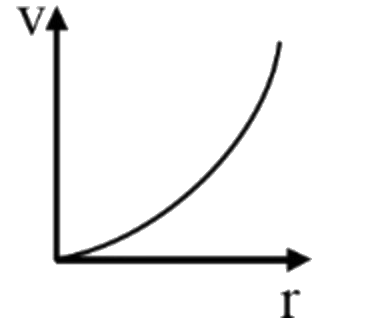
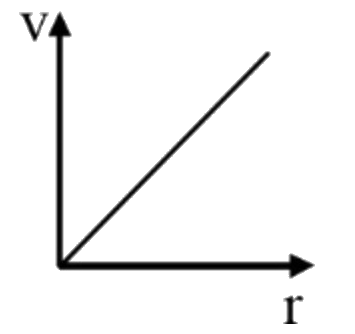
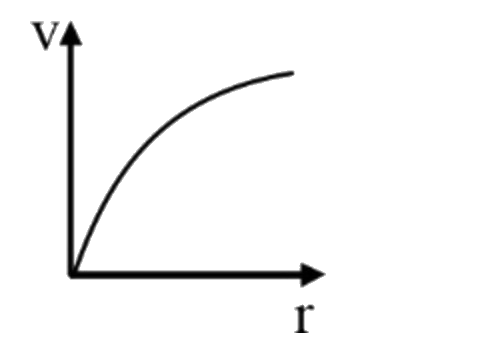
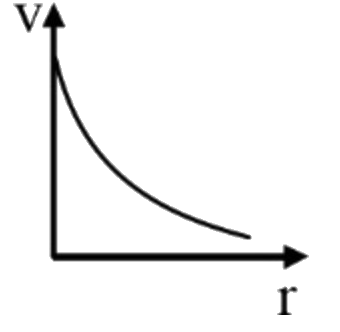
Terminal velocity `(V)` of a spherical object varies with a radius of object `(r)` -

A

B

C

D

Text Solution

AI Generated Solution

The correct Answer is:
To solve the problem regarding the relationship between terminal velocity (V) and the radius (r) of a spherical object, we can follow these steps: ### Step-by-Step Solution: 1. **Understanding Terminal Velocity**: Terminal velocity is the constant speed that a freely falling object eventually reaches when the resistance of the medium prevents further acceleration. For a spherical object falling through a viscous medium, the forces acting on it are the gravitational force (downward) and the drag force (upward). 2. **Forces Acting on the Object**: - The gravitational force acting on the object is given by \( F_g = mg \), where \( m \) is the mass of the object and \( g \) is the acceleration due to gravity. - The drag force acting on the object can be expressed as \( F_d = 6 \pi \eta r V \), where \( \eta \) is the coefficient of viscosity, \( r \) is the radius of the spherical object, and \( V \) is the terminal velocity. 3. **Setting Up the Equation**: At terminal velocity, the drag force equals the gravitational force: \[ mg = 6 \pi \eta r V \] 4. **Expressing Mass in Terms of Density**: The mass \( m \) can be expressed in terms of the density of the object \( \rho \) and its volume. The volume \( V \) of a sphere is given by \( V = \frac{4}{3} \pi r^3 \), so: \[ m = \rho \cdot V = \rho \cdot \frac{4}{3} \pi r^3 \] 5. **Substituting Mass into the Equation**: Substituting \( m \) into the force balance equation gives: \[ \rho \cdot \frac{4}{3} \pi r^3 g = 6 \pi \eta r V \] 6. **Simplifying the Equation**: Canceling \( \pi \) from both sides and rearranging gives: \[ \frac{4}{3} \rho r^2 g = 6 \eta V \] \[ V = \frac{2}{9} \frac{\rho g r^2}{\eta} \] 7. **Identifying the Relationship**: From the final equation, we can see that terminal velocity \( V \) is proportional to the square of the radius \( r \): \[ V \propto r^2 \] 8. **Graphical Representation**: The relationship \( V \propto r^2 \) indicates that if we were to plot terminal velocity \( V \) against radius \( r \), the graph would be a parabola opening upwards. However, since the radius cannot be negative, the graph will only exist in the first quadrant. ### Conclusion: The terminal velocity \( V \) of a spherical object varies with the square of its radius \( r \) as \( V \propto r^2 \).
Promotional Banner

Topper's Solved these Questions

  • NTA NEET SET 57

    NTA MOCK TESTS|Exercise PHYSICS|45 Videos
  • NTA NEET SET 59

    NTA MOCK TESTS|Exercise PHYSICS|45 Videos

Similar Questions

Explore conceptually related problems

Define velocity of an object

The terminal velocity V of a spherical ball of lead of radius R falling through a viscous liquid varies with R such that

The nature of graph between terminal velocity of spherical body vs the square of its radius is

As a spherical wavefront propagates, the amplitude (a) of a spherical wavefront varies with the distance r of the source

Instantaneous velocity of an object varies with time as v = alpha - beta t^(2) . Find its position and acceleration as a function of time, also find the object's maximum positive displacement from the origin.

Define escape velocity of an object.

The terminal velocity of small sized spherical body of radius r falling vertically in a viscous liquid is given by the following proportionality

The velocity v of moving object varies with displacement u as v=3x^(2)-2 ,then the acceleration at x=2m is

Draw a graph between terminal velocity of a spherical body and square of its radius?

A small spherical ball falling through a viscous medium of negligible density has terminal velocity v. Another ball of the same mass but of radius twice that of the earlier falling through the same viscous medium will have terminal velocity

NTA MOCK TESTS-NTA NEET SET 58-PHYSICS
  1. A particle A has chrage +q and a particle B has charge +4q with each o...

    Text Solution

    |

  2. Hammer of mass M strikes a nail of mass 'm' with a velocity 20 m/s int...

    Text Solution

    |

  3. Consider the earth as a uniform sphere if mass M and radius R. Imagine...

    Text Solution

    |

  4. A short bar magnet has a magnetic moment of 10 Am^(2).If its length is...

    Text Solution

    |

  5. In potentiometer experiment, null point isobtained at a particular poi...

    Text Solution

    |

  6. A uniformly wound solenoid coil of self inductance 1.8xx10^(-4)H and r...

    Text Solution

    |

  7. Two identical metal plates are given poistive charges Q1 and Q2 (ltQ1)...

    Text Solution

    |

  8. The weight of a dody at earth's surface is W. At a depth halfway to th...

    Text Solution

    |

  9. A metal rod of Young's modules Y and coefficient of thermal expansion ...

    Text Solution

    |

  10. A thermodynamical system undergoes cyclic process ABCDA as shown in fi...

    Text Solution

    |

  11. A charged particle q enters a region of uniform magnetic field B (out ...

    Text Solution

    |

  12. An airplane, diving at an angle of 53.0^@ with the vertical releases a...

    Text Solution

    |

  13. A man of mass 60 kg climbed down using an elevator . The elevator had ...

    Text Solution

    |

  14. F(pp),F("nn")and F(np) are the nuclear forces between proton - proton...

    Text Solution

    |

  15. A body is vibrating in simple harmonic motion with an amplitude of 0.0...

    Text Solution

    |

  16. A uniform electric field and a uniform magneitc field exist in a regio...

    Text Solution

    |

  17. Terminal velocity (V) of a spherical object varies with a radius of ob...

    Text Solution

    |

  18. What is the angle of incidence for an equilateral prism of refractive ...

    Text Solution

    |

  19. A sphere of mass m and radius r rolls on a horizontal plane without sl...

    Text Solution

    |

  20. If in a p - n junction diode , a square input signal of 10 V is applie...

    Text Solution

    |