A
B
C
D
Text Solution
Verified by Experts
The correct Answer is:
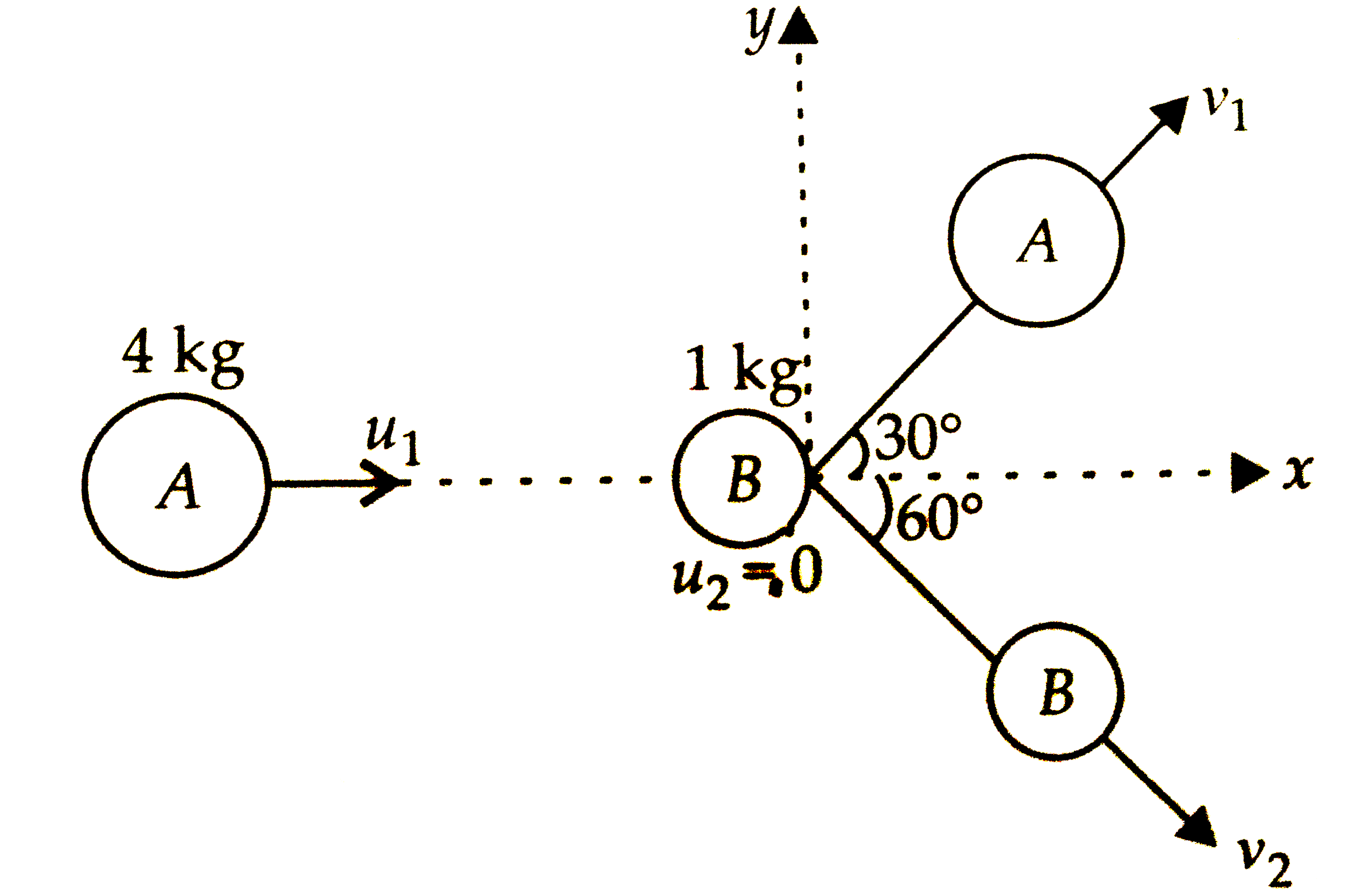



Topper's Solved these Questions
Similar Questions
Explore conceptually related problems
NCERT FINGERTIPS-WORK , ENERGY AND POWER-Collisions
- Consider the following statements A and B. Identify the correct choice...
Text Solution
|
- When two spheres of equal masses undergo glancing elastic collision wi...
Text Solution
|
- A spherical ball of mass m(1) collides head on with another ball of ma...
Text Solution
|
- Fast neutrons can easily be slowed down by
Text Solution
|
- Which of the following potential energy curves in figure., cannot poss...
Text Solution
|
- A particle of mass 1 g moving with a velocity vecv1=3hati-2hatj m s^(-...
Text Solution
|
- A ball falls under gravity from a height of 10 m with an initial downw...
Text Solution
|
- A ball of mass m moving with a speed 2v0 collides head-on with an iden...
Text Solution
|
- The bob A of a pendulum released from horizontal to the vertical hits ...
Text Solution
|
- A ball is dropped from a height h on to a floor . If the cofficient of...
Text Solution
|
- A ball of mass m collides with a wall with speed v and rebounds on the...
Text Solution
|
- A sphere P of mass m and velocity vi undergoes an oblique and perfectl...
Text Solution
|
- A spherical ball A of mass 4 kg, moving along a straight line strikes ...
Text Solution
|
- A neutron collides, head-on with a deuterium at rest. What fraction of...
Text Solution
|
- A neutron in a nuclear reactor collides head on elastically with the n...
Text Solution
|