Text Solution
Verified by Experts
The correct Answer is:



Topper's Solved these Questions
Similar Questions
Explore conceptually related problems
DC PANDEY-WAVE OPTICS-Assertion reason
- Assertion interference shows wave nature of light Reason Photoelectr...
Text Solution
|
- Assertion if wavelength is of the order of distance between the slits,...
Text Solution
|
- Assertion Two coherent sources transmit waves of equal intensity I(0) ...
Text Solution
|
- Assertion In Young's double slit experiment, ratio I(max)/I(min) is in...
Text Solution
|
- Assertion If a glass slab is placed in front of one of the slits, then...
Text Solution
|
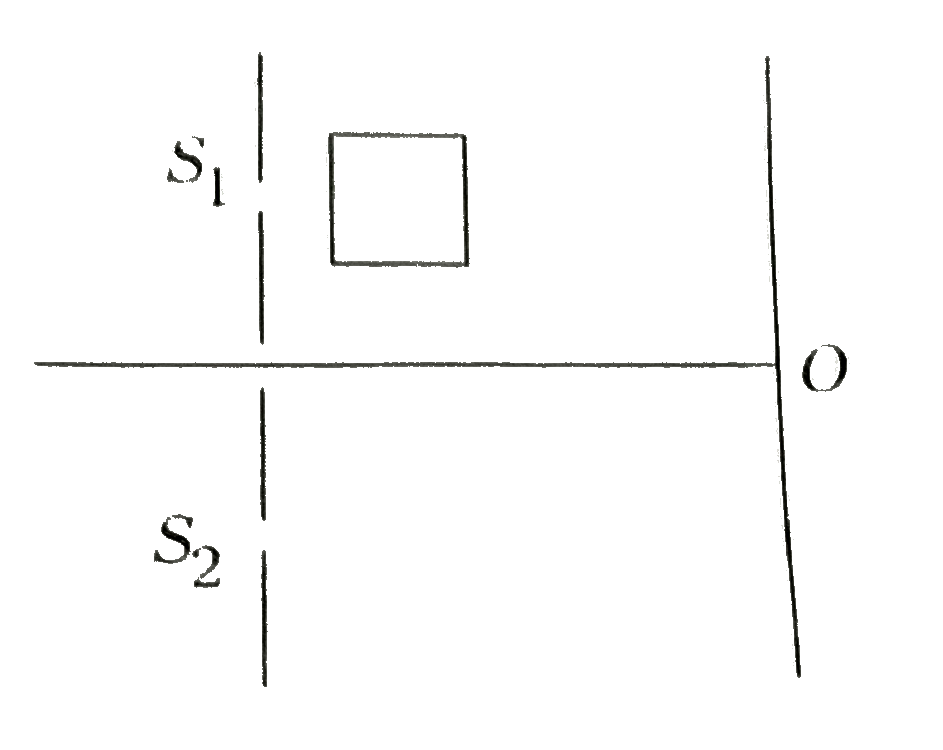
- Assertion In the YDSE set up shown in figure a glass slab is inserted ...
Text Solution
|
- Assertion Fraunhofer diffraction occurs when all the rays passing thro...
Text Solution
|
- Assertion In Young's double slit experiment, often both the phenomena ...
Text Solution
|
- Assertion In diffraction phernomenon different maximas have different ...
Text Solution
|
- Assertion (A) : The unpolarised light and polarized light can be disti...
Text Solution
|