Text Solution
Verified by Experts



Topper's Solved these Questions
LAW OF MOTION
PREMIERS PUBLISHERS|Exercise EVALUATION (TEXTBOOK QUESTIONS & ANSWERS) (III Long Answer Questions)|22 VideosLAW OF MOTION
PREMIERS PUBLISHERS|Exercise EVALUATION (TEXTBOOK QUESTIONS & ANSWERS) (IV Conceptual Question )|18 VideosLAW OF MOTION
PREMIERS PUBLISHERS|Exercise OTHER IMPORTANT QUESTIONS & ANSWERS (VI Numerical Problems)|62 VideosKINETIC THEORY OF GASES
PREMIERS PUBLISHERS|Exercise OTHER IMPORTANT QUESTIONS & ANSWERS (VI. Conceptual Questions.)|8 VideosMOTION OF SYSTEM OF PARTICLES AND BODIES
PREMIERS PUBLISHERS|Exercise OTHER IMPORTANT QUESTIONS & ANSWER (NUMERICAL PROBLEMS)|60 Videos
Similar Questions
Explore conceptually related problems
PREMIERS PUBLISHERS-LAW OF MOTION -EVALUATION (TEXTBOOK QUESTIONS & ANSWERS) (II Short Answer Questions)
- Define one newton
Text Solution
|
- Show that impulse is the change of momentum
Text Solution
|
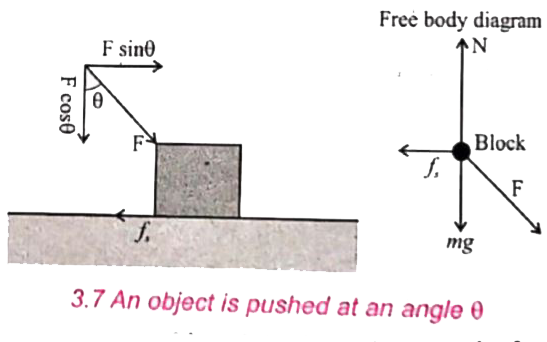
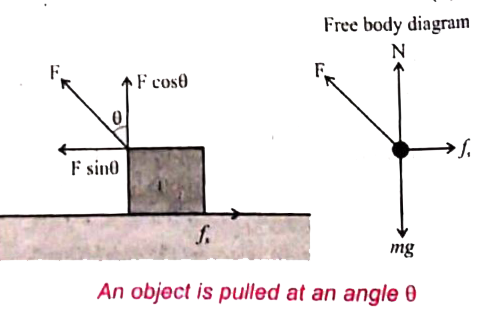
- Using free body diagram show that it is easy to pull an object than to...
Text Solution
|
- Explain various types of friction suggest a few methods to reduce fri...
Text Solution
|
- Pseudo Force
Text Solution
|
- State the empirical laws of static and kinetic friction
Text Solution
|
- State newton's third law
Text Solution
|
- What are interial frames ?
Text Solution
|
- Under what condion will a car skid on a leveled circular road ?
Text Solution
|
- Explain the concept of inertia write two examples each inertia of mot...
Text Solution
|
- State Newton's second law .
Text Solution
|
- Define one newton
Text Solution
|
- Show that impulse is the change of momentum
Text Solution
|
- Using free body diagram show that it is easy to pull an object than to...
Text Solution
|
- Explain various types of friction suggest a few methods to reduce fri...
Text Solution
|
- pseudo force
Text Solution
|
- State the empirical laws of static and kinetic friction
Text Solution
|
- State newton's third law
Text Solution
|
- What are interial frames ?
Text Solution
|
- Under what condion will a car skid on a leveled circular road ?
Text Solution
|