Home
Class 12
PHYSICS
Of the diodes shown in the following fig...

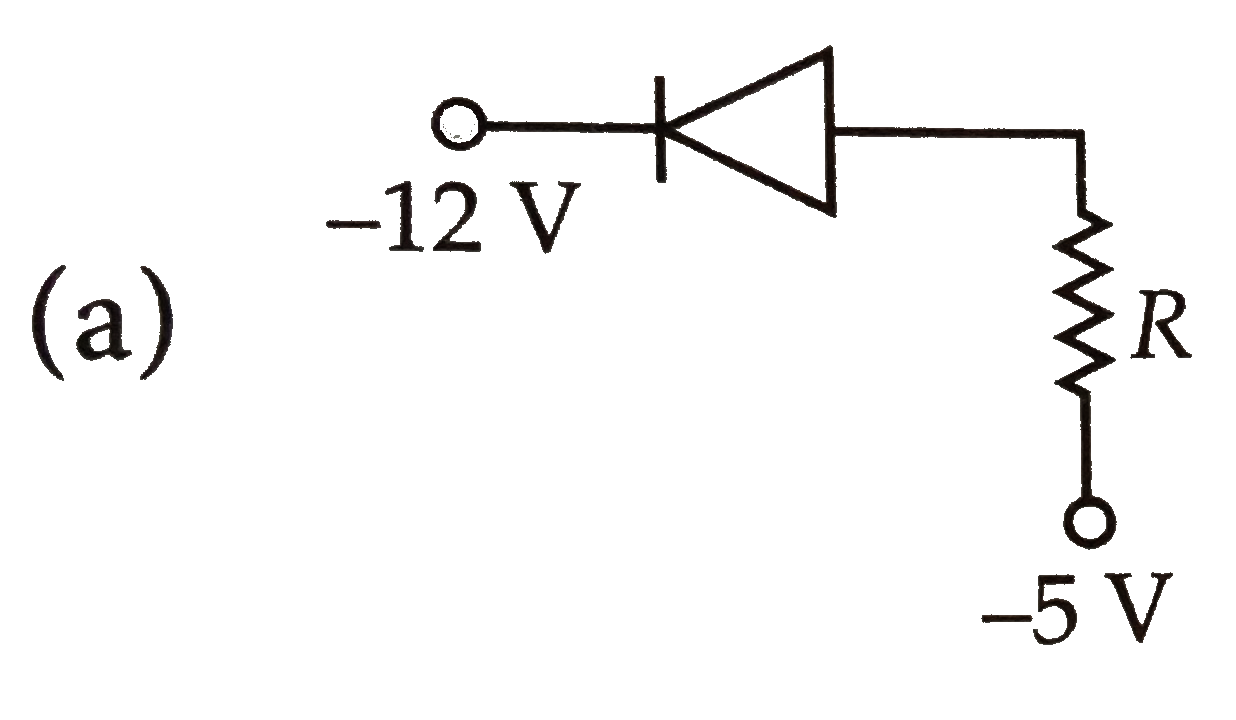
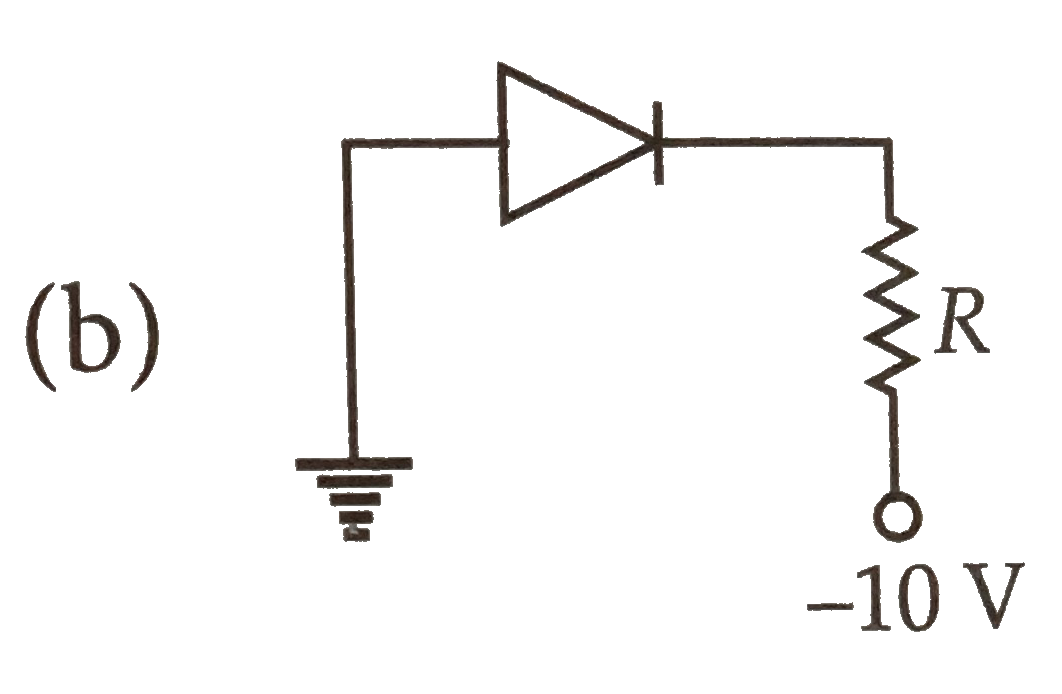
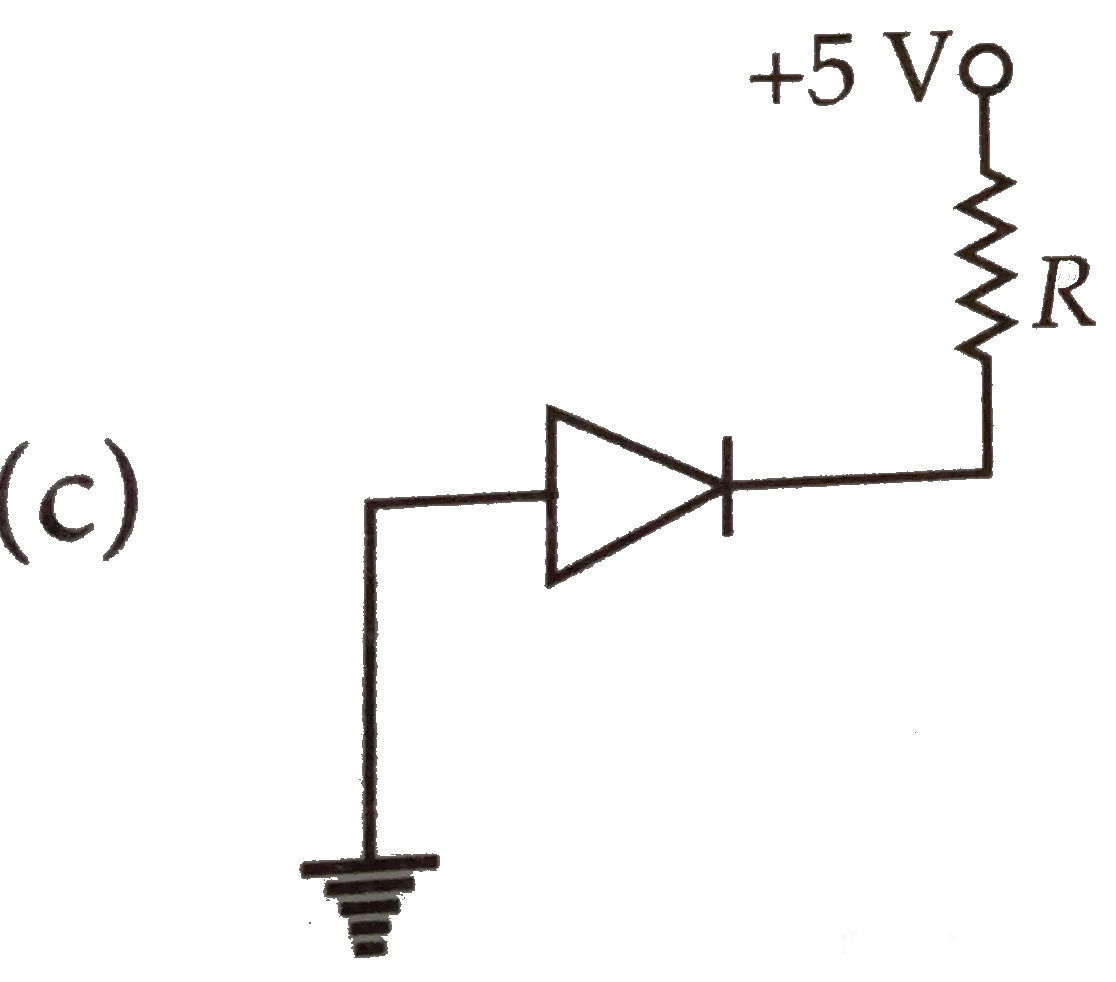
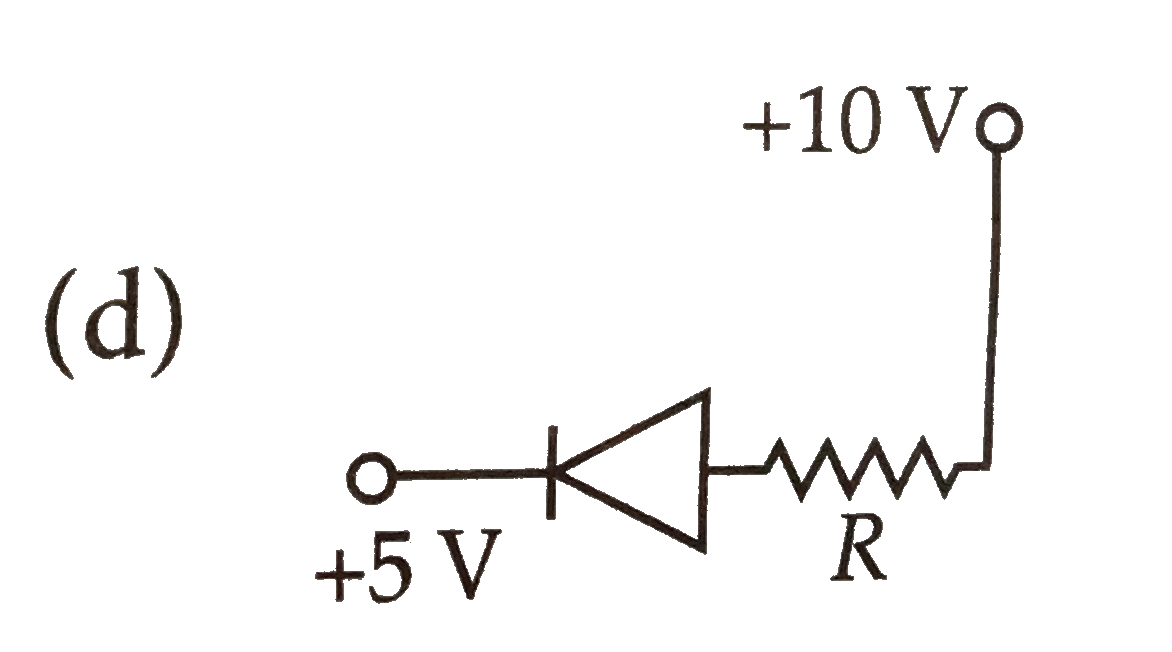
Of the diodes shown in the following figures, which one is reverse biased ?

A

B

C

D

Text Solution

AI Generated Solution

The correct Answer is:

To determine which diode is reverse biased from the given options, we can follow these steps: ### Step 1: Understand the Biasing of Diodes A diode is reverse biased when the p-type (positive) terminal is connected to a lower potential (negative) and the n-type (negative) terminal is connected to a higher potential (positive). Conversely, it is forward biased when the p-type terminal is at a higher potential than the n-type terminal. ### Step 2: Analyze Each Option We will analyze the biasing of each diode based on the provided connections: 1. **Option A**: - P-terminal is connected to -12V and N-terminal is connected to -5V. - Here, the p-terminal (-12V) is at a lower potential than the n-terminal (-5V), indicating that this diode is reverse biased. 2. **Option B**: - P-terminal is connected to +10V and N-terminal is grounded (0V). - The p-terminal (+10V) is at a higher potential than the n-terminal (0V), indicating that this diode is forward biased. 3. **Option C**: - P-terminal is connected to +5V and N-terminal is grounded (0V). - Again, the p-terminal (+5V) is at a higher potential than the n-terminal (0V), indicating that this diode is also forward biased. 4. **Option D**: - P-terminal is connected to +5V and N-terminal is connected to +10V. - Here, the p-terminal (+5V) is at a lower potential than the n-terminal (+10V), indicating that this diode is reverse biased. ### Step 3: Conclusion From the analysis: - **Option A** is reverse biased. - **Option D** is also reverse biased. However, since the question asks for which one is reverse biased and typically only one option is expected, we can conclude that **Option A** is the primary answer. ### Final Answer The diode that is reverse biased is **Option A**. ---

To determine which diode is reverse biased from the given options, we can follow these steps: ### Step 1: Understand the Biasing of Diodes A diode is reverse biased when the p-type (positive) terminal is connected to a lower potential (negative) and the n-type (negative) terminal is connected to a higher potential (positive). Conversely, it is forward biased when the p-type terminal is at a higher potential than the n-type terminal. ### Step 2: Analyze Each Option We will analyze the biasing of each diode based on the provided connections: ...
Promotional Banner

Topper's Solved these Questions

  • SEMICONDUCTOR ELECTRONICS : MATERIALS , DEVICES AND SIMPLE CIRCUITS

    NCERT FINGERTIPS|Exercise Application Of Junction Diode As A Rectifier|5 Videos
  • SEMICONDUCTOR ELECTRONICS : MATERIALS , DEVICES AND SIMPLE CIRCUITS

    NCERT FINGERTIPS|Exercise Special Purpose P-N Junction Diode|8 Videos
  • SEMICONDUCTOR ELECTRONICS : MATERIALS , DEVICES AND SIMPLE CIRCUITS

    NCERT FINGERTIPS|Exercise P-N Junction|6 Videos
  • RAY OPTICS AND OPTICAL INSTRUMENTS

    NCERT FINGERTIPS|Exercise Assertion And Reason|15 Videos
  • WAVE OPTICS

    NCERT FINGERTIPS|Exercise Assertion And Reason|15 Videos

Similar Questions

Explore conceptually related problems

Of the diodes shown in the following diagrams, which one is reverse biased?

If the following which one of the diodes reverse biased?

In the following, which one of the diodes is reverse biased ?

In which of the following figure the junction diode is reverse biased ?

In the following, which one of the diodes is reverse biased –

In the figure, which of the diode is in reverse bias

In the following figure, the diodes which are forward biased are:

Which of the following semiconductor diodes is reverse biased?
