Text Solution
Verified by Experts



Topper's Solved these Questions
GEOMATRICAL OPTICS
RESONANCE|Exercise Exercise-1|142 VideosGEOMATRICAL OPTICS
RESONANCE|Exercise Exercise-2|63 VideosGEOMATRICAL OPTICS
RESONANCE|Exercise Advance level Problems|35 VideosEXPERIMENTAL PHYSICS
RESONANCE|Exercise PART -II|10 VideosGRAVITATION
RESONANCE|Exercise HIGH LEVEL PROBLEMS|16 Videos
Similar Questions
Explore conceptually related problems
RESONANCE-GEOMATRICAL OPTICS -Problem
- An object lies 90cm in air avove water surface. It is viewed form wa...
Text Solution
|
- A concave mirror is placed inside water its shining surface upwards an...
Text Solution
|
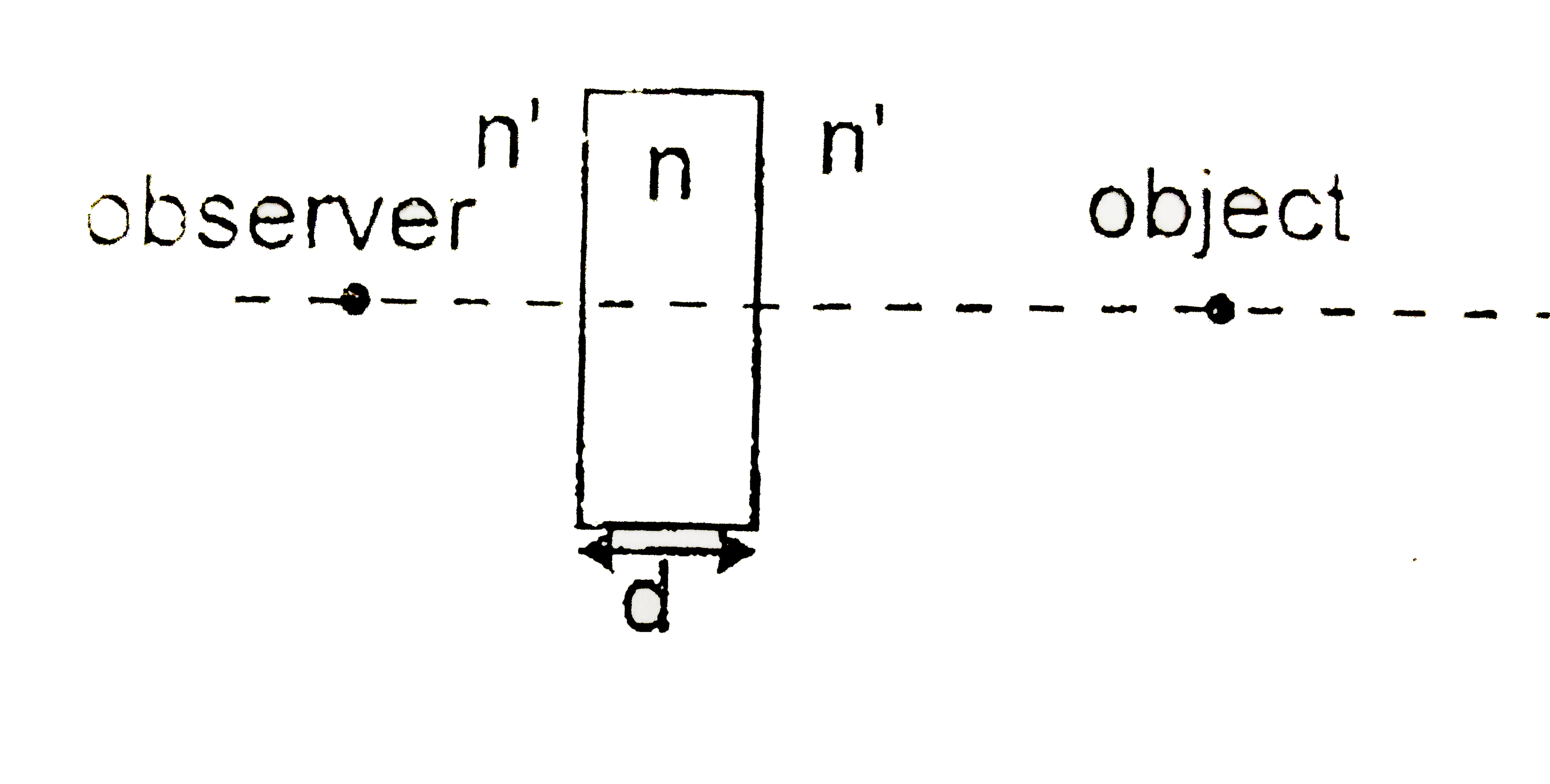
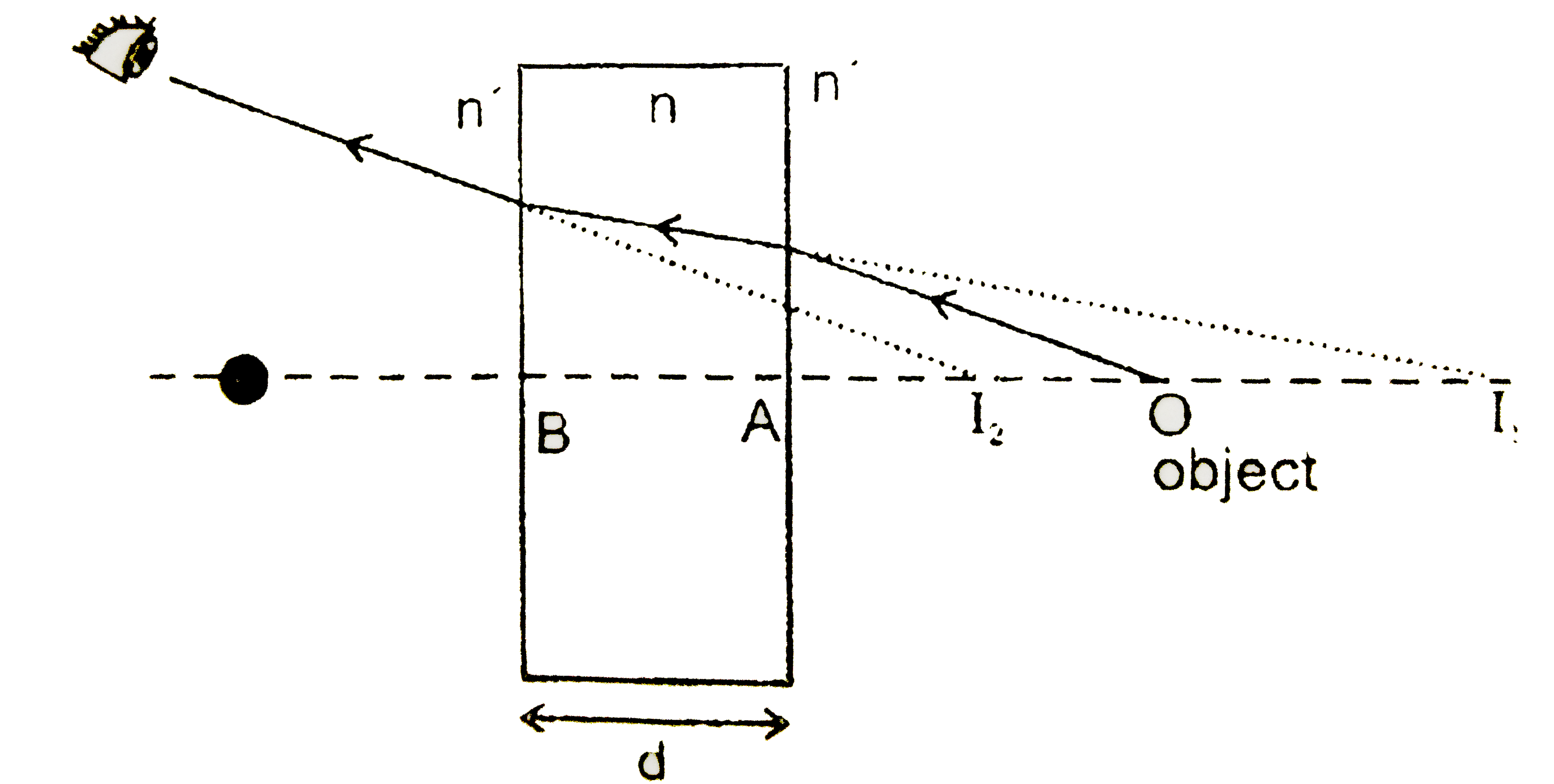
- Prove that the shift in position of object due to parallel slab is g...
Text Solution
|
- Find the apparent depth of object O below surface AB, seen by an obs...
Text Solution
|
- In above question what is the depth of object corresponding to inci...
Text Solution
|
- In above question if observer is in medium mu(3) what is the apparen...
Text Solution
|
- Find the radius of circle of illuminance, if a luminous object is pla...
Text Solution
|
- A ship is salling in river. An observe is situated at a depth h i...
Text Solution
|
- Find r, r', e delta for the case shown in figure
Text Solution
|
- For the case shown in figure shown in figure prove the relations r' ...
Text Solution
|
- From the graph fo angle of deviation delta versus angle of incidwenc...
Text Solution
|
- If two prisms are combined , as shown in figure, find the total angu...
Text Solution
|
- The dispersive powers of crown and flint glasses are 0.03 and 0.05 res...
Text Solution
|
- See the situatiion shown on figure (1) Find the positiion of imag...
Text Solution
|
- Find the focal length of a double-convex lens with R(1) = 15cm and R(...
Text Solution
|
- Find the focal length of a plance-convex lens with R(1) = 15cm and R...
Text Solution
|
- Find the focal length of a convavo-convex lens (Positive me menisus ) ...
Text Solution
|
- Figure shows a point object and a divegoing lens Find the final ...
Text Solution
|
- An extended real object is placed perpendicular to the principle axis...
Text Solution
|
- Find the equivalent focal length of the system for paraxal rays paral...
Text Solution
|