Home
Class 12
CHEMISTRY
An organic compound 'A' (C(9)H(10)O) whe...

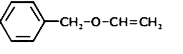
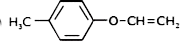
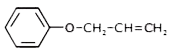
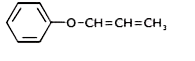
An organic compound 'A' `(C_(9)H_(10)O)` when treated with conc. HI undergoes cleavage to yield compounds ‘B’ and ‘C’. ‘B’ gives yellow precipitate with `AgNO_(3)` where as ‘C’ tautomerizes to ‘D’. ‘D’ givespositive iodoform test. ‘A’ could be :

A

B

C

D

Text Solution

AI Generated Solution

To solve the problem, we need to identify the organic compound 'A' with the molecular formula \( C_9H_{10}O \) based on the reactions it undergoes when treated with concentrated HI. ### Step-by-Step Solution: 1. **Understanding the Reaction with HI**: - The compound 'A' reacts with concentrated HI, leading to cleavage. This suggests that 'A' likely contains a functional group that can be cleaved by HI, such as an alcohol or ether. 2. **Identifying Compounds 'B' and 'C'**: ...
Promotional Banner

Topper's Solved these Questions

  • JEE MAINS 2020

    JEE MAINS PREVIOUS YEAR|Exercise CHEMSITRY|25 Videos
  • JEE MAINS

    JEE MAINS PREVIOUS YEAR|Exercise QUESTION|1 Videos
  • JEE MAINS 2021

    JEE MAINS PREVIOUS YEAR|Exercise Chemistry (Section B )|10 Videos

Similar Questions

Explore conceptually related problems

If given compound having molecular formula C_9H_10O react with HI and produce two compounds A and B. A will give yellow ppt with AgNO_3 and B shows positive iodofrom test after tautomerisation. Identify the structrure of given cmpound.

An ether, (A) having molecular formula, C_(6)H_(14)O , when treated with excess of HI produced two alkyl iodides which on hydrolysis yield compounds (B) and (C ). Oxidation of (B ) gives an acid (D), whereas oxidation of (C ) results in the formation of a mixed ketone, (E ) . Give graphic representation of (A) to (E).

An organic compound (A) (C_(6)H_(10)O) on reaction with CH_(3)MgBr followed by acid treatment gives compound (B). The compound (B) on ozonolysis gives compound (C ), which in the presence of a base gives 1-acetyl cyclopentane (D). The compound (B) on reaction with HBr gives compound (E ). Write the structures of (A), (B), (C ), (D), and (E ). Show how (D) is formed from (C ).

JEE MAINS PREVIOUS YEAR-JEE MAINS 2020-CHEMSITRY
  1. An organic compound 'A' (C(9)H(10)O) when treated with conc. HI underg...

    Text Solution

    |

  2. The correct statement with respect to dinitrogen is :

    Text Solution

    |

  3. Consider the following reactions :

    Text Solution

    |

  4. The major product obtained from the following reaction is :

    Text Solution

    |

  5. A solution of two components containing n1 moles of 1^(st) component a...

    Text Solution

    |

  6. The INCORRECT statement is :

    Text Solution

    |

  7. Consider the Assertion and Reason given below. Assertion (A) : Ethe...

    Text Solution

    |

  8. Arrange the following solutions in the decreasing order of pOH : (A...

    Text Solution

    |

  9. Among the sulphates of alkaline earth metals the solubilities of BeSO4...

    Text Solution

    |

  10. The major products of the following reaction are : CH3 -overset(CH...

    Text Solution

    |

  11. The major product of the following reaction is :

    Text Solution

    |

  12. The presence of soluble fluoride ion upto 1 ppm concentration in drink...

    Text Solution

    |

  13. The increasing order of pKb values of the following compounds is :

    Text Solution

    |

  14. Which of the following compounds shows geometrical isomerism ?

    Text Solution

    |

  15. The set that contains atomic numbers of only transition elements , is ...

    Text Solution

    |

  16. The variation of equilibrium constant with temperature is given below ...

    Text Solution

    |

  17. Kraft temperature is the temperature :

    Text Solution

    |

  18. For the reaction Fe2N(s)+(3)/(2)H2(g)=2Fe(s)+NH3(g)

    Text Solution

    |

  19. The species that has a spin -only magnetic moment of 5.9 BM , is : (...

    Text Solution

    |

  20. The lanthanoid that does NOT show +4 oxidation stat is :

    Text Solution

    |

  21. Consider the following reaction A to P1, B to P2 , C to P3 , D to P4...

    Text Solution

    |
