Home
Class 11
CHEMISTRY
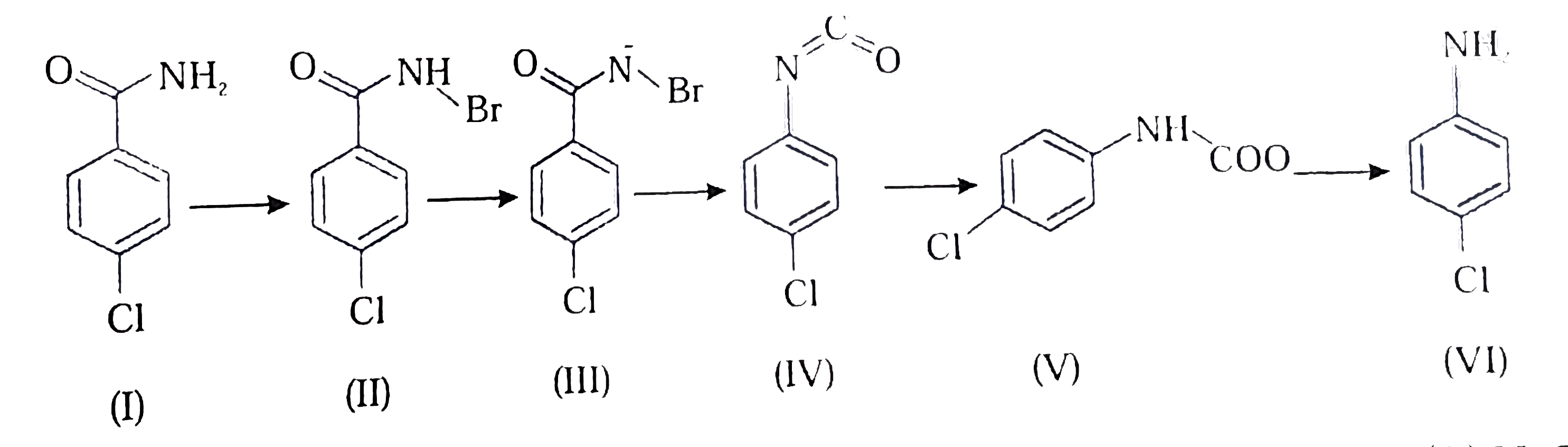
Consider the pathway of a well known org...

Consider the pathway of a well known organic reaction

Which step is rate determining step?

A

formation of II

B

formation of III

C

formation of V

D

formation of IV

Text Solution

Verified by Experts

The correct Answer is:

D
Promotional Banner

Topper's Solved these Questions

  • AROMATIC COMPOUNDS

    RESONANCE|Exercise PART-II JEE MAIN|19 Videos
  • AROMATIC COMPOUNDS

    RESONANCE|Exercise JEE(MAIN) ONLINE PROBLEM|16 Videos
  • AROMATIC COMPOUNDS

    RESONANCE|Exercise PART IV- COMPREHENSION|14 Videos
  • ATOMIC STRUCTURE

    RESONANCE|Exercise PHYSICAL CHEMISTRY(ATOMIC EQUILIBRIUM)|48 Videos

Similar Questions

Explore conceptually related problems

Consider the pathway of a well known organic reaction For the conversion from I to II, which reagent was used?

Consider the above reaction and answer A to E. Which step is rate determining step?

What is the rate determining step of a reaction ?

Consider the potential energy diaram given below (X) Name the positions A-D (Y) Answer the following questions . (I) Both reaction pathways are. (II) which step is the rate determine step? (III) which product is most stable ? (iv) In accordance with Hammonds potulate , exothermixc reaction tend to have

The conversion of aldehyde having no alpha hydrogen to a mixture to a mixture of carboxylic acid and primary alcohol is known as cannizzaro reaction. The most important feature of this reaction is the conjugates base of hydrate aldehyde. Which step is rate determine step

Acccording to the reaction profile given, which reaction step is rate-determining in the forward direction ?

RESONANCE-AROMATIC COMPOUNDS -Exercise -3 Part-I
  1. under Hofmann conditions will give:

    Text Solution

    |

  2. Which reagent (X) is used to convert I to II

    Text Solution

    |

  3. Consider the pathway of a well known organic reaction Which step ...

    Text Solution

    |

  4. CH(3)NH(2)+CHCl(3)+KOH to nitrogen containing compound +KCl+H(2)O. Nit...

    Text Solution

    |

  5. What are P & Q.

    Text Solution

    |

  6. Riemer-Tiemann reaction intorduces an aldehyde group, on to the aromat...

    Text Solution

    |

  7. Reimer-Tiemann reaction introduces an aldehyde group on to the aromati...

    Text Solution

    |

  8. Riemer-Tiemann reaction intorduces an aldehyde group, on to the aromat...

    Text Solution

    |

  9. In the reaction the intermediate(s) is/are:

    Text Solution

    |

  10. Match the reactions in Column I with appropriate options in Column II.

    Text Solution

    |

  11. The major product of the following reaction is :

    Text Solution

    |

  12. Among the compounds given, the one that would form a brilliant colored...

    Text Solution

    |

  13. In the following reaction, the products formed is(are)

    Text Solution

    |

  14. The major product(s) of the following is (are):

    Text Solution

    |

  15. P and Q are isomers of dicarboxylic acid C(4)H(4)O(4). Both decolorize...

    Text Solution

    |

  16. P and Q are isomers of dicarboxylic acid C(4)H(4)O(4). Both decolorize...

    Text Solution

    |

  17. The reactivity of compound Z with different halogens under appropriat...

    Text Solution

    |

  18. The the identification of beta-napthol using dye test, it is necessary...

    Text Solution

    |

  19. Match the four starting materials (P,Q,R,S) gien in List-I with the co...

    Text Solution

    |

  20. Among The following the number of reaction(s) that prouduce(s) benzad...

    Text Solution

    |
