Home
Class 12
PHYSICS
Choose Graph between potential and time...

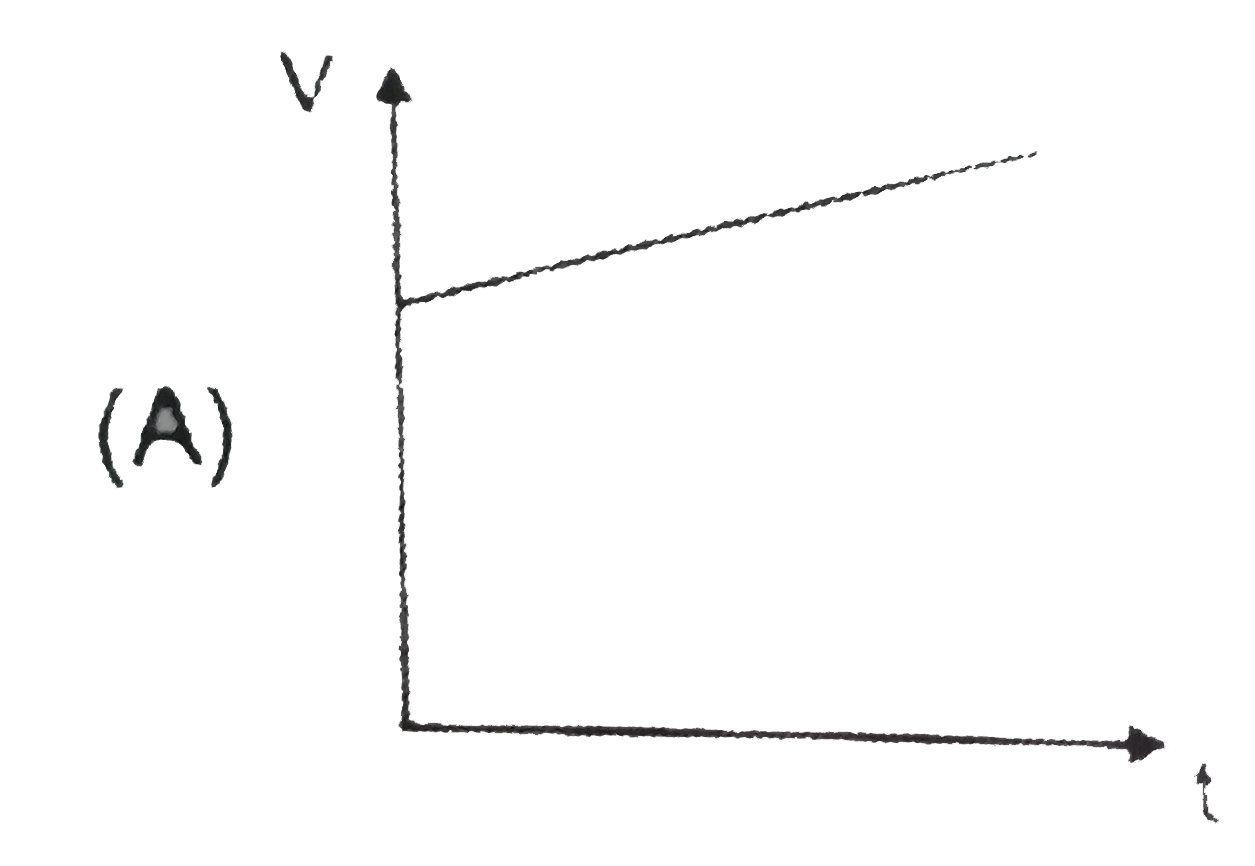
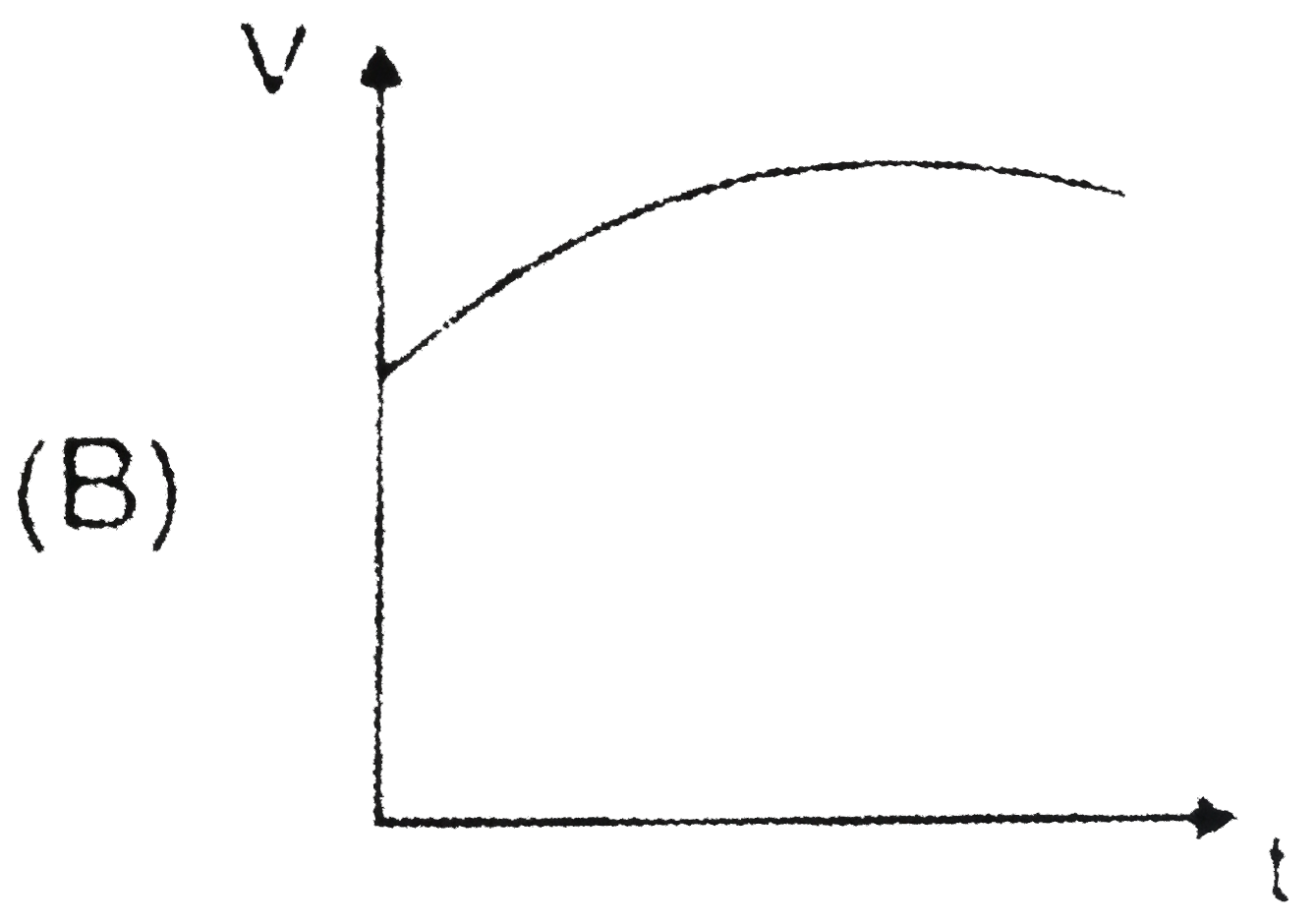
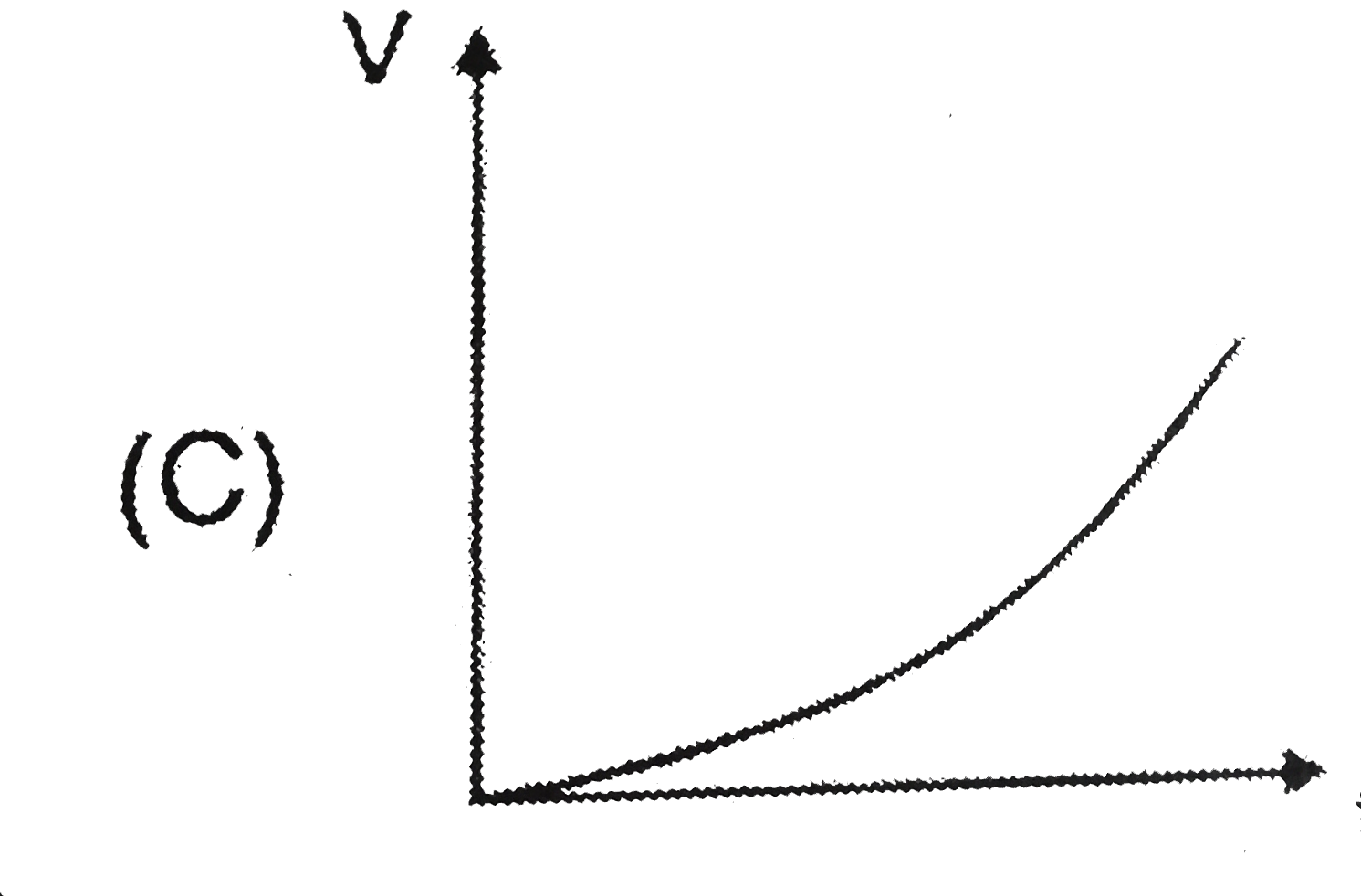
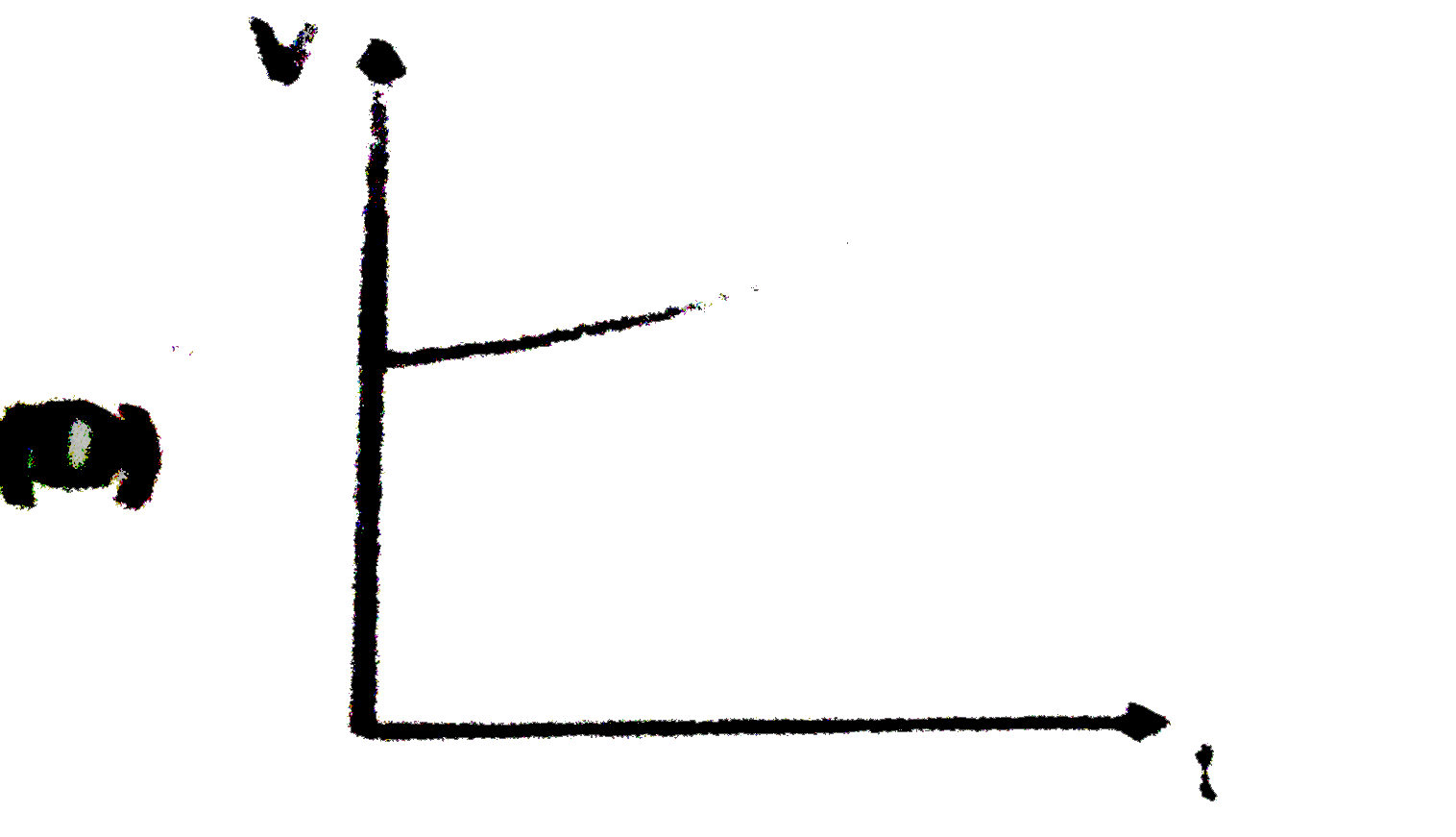
Choose Graph between potential and time for an isolated conductor of finite capacitance C, if its charge varies according to the formula `Q=(alpha t +Q_(0))` coulomb, where `Q_(0)` and `alpha` are positive constant.

A

B

C

D

Text Solution

Verified by Experts

The correct Answer is:

A
Promotional Banner

Topper's Solved these Questions

  • CAPACITANCE

    RESONANCE|Exercise Exercise - 3|26 Videos
  • CAPACITANCE

    RESONANCE|Exercise High Level Problems|16 Videos
  • CAPACITANCE

    RESONANCE|Exercise Exercise - 1|79 Videos
  • ATOMIC PHYSICS

    RESONANCE|Exercise Advanved level problems|17 Videos
  • COMMUNICATION SYSTEMS

    RESONANCE|Exercise Exercise 3|13 Videos

Similar Questions

Explore conceptually related problems

A particle having a velocity v = v_0 at t= 0 is decelerated at the rate |a| = alpha sqrtv , where alpha is a positive constant.

A charge Q is given to the plates of an isolated capacitor of capacitance C. Now, the terminals of this capacitor are connected to the terminals of an inductor L at t = 0. After how much time will the energy stored in the capacitor and the Inductor become equal?

Potential difference that is applied actions a conductor of resistance 'R' varies with time 't' according to the equation V(t)=V_(0)e^(-t/z) where z is a constant that has dimensions of time. Obviously,the applied potential difference decreases exponentially with time.Charge that passes through any fixed observation point within the conductor between t=0 and t=z will be

In an isolated parallel plate capacitor of capacitance C , the plates have charge Q_(1) and Q_(2) . The potential difference between the plates is

The charge flowing through a resistance R varies with time t as Q=at-bt^(2) , where a and b are positive constant. The total heat produced in R is

The displacement x of a particle varies with time t as x = ae^(-alpha t) + be^(beta t) . Where a,b, alpha and beta positive constant. The velocity of the particle will.

The plates of a capacitor of capacitance C are given the charges Q_1 and Q_2 as shwon in figure. Now the switch is closed at t =0. Find the charges on plates after time t.

RESONANCE-CAPACITANCE-Exercise - 2
  1. The plates of a parallel plate capacitor are pulled apart with a veloc...

    Text Solution

    |

  2. Choose Graph between potential and time for an isolated conductor of...

    Text Solution

    |

  3. A thin metal plate P is inserted between the plates of a parallel-plat...

    Text Solution

    |

  4. Two spherical conductors A(1) and A(2) of radii r(1) and r(2) are plac...

    Text Solution

    |

  5. There are two conducting spheres of radius a and b (b gt a) carrying ...

    Text Solution

    |

  6. A capacitor of capacitance C(0) is charged to a voltage V(0) and then ...

    Text Solution

    |

  7. A network of uncharged capacitors and resistances is as shown C...

    Text Solution

    |

  8. (i) A 3mu F capacitor is charged up to 300 volt and 2mu F is charged u...

    Text Solution

    |

  9. (ii) If instead of this, the plates of opposite polarity were joined ...

    Text Solution

    |

  10. In the circuit shown in figure, the capacitors are initially uncharged...

    Text Solution

    |

  11. Six capacitors each of capacitance 'C' is connected as shown in the ...

    Text Solution

    |

  12. The equivalent capacitance between point A and B is

    Text Solution

    |

  13. In the arrangement of the capacitor shown in the figure, each C(1) cap...

    Text Solution

    |

  14. In the arrangement of the capacitor shown in the figure, each C(1) cap...

    Text Solution

    |

  15. In the arrangement of the capacitor shown in the figure, each C(1) cap...

    Text Solution

    |

  16. A combination arrangement of the capacitors is shown in the figure ...

    Text Solution

    |

  17. A combination arrangement of the capacitors is shown in the figure ...

    Text Solution

    |

  18. The V versus x plot for six identical metal plates of cross-sectiona...

    Text Solution

    |

  19. Each edge of the cube contains a capacitance C. The equivalent capacit...

    Text Solution

    |

  20. The potential difference between the points P and Q in the adjoining c...

    Text Solution

    |
