Home
Class 11
PHYSICS
The graph between distance between sourc...

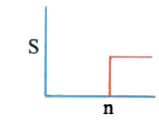
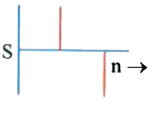
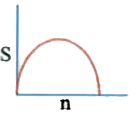
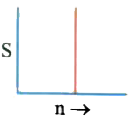
The graph between distance between source and observer and apparent frequency in the case of Doppler's effect will be

A

B

C

D

Text Solution

AI Generated Solution

The correct Answer is:

To solve the problem of determining the relationship between the distance between the source and observer and the apparent frequency in the case of the Doppler effect, we can follow these steps: ### Step-by-Step Solution: 1. **Understand the Doppler Effect:** The Doppler effect describes how the frequency of a wave changes for an observer moving relative to the source of the wave. When the source and observer are moving towards each other, the observed frequency increases, and when they are moving apart, the observed frequency decreases. 2. **Identify the Variables:** - Let \( f_0 \) be the actual frequency emitted by the source. - Let \( v \) be the speed of sound in the medium. - Let \( v_o \) be the speed of the observer. - Let \( v_s \) be the speed of the source. - Let \( d \) be the distance between the source and the observer. 3. **Apparent Frequency Formula:** The apparent frequency \( f' \) can be expressed using the formula: \[ f' = f_0 \frac{v + v_o}{v - v_s} \] - If the source is stationary (\( v_s = 0 \)), the formula simplifies to: \[ f' = f_0 \frac{v + v_o}{v} \] 4. **Distance Independence:** The key point here is that the apparent frequency \( f' \) does not depend on the distance \( d \) between the source and the observer. Instead, it depends on their relative velocities. Thus, as the distance changes, the apparent frequency remains constant if the speeds of the source and observer do not change. 5. **Graph Representation:** When plotting the graph of distance \( d \) (on the x-axis) versus apparent frequency \( f' \) (on the y-axis), since \( f' \) remains constant regardless of \( d \), the graph will be a horizontal line. This indicates that as the distance between the source and observer increases or decreases, the apparent frequency does not change. ### Conclusion: The graph between the distance between the source and observer and the apparent frequency in the case of the Doppler effect will be a horizontal line, indicating that the apparent frequency is independent of the distance. ---

To solve the problem of determining the relationship between the distance between the source and observer and the apparent frequency in the case of the Doppler effect, we can follow these steps: ### Step-by-Step Solution: 1. **Understand the Doppler Effect:** The Doppler effect describes how the frequency of a wave changes for an observer moving relative to the source of the wave. When the source and observer are moving towards each other, the observed frequency increases, and when they are moving apart, the observed frequency decreases. 2. **Identify the Variables:** ...
Promotional Banner

Topper's Solved these Questions

Similar Questions

Explore conceptually related problems

Change in frequency due to Doppler's effect is produced when

The graph between inductive reactance and frequency is

A : In Doppler's effect the value of apparent frequency depends on the relative motion between source and observer . R : The change in frequency in Doppler effect is independent from the distance between source and observer .

(a) Does the change in frequency due to Doppler effect depend on the distance between source (b)Does the change in frequency due to Doppler effect on the fact that source is moving towards the observer or observer is moving towards the source ?

Assertion : A sound source is approaching towards a stationary observer along the tine joining them. Then , apparent frequency to the observer will go on increasing. Reason : If there is no relative motion between source and observer , apparent frequency is equal to the actual frequency.

There will be no change in frequency or no Doppler effect if

The change in frequency due to Doppler effect does not depend on

The change in frequency due to Doppler effect does not depend on

Doppler's effect in sound takes place when source and observer are
