Home
Class 12
CHEMISTRY
The example of an electrophilic substitu...

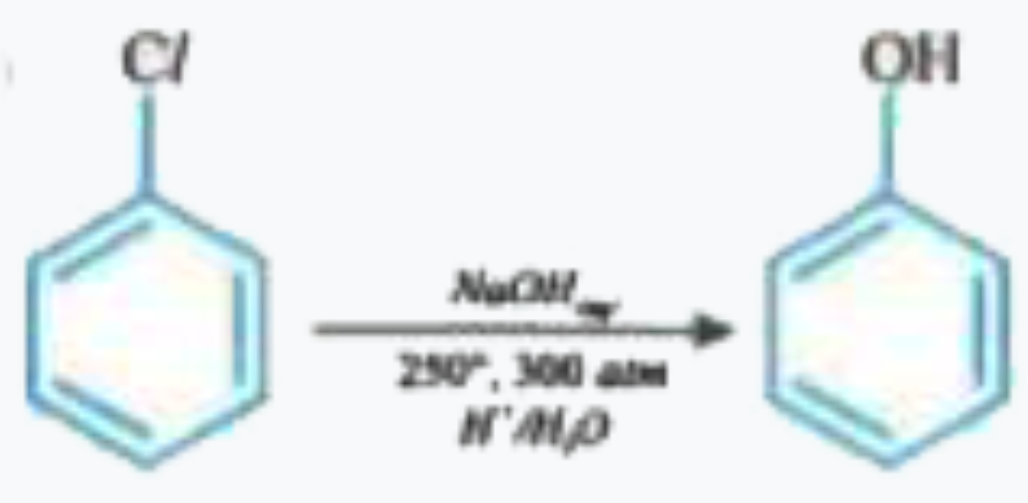
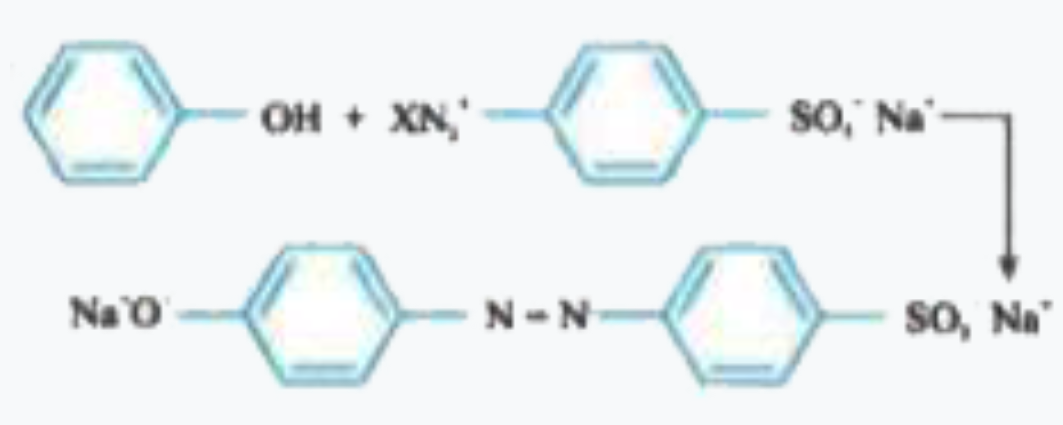
The example of an electrophilic substitution reaction is

A

B

C

`H_(2)C=CH-CH_(3) underset("peroxide") overset(HBr) to `
`Br_(2)-CH_(2)-CH_(2)-CH_(3)`

D

`H_(2)CCH_(2)-CH_(2)-overset(O)overset(||)(C )-CH_(3)`

Text Solution

AI Generated Solution

The correct Answer is:

To determine the example of an electrophilic substitution reaction from the given options, we can analyze each option step by step. ### Step 1: Identify the Reactions We have four options to consider, and we need to identify which of these represents an electrophilic substitution reaction. ### Step 2: Analyze Each Option 1. **Chlorobenzene with NaOH**: - This reaction involves the substitution of the chlorine atom in chlorobenzene with a hydroxyl group (OH) to form phenol. This is a nucleophilic substitution reaction, not electrophilic. 2. **Phenol with Diazonium Salt (N2+ and SO3-Na+)**: - In this case, phenol reacts with a diazonium salt, which acts as an electrophile. The electrophilic substitution occurs where the diazonium ion substitutes for a hydrogen atom on the benzene ring of phenol, leading to the formation of a colored azo compound. This is indeed an electrophilic substitution reaction. 3. **HBA in the presence of peroxide**: - This reaction follows a radical mechanism and does not involve electrophilic substitution. It typically leads to anti-Markovnikov addition, which is not what we are looking for. 4. **Ketone with Strong Base (LDA)**: - The reaction of a ketone with a strong base leads to the formation of an enolate ion, which acts as a nucleophile. This is also a nucleophilic substitution reaction, not electrophilic. ### Step 3: Conclusion From the analysis, the only reaction that qualifies as an electrophilic substitution reaction is the one involving phenol and diazonium salt. Therefore, the correct answer is: **B. Phenol with Diazonium Salt (N2+ and SO3-Na+)**

To determine the example of an electrophilic substitution reaction from the given options, we can analyze each option step by step. ### Step 1: Identify the Reactions We have four options to consider, and we need to identify which of these represents an electrophilic substitution reaction. ### Step 2: Analyze Each Option 1. **Chlorobenzene with NaOH**: - This reaction involves the substitution of the chlorine atom in chlorobenzene with a hydroxyl group (OH) to form phenol. This is a nucleophilic substitution reaction, not electrophilic. ...
Promotional Banner

Topper's Solved these Questions

  • ORGANIC COMPOUNDS CONTAINING NITROGEN

    NARAYNA|Exercise EXERCISE-3|32 Videos
  • NUCLEAR CHEMISTRY

    NARAYNA|Exercise INTEGER|28 Videos
  • PERIODIC TABLE

    NARAYNA|Exercise All Questions|573 Videos

Similar Questions

Explore conceptually related problems

Electrophilic Substitution Reactions

Electrophilic substitution reaction in Haloarenes

In electrophilic substitution reaction nitrobenzene is

For an electrophilic aromatic substitution reaction

Correct order of electrophilic substitution reaction is :

NARAYNA-ORGANIC COMPOUNDS CONTAINING NITROGEN-EXERCISE-4
  1. The reaction of chloroform with alcoholic KOH and p-toluidine form-

    Text Solution

    |

  2. Which one of the following is an example of 3^(@) amide ?

    Text Solution

    |

  3. The product of the given reaction is

    Text Solution

    |

  4. Which of the following reagents can be used to convert primary amides ...

    Text Solution

    |

  5. Which of the following chemicals are used to manufacture methy1 isocya...

    Text Solution

    |

  6. The major organic product formed from the following reaction

    Text Solution

    |

  7. The following reaction gives : 4-nitrotoluene underset(H(2)S(4))over...

    Text Solution

    |

  8. The example of an electrophilic substitution reaction is

    Text Solution

    |

  9. An aromatic compound A (C7H9N) on reacting with NaNO2 / HCI at 0^@C fo...

    Text Solution

    |

  10. An organic compound (C3H9N) (A) when treated with nitrous acid , gave ...

    Text Solution

    |

  11. Which of the following reagents could be used to distinguish aniline f...

    Text Solution

    |

  12. Maximum number of molecules of CH(3)I that can react with a molecule o...

    Text Solution

    |

  13. Which of the followinmg is soluble in sodium hydroxide ?

    Text Solution

    |

  14. Identify the major product for the reaction given below.

    Text Solution

    |

  15. What is the majot product of the following reaction ?

    Text Solution

    |

  16. the product B is

    Text Solution

    |

  17. An organic compound 'A' on reduction give compound 'B' which on reacti...

    Text Solution

    |

  18. Which one of the following amines forms a non-acidcic and alkali insol...

    Text Solution

    |

  19. The reagent that is used to distinguish between secondary amine and te...

    Text Solution

    |

  20. Predict the product

    Text Solution

    |
