A
B
C
D
Text Solution
Verified by Experts
The correct Answer is:



Topper's Solved these Questions
Similar Questions
Explore conceptually related problems
KCET PREVIOUS YEAR PAPERS-KARNATAKA CET 2018-CHEMISTRY
- The IUPAC name of [Co(NH(3))(4) Cl(NO(2))] Cl is
Text Solution
|
- Which of the following statements is true in case of alkyl halides?
Text Solution
|
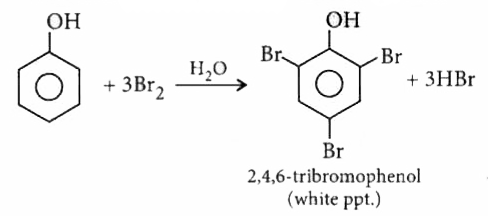
- Phenol can be distinguished from ethanol by the reagent
Text Solution
|
- Which of the following compounds undergoes haloform reaction ?
Text Solution
|
- Which of the following will be the most stable diazonium salt (RN(2)^...
Text Solution
|
- Which of the following bases is not present in DNA?
Text Solution
|
- Which one of the following is a polyamide polymer ?
Text Solution
|
- In F.C.C. the unit cell is shared equally by how many unit cells ?
Text Solution
|
- At a particular temperature, the ratio of molar conductance to specifi...
Text Solution
|
- Isotonic solutions are solutions having the same
Text Solution
|
- The temperature coefficient of a reaction is 2. When the temperature i...
Text Solution
|
- Gold sol is not a
Text Solution
|
- The common impurity present in bauxite is
Text Solution
|
- Very pure N(2) can be obtained by
Text Solution
|
- Which of the following oxidation states is common for all lanthanides?
Text Solution
|
- The electronic configuration of transition element "X", is +3, oxidati...
Text Solution
|
- n-Propyl chloride reacts with sodium metal in dry ether to give
Text Solution
|
- When the vapours of tertiary butyl alcohol are passed through heated c...
Text Solution
|
- What is the increasing order of acidic strength among the following ? ...
Text Solution
|
- Which of the following is more basic than aniline ?
Text Solution
|