Home
Class 12
CHEMISTRY
The compound which reacts with HBr obeyi...

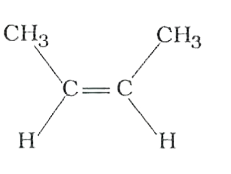
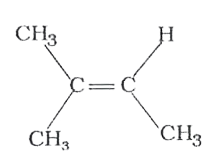
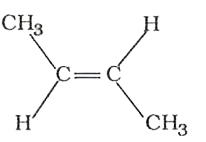
The compound which reacts with HBr obeying Markovnikov's rule is :

A

`CH_(2) = CH_(2)`

B

C

D

Text Solution

Verified by Experts

The correct Answer is:

D
Promotional Banner

Topper's Solved these Questions

  • HYDROCARBONS

    MODERN PUBLICATION|Exercise LEVEL-II|85 Videos
  • HYDROCARBONS

    MODERN PUBLICATION|Exercise LEVEL-III|10 Videos
  • HALOALKANES AND HALOARENES

    MODERN PUBLICATION|Exercise RECENT EXAMINATION QUESTIONS|12 Videos
  • HYDROGEN

    MODERN PUBLICATION|Exercise RECENT EXAMINATION QUESTIONS|4 Videos

Similar Questions

Explore conceptually related problems

State Markovnikov's rule.

Of the following compounds which will react with Br_2 at room temperature in dark.

The compound which on reacting with aqueous nitrous acid at low temperature produces an oily nitrosamine is

An organic compound X on treatment with acidified K_(2)Cr_(2)O_(7) gives compound Y which reacts with I_(2) and sodium carbonate to form tri-iodomethane . The compound X is :

The compound that reacts fastest with Lucas reagent is

Vladimir Markovnikov rule : Alkenes undergo electrophilic addition reactions. It is triggered by the acid acting as a electrophile toward t-electrons of the double bond. Markovnikov's rule states that when an unsymmetrically substituted alkene reacts with a hydrogen halide, the hydrogen atom adds to the carbon that has the greater number of hydrogen, e.g., Which of the following is most reactive toward Markovnikov addition ?

Vladimir Markovnikov rule : Alkenes undergo electrophilic addition reactions. It is triggered by the acid acting as a electrophile toward t-electrons of the double bond. Markovnikov's rule states that when an unsymmetrically substituted alkene reacts with a hydrogen halide, the hydrogen atom adds to the carbon that has the greater number of hydrogen, e.g., In which of the following reactions, product is racemic mixture ?

Vladimir Markovnikov rule : Alkenes undergo electrophilic addition reactions. It is triggered by the acid acting as a electrophile toward t-electrons of the double bond. Markovnikov's rule states that when an unsymmetrically substituted alkene reacts with a hydrogen halide, the hydrogen atom adds to the carbon that has the greater number of hydrogen, e.g., In which of following reactions carbocation rearrangement is possible ?
