Text Solution
Verified by Experts
The correct Answer is:



Topper's Solved these Questions
ELECTROMAGNETIC INDUCTION
FIITJEE|Exercise ASSIGNMENT PROBLEMS ( SUBJECTIVE ) LEVEL - II & III|15 VideosELECTROMAGNETIC INDUCTION
FIITJEE|Exercise ASSIGNMENT PROBLEMS ( OBJECTIVE ) LEVEL -I|28 VideosELECTROMAGNETIC INDUCTION
FIITJEE|Exercise ASSIGNMENT PROBLEMS ( SUBJECTIVE ) Level -I Fill in the blank|5 VideosELASTICITY AND WAVES
FIITJEE|Exercise Assignment Problems (Objective) Level-II|15 VideosELECTROMAGNETIC INDUCTION AND AC CURRENT
FIITJEE|Exercise Example|15 Videos
Similar Questions
Explore conceptually related problems
FIITJEE-ELECTROMAGNETIC INDUCTION-ASSIGNMENT PROBLEMS ( SUBJECTIVE ) Level -I True and False
- In the steady state of the circuit shown in the figure the ratio of en...
Text Solution
|
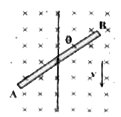
- A conducting rod AB of lemgth 2 l moves through a uniform magnetic fie...
Text Solution
|
- A conducting rim of radius R rolls without slipping on a horizontal su...
Text Solution
|
- Figure shown plane figure made of a conductor located in a magnetic fi...
Text Solution
|
- Electric field induced by changing magnetic fields are
Text Solution
|