A
B
C
D
Text Solution
Verified by Experts
The correct Answer is:
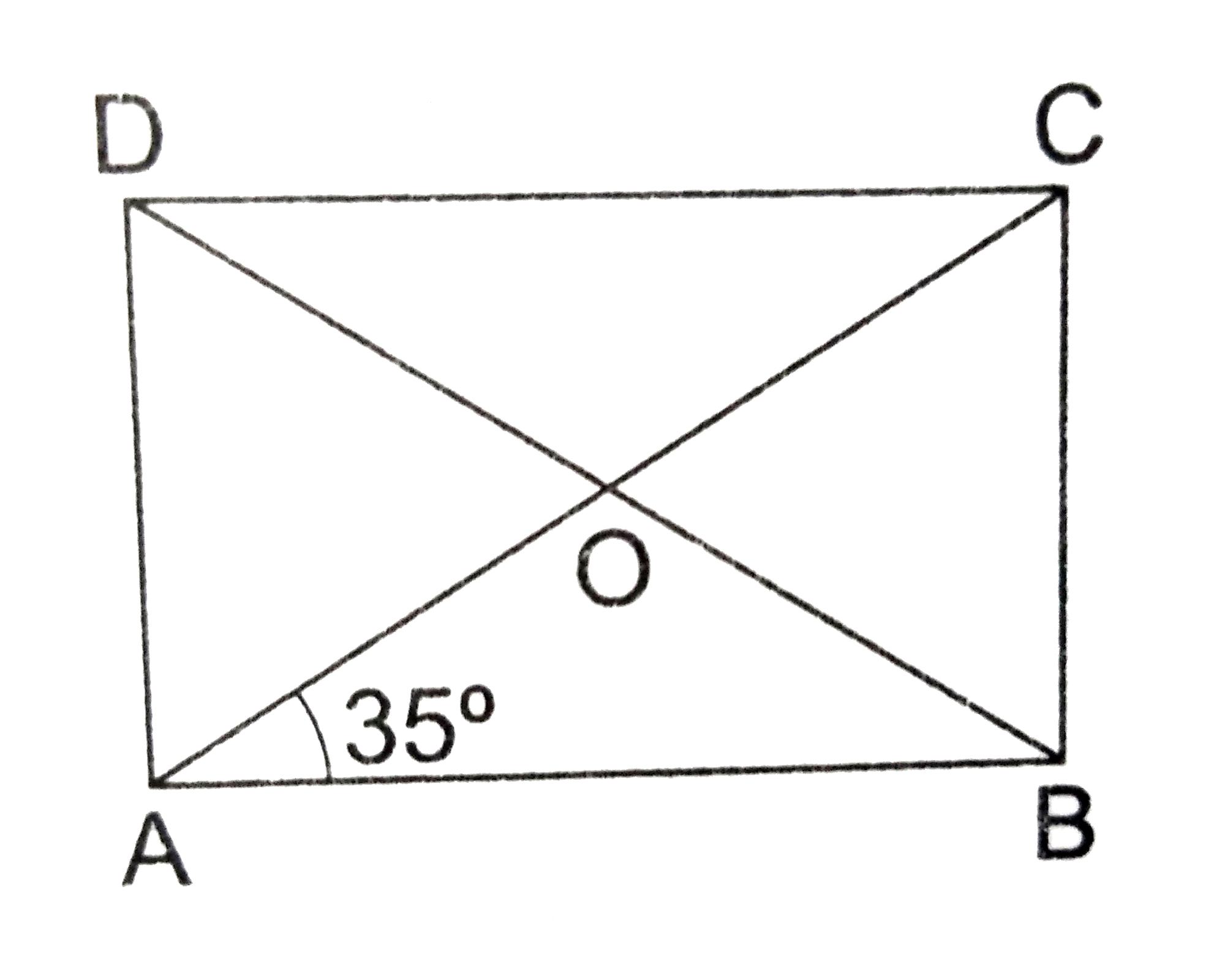



Topper's Solved these Questions
QUADRILATERALS
RS AGGARWAL|Exercise MULTIPLE-CHOICE QUESTIONS (MCQ)|9 VideosQUADRILATERALS
RS AGGARWAL|Exercise Short-Answer Questions|1 VideosQUADRILATERALS
RS AGGARWAL|Exercise EXERCISE 10C|18 VideosPROBABILITY
RS AGGARWAL|Exercise Multiple Choice Questions (Mcq)|16 VideosTRIANGLES
RS AGGARWAL|Exercise MULTIPLE-CHOICE QUESTIONS (MCQ)|10 Videos
Similar Questions
Explore conceptually related problems
RS AGGARWAL-QUADRILATERALS-Multiple Choice Questions (Mcq)
- The lengths of the diagonals of a rhombus are 12 cm and 16 cm. Find th...
Text Solution
|
- Each side of a rhombus is 10cm. If one of its diagonals is 16cm fin...
Text Solution
|
- A diagonal of a rectangle is inclined to one side of the rectangle a...
Text Solution
|
- If ABCD is a parallelogram with two adjacent angles angle A = angle B...
Text Solution
|
- In a quadrilateral ABCD, AO and BO are the bisectors of angle A and an...
Text Solution
|
- The bisectors of any two adjacent angles of a parallelogram intersect ...
Text Solution
|
- The bisectors of the angle of a parallelogram enclose a parallelogr...
Text Solution
|
- If bisectors of angle A and angle B of a quadrilateral ABCD intersect ...
Text Solution
|
- The figure formed by joining the mid-points of the adjacent sides o...
Text Solution
|
- Show that the quadrilateral, formed by joining the mid-points of the s...
Text Solution
|
- The figure formed by joining the mid-point of the adjacent sides of...
Text Solution
|
- The figure obtained by joining the mid-points of the adjacent sides of...
Text Solution
|
- The figure formed by joining the mid-points of the adjacent sides of...
Text Solution
|
- The quadrilateral formed by joining the midpoints of the sides of a qu...
Text Solution
|
- The quadrilateral formed by joining the midpoints of the sides of a qu...
Text Solution
|
- The figure formed by joining the mid-points of the sides of a quadrila...
Text Solution
|
- If an angle of a parallelogram is two-third of its adjacent angle, f...
Text Solution
|
- Find the measure of all the angles of a parallelogram, if one angle is...
Text Solution
|
- If angle A, angle B, angle C and angle D of a quadrilateral ABCD, ta...
Text Solution
|
- Which of the following is not true for a parallelogram ?
Text Solution
|