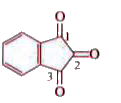
A
B
C
D
Text Solution
Verified by Experts
The correct Answer is:
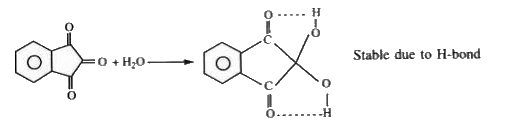



Topper's Solved these Questions
ALDEHYDES AND KETONES
AAKASH SERIES|Exercise LEVEL-II LECTURE SHEET (EXERCISE-II)|28 VideosALDEHYDES AND KETONES
AAKASH SERIES|Exercise LEVEL-II LECTURE SHEET (EXERCISE-III)|11 VideosALDEHYDES AND KETONES
AAKASH SERIES|Exercise LEVEL-I(EXERCISE-II)|59 VideosALCOHOLS, PHENOLS AND ETHERS
AAKASH SERIES|Exercise ETHERS (OBJECTIVE EXERCISE-4)|50 VideosALKYL AND ARYL HALIDES
AAKASH SERIES|Exercise OBJECTIVE EXERCISE - 4 (ASSERTION (A) & REASON (R) TYPE QUESTIONS)|19 Videos
Similar Questions
Explore conceptually related problems
AAKASH SERIES-ALDEHYDES AND KETONES-LEVEL-II LECTURE SHEET (EXERCISE-I)
- Arrange the compound in order or decreasing reactivity for nucle...
Text Solution
|
- In the given reaction
Text Solution
|
- Which carbonyl group of the given compound in most reactive for...
Text Solution
|
- In the given reaction the main product will be :
Text Solution
|
- In the given reaction the main product will be :
Text Solution
|
- Which one of the following compounds would form most stable hy...
Text Solution
|
- will be
Text Solution
|
- In the given (##AKSTRGAOCHEXIIV02BC03E02024Q01.png" width="80%"> , o...
Text Solution
|
- In the given reaction , (X ) will be
Text Solution
|
- What are A ,B and C in the given reaction ?
Text Solution
|
- Complete the following reaction
Text Solution
|
- B identify structure of B
Text Solution
|
- In the given reaction ,(X) wil be
Text Solution
|
- In the given reaction product
Text Solution
|
- Find the product of the following reaction :
Text Solution
|
- Complete the following reaction
Text Solution
|
- Find the product of the following reaction :
Text Solution
|
- Find out final product of reaction :
Text Solution
|
- Complete the following reaction
Text Solution
|
- What is the prodcut (X) of the following reaction ?
Text Solution
|